





Olden Era sticks to tried-and-true formulas rather than experimenting. We’ll show you how well this approach pays off in the game’s Early Access release on April 30.
There is probably no other fantasy universe in the gaming world that is as little known relative to its success as that of Might and Magic. Successful strategy and role-playing games have been released in this universe for 40 years now, and yet most fans couldn’t even roughly describe what it’s about.
Especially in the strategy spin-off Heroes of Might and Magic, most fans couldn’t care less. The goal there is to rid the world map of everything that glitters and sparkles, while using unstoppable armies to beat up creatures big and small.
This is exactly where Olden Era shines once again, drawing particularly heavy inspiration from Heroes of Might and Magic 3.We played the latest installment extensively ahead of its Early Access launch on April 30 and break down its strengths and weaknesses for you in our review. You can get Olden Era on Steam and via PC Game Pass.
Back to the very old roots
Olden Era isa prequel to the first game in the series. It takes us back to Enroth, the planet where the first three Heroes games and several titles in the Might and Magic RPG series are set.
What’s particularly noteworthy is that Ubisoft, the license holder and co-publisher (alongside Hooded Horse), is effectively backtracking. When the brand was transferred to the French company with Heroes of Might and Magic 5, the universe was rebooted. Olden Era, however, now returns to the old canon.
The average player probably won’t even notice this, since the continent of Jadame depicted here is once again inhabited by humans, elves, mythical creatures, necromancers, and other sinister beings who are beating each other’s brains out.
Not all factions light up
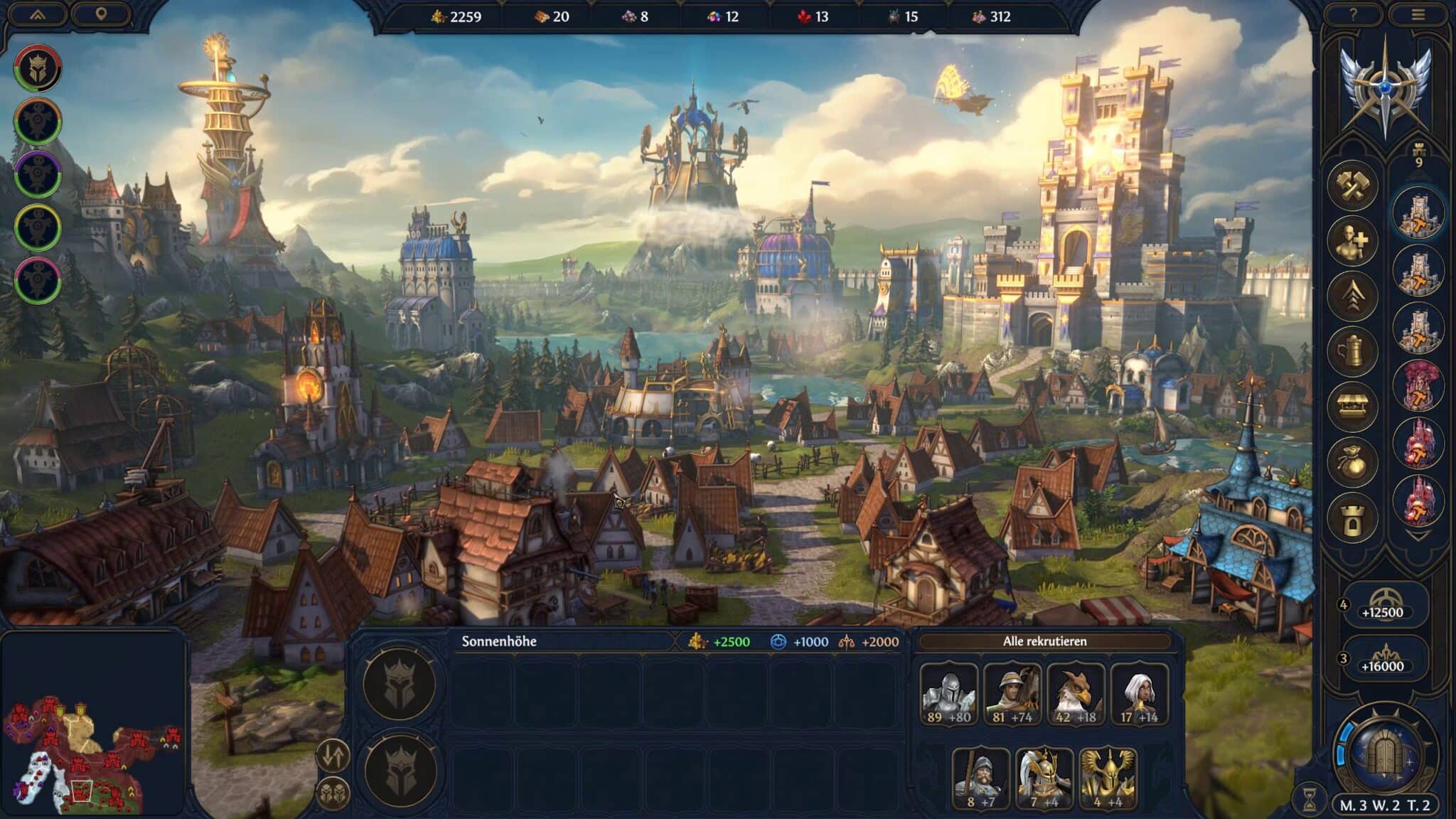
- TheTemplewatches over the people of Jadame and is organized as a church that worships the sun. Here you’ll find the classic knights, priestesses, crossbowmen, and of course angels!
- In theNecropolisthe necromancers gather. Here you command hordes of skeletons, liches, and vampires.
- Thegroveoffers shelter to nature-loving creatures, including elf-like fauns, druids, and phoenixes.
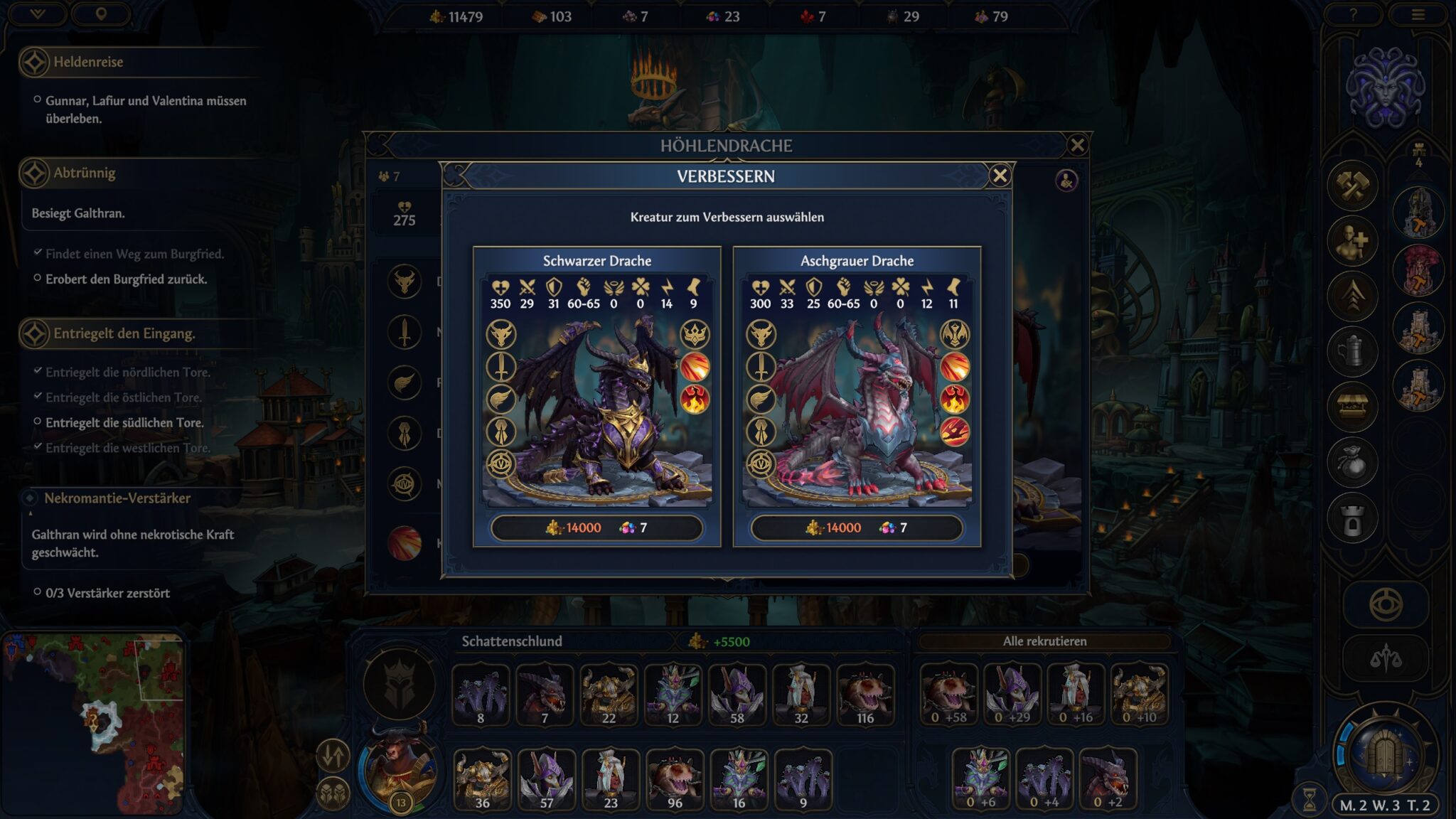
- UnderDungeonlies the Empire of Alvar, a confederation of many beings, such as minotaurs, dark elves, medusas, and dragons.
- TheSchismis a splinter group of Alvar that you can imagine as a sort of underwater Cthulhu faction.
- TheSwarmreplaces the typical demon faction. Here, you command hordes of hellish insects.
Our verdict here is mixed. Because although the factions offer plenty of variety and play differently, some of them simply feel a bit bland. Fiery insects aren’t a particularly exciting replacement for demons. And the Grove and Schism factions also lack a few truly cool or impressive units.
Table of Contents
At its core, everything remains the same
Otherwise, Olden Era plays exactly as you would expect from a Heroes of Might and Magic game. Normally, you start with a city and a hero, along with some basic creatures. For the Temple faction, these are usually a few swordsmen, crossbowmen, and perhaps a couple of griffins.
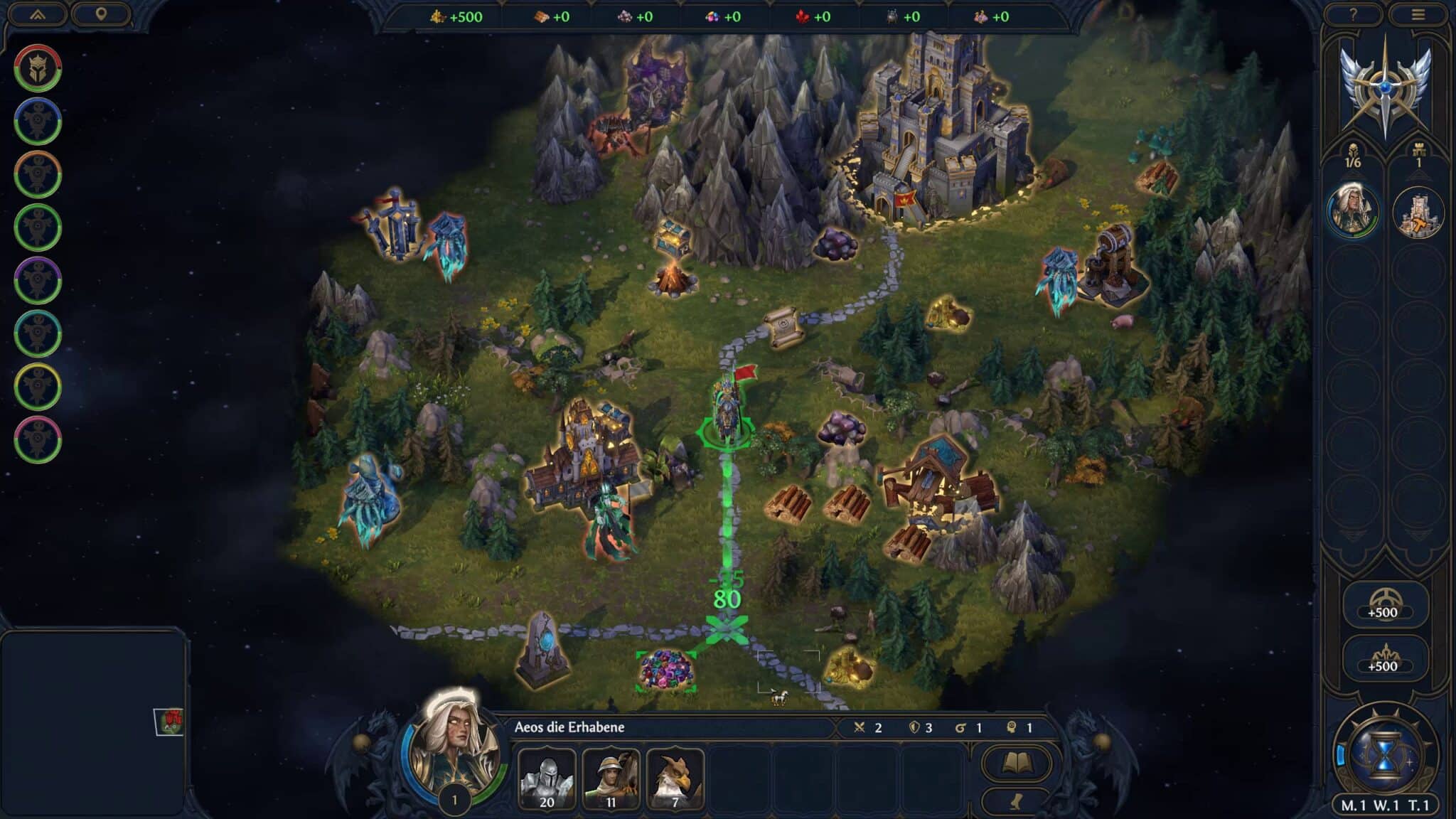
You move this army across the world map until its movement points are used up. Along the way, you collect gold and resources for building structures and recruiting new units. Equipment and buffs for your hero also await you.
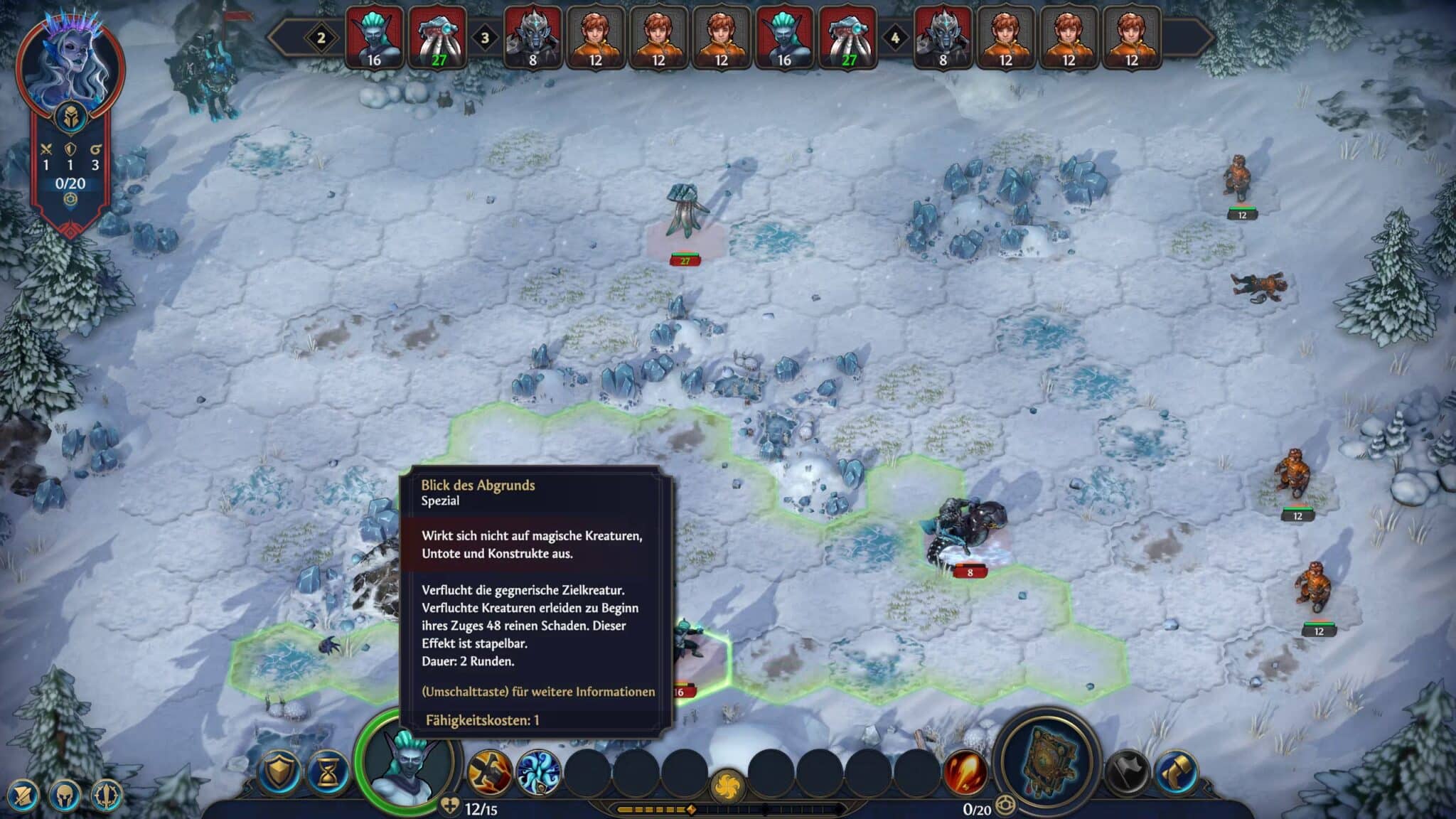
Much of this, however, is guarded by neutral monster groups, which you defeat in hex-based tactical battles, just like enemy armies. In these battles, you use your creatures as well as a whole range of spells, whose potency increases with the leader’s magic stats.

Heroes in Name and Deed
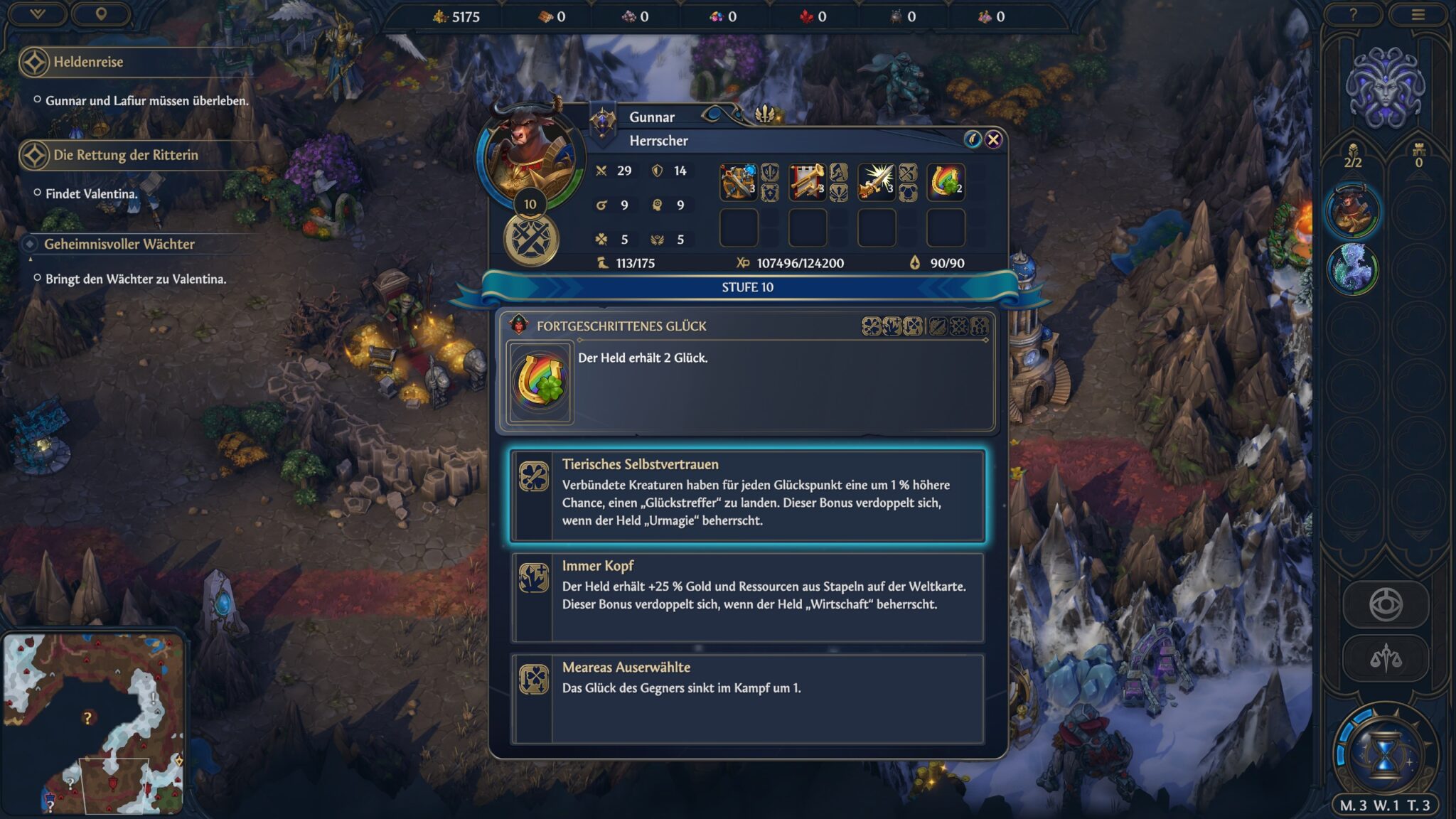
In addition to faction-specific differences, heroes’ level-ups offer additional customization options. For example, you can specialize them as fighters, granting the creatures particularly high passive bonuses to attack and defense. If you instead turn a champion into a mage, you can wipe out entire armies with spells alone—as long as you don’t run out of mana.
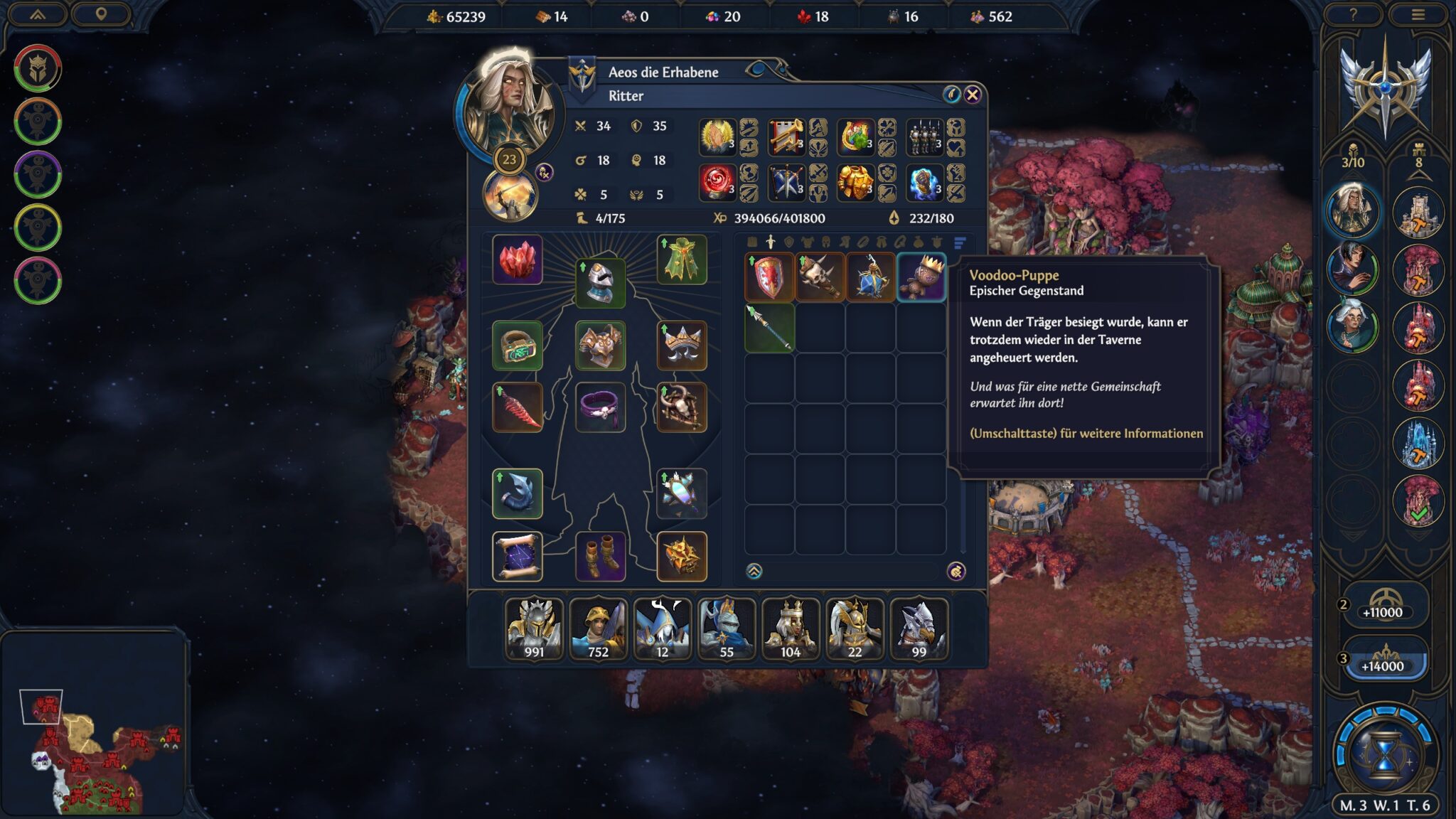
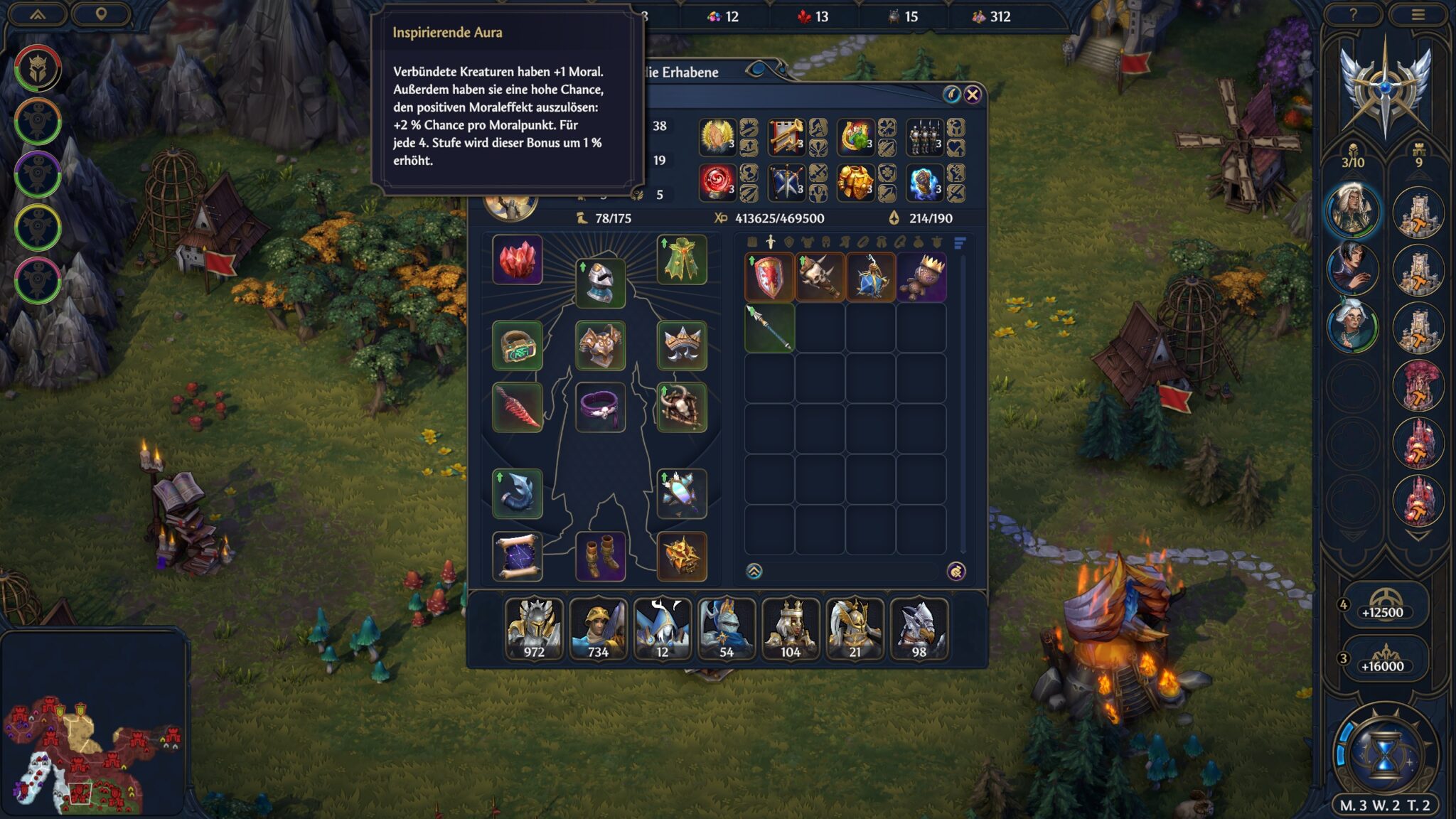
Every hero has an (almost) unique starting trait. This heroine here is perfectly suited for a specialization in Morale and Luck.
For secondary heroes, on the other hand, special abilities such as daily gold income or an increased weekly influx of new recruits are ideal. We had a lot of fun with builds that affect the Luck and Morale stats. These give your units a higher chance of landing a critical hit or performing a second attack in the same turn.
Combined with equipment, this allows you to develop very different army leaders, each with their own unique playstyles. However, this can quickly throw the game’s balance off kilter.
Battles are a war of attrition
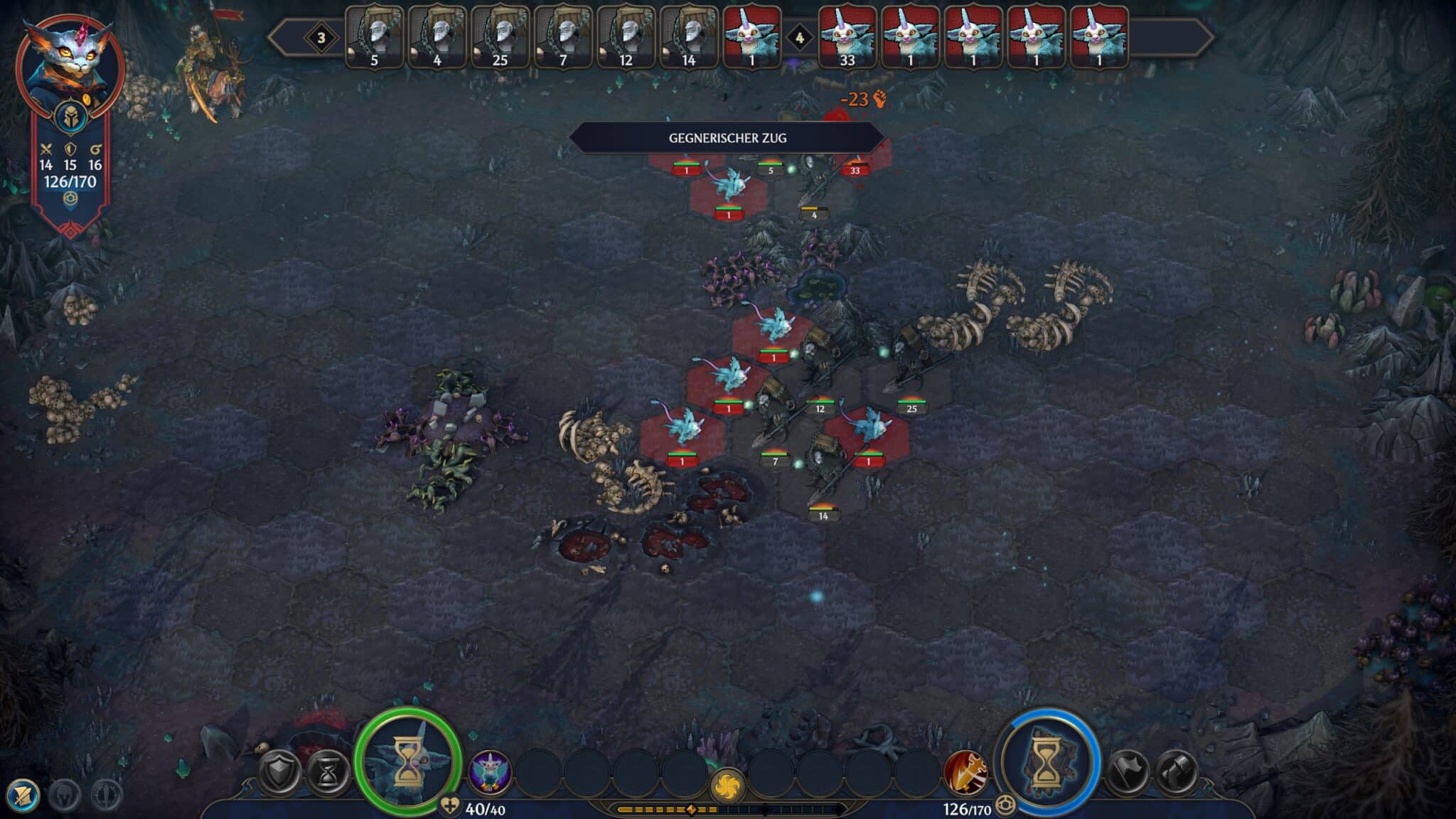
Just like in previous installments, the combat system is designed for efficiency rather than tactical mastery. So instead of exploiting complex synergy effects, control zones, or terrain advantages, Olden Era is all about avoiding damage.
Unlike other games with tactical combat, such as Age of Wonders 4 or Spellforce: Conquest of Eo, when hit, troops lose not only health points but also a portion of the creatures in their unit stack. So, for example, if two squads of 30 minotaurs each face off in battle—setting aside any spells or passive bonuses – the side that strikes first. Because then the side hit first immediately loses ten of its bull-men and has less attack power when counterattacking directly.

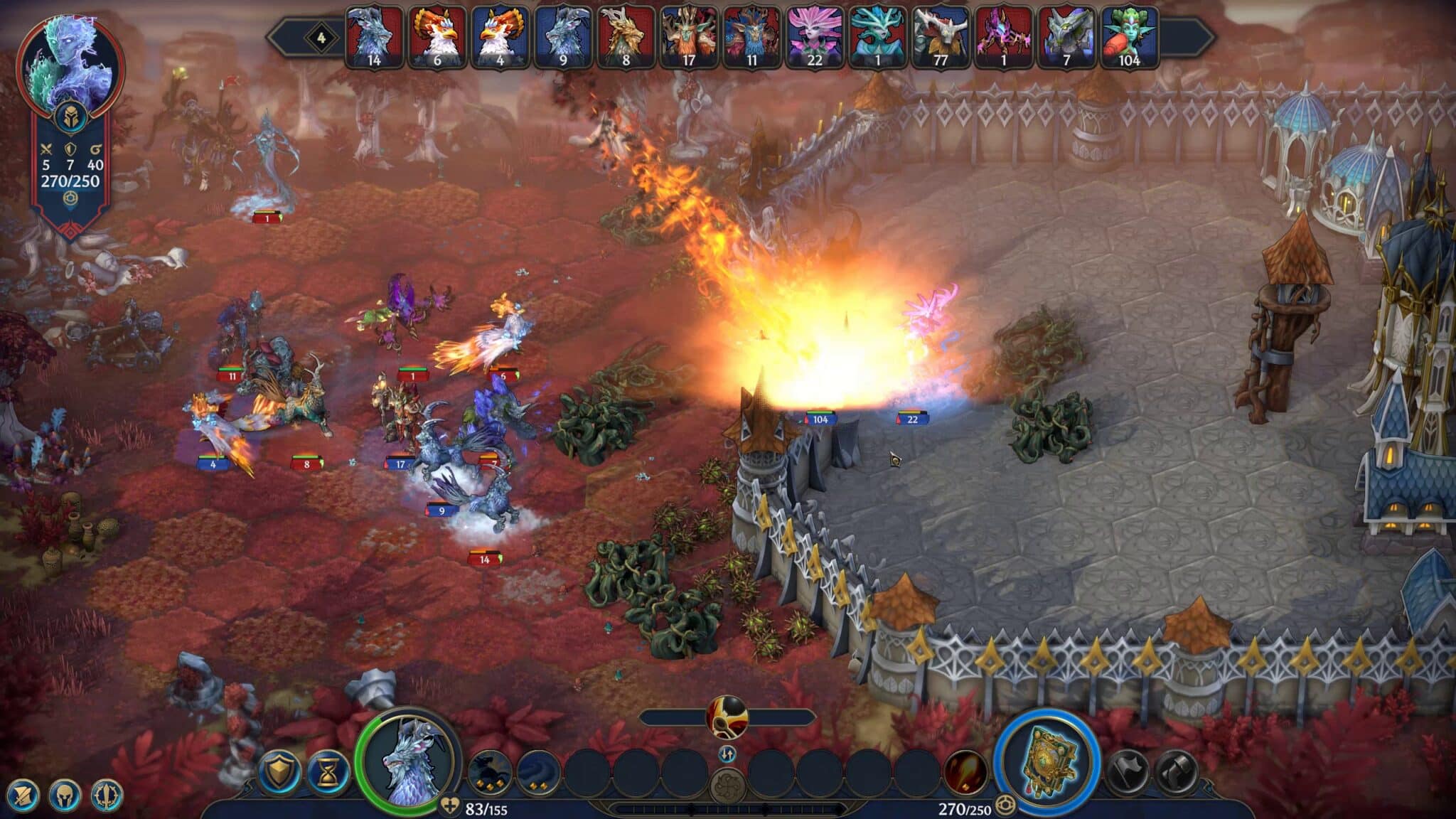
The more unit strength you lose due to enemy attacks, the harder not only the immediate rounds of battle become, but also all subsequent fights. If, on the other hand, you manage to efficiently eliminate enemies through support spells, clever positioning, and focusing your attacks, you’ll grow stronger faster—to the point where at least the neutral enemies, based on their own strength, won’t even engage in battle but will flee instead.
Snowballing is part of the charm
As in earlier Heroes of Might and Magic games, this leads to significant “snowballing” in Olden Era as well. If you defeat the opponent’s main army once in Classic Mode, you’ve essentially already won.
However, this principle is part of the series’ DNA and is partly why it captivates its fans so much. On the one hand, it keeps the combat system relatively simple; you don’t have to spend ages figuring out how to win a battle. So the mental effort is kept to a minimum once you’ve understood your faction and devised a main strategy.
On the other hand, the principle fosters the power fantasy of overwhelming your opponents, which also exists in other genres. In role-playing games, for example, many players get a lot of enjoyment out of becoming so overpowered after a long grind that enemies simply get blown away. The same applies to strategy games, and Heroes of Might and Magic expertly caters to this feeling.
Although the genre mix of role-playing, building, and tactical combat seems quite complex at first glance and certainly features many subsystems, the gameplay is actually quite intuitive. Since there are constantly interesting small decisions to make regarding movement on the world map, upgrades, and equipment, Olden Era doesn’t feel like it’s on rails. The gameplay strikes a pleasant balance, just like in the old days, which immediately captivated us again during testing.
Martin Deppe’s response to the question of whether he had already started playing, even though he was busy working on the Diablo special issue for GlobalESportNews at the time: “No, no. Honestly, no! And even if I had, I could stop anytime!”
A few new features wouldn’t have gone amiss
However, this approach comes with well-known weaknesses that even Olden Era can’t resolve. The tension, in particular, suffers as a result. The same patterns repeat themselves over and over. Once you have a strong main army capable of taking on the largest AI force, the rest is just a matter of grinding through the game.
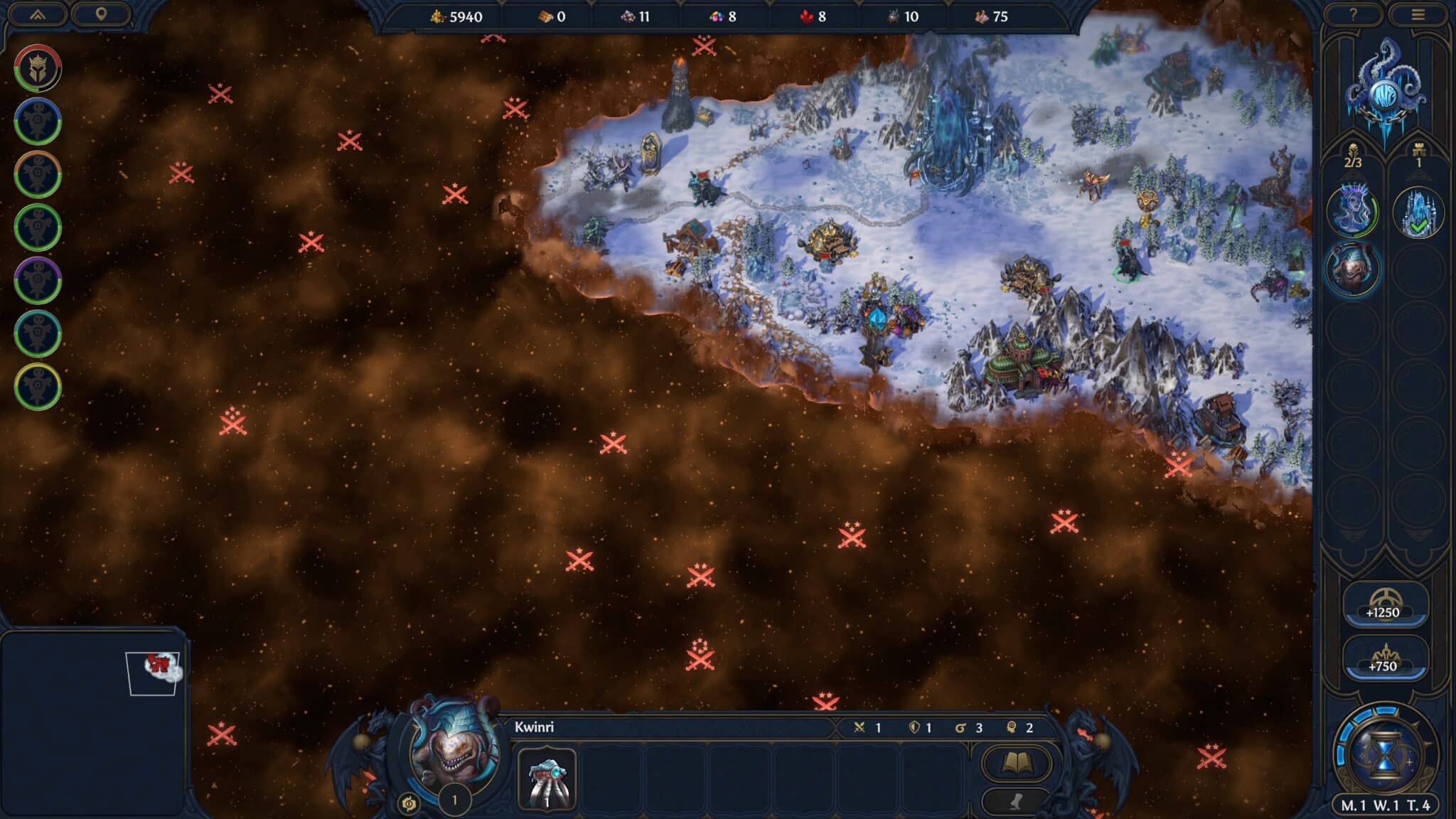
There are no comeback mechanics, no counterplay against overwhelming odds. Even the home advantage in fortified cities doesn’t play a significant role. This is particularly noticeable with the difficulty levels, which aren’t yet perfectly balanced. On the second of four AI difficulty levels (“Normal”), we’re never really in danger. We have time to build up our forces and then gradually eliminate all enemies on a map with seven opponents. That’s satisfying, but a bit more back-and-forth action would be desirable, especially with regard to future replay value.
But when we crank up the difficulty by one level, an unbeatable army is right at our doorstep after the initial phase. Not only does the enemy command significantly more and higher-level units, but the hero also has such high attack and defense stats that our creatures barely deal any damage and drop like flies. Even a tactical masterstroke makes no difference anymore.
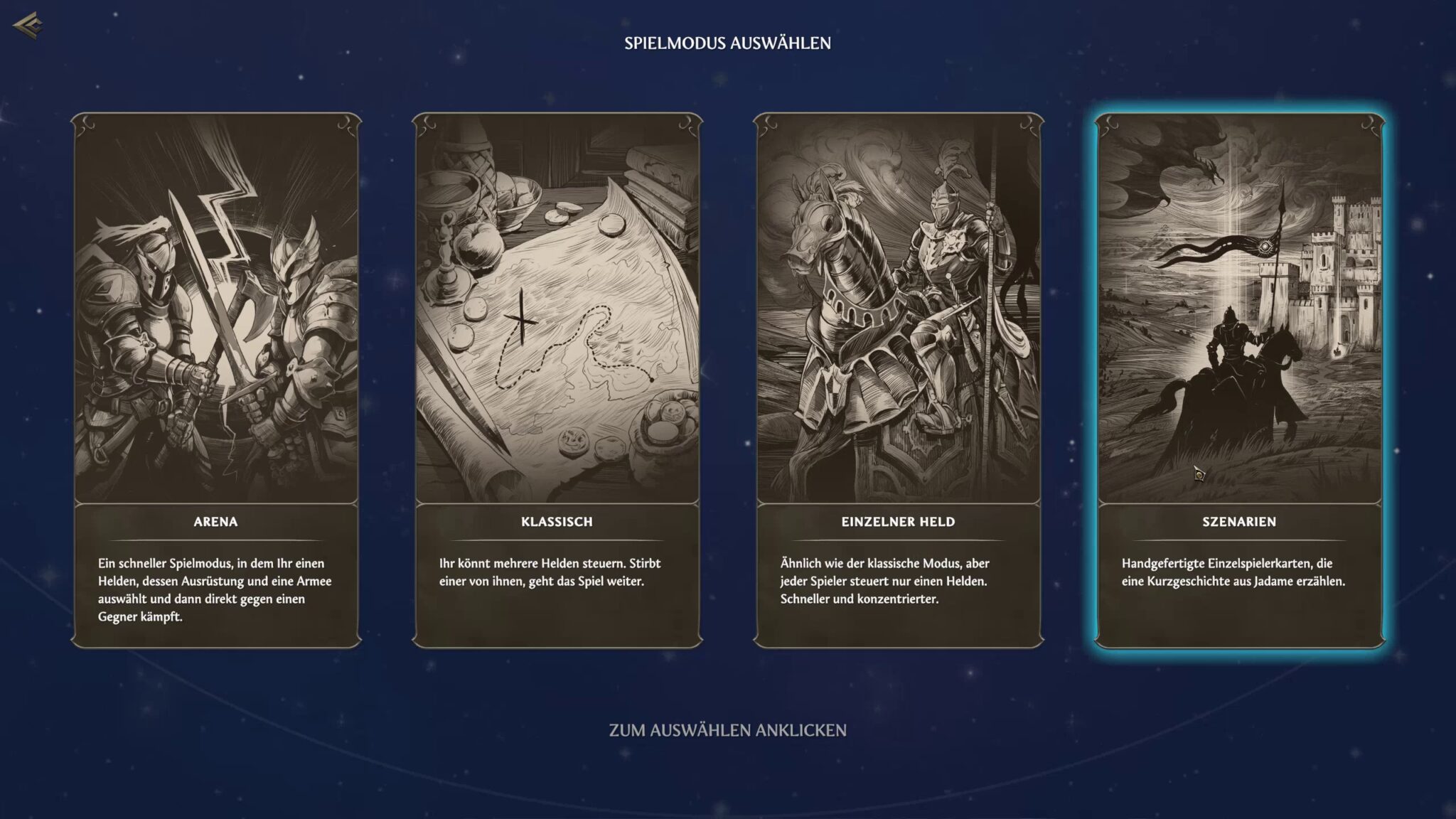
The game offers four game modes for standard single-player. The scenarios, in particular, are a highlight alongside the campaign.
Of course, a player with sufficient expertise in their own faction and a more efficient approach on the world map will build a stronger army from the start and may be able to fend off the attack. But those moments when a game is simply over without any chance to react feel demotivating. This lack of options in the face of overwhelming odds was and remains the greatest weakness of Heroes of Might and Magic.
By Law and Order
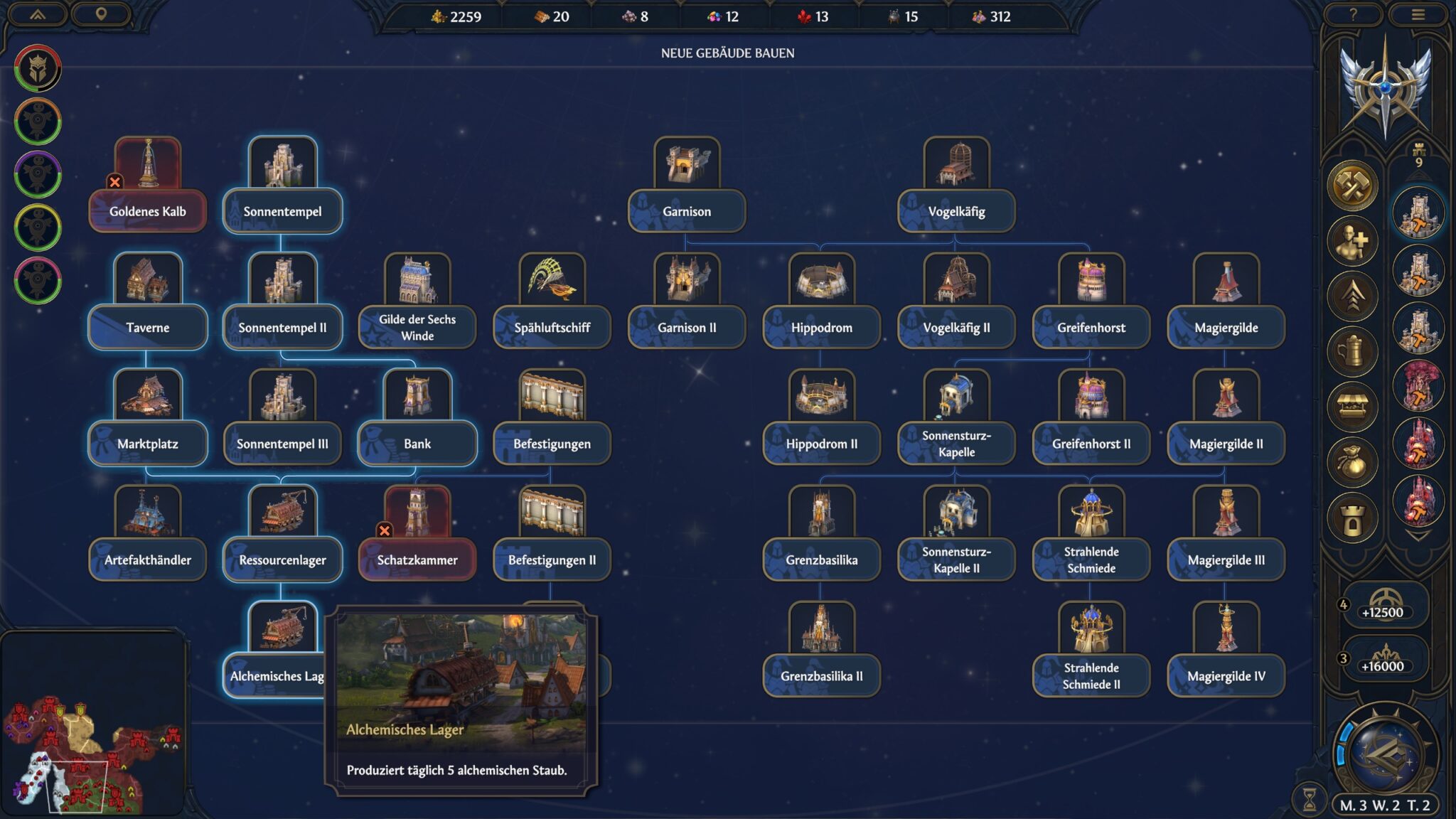
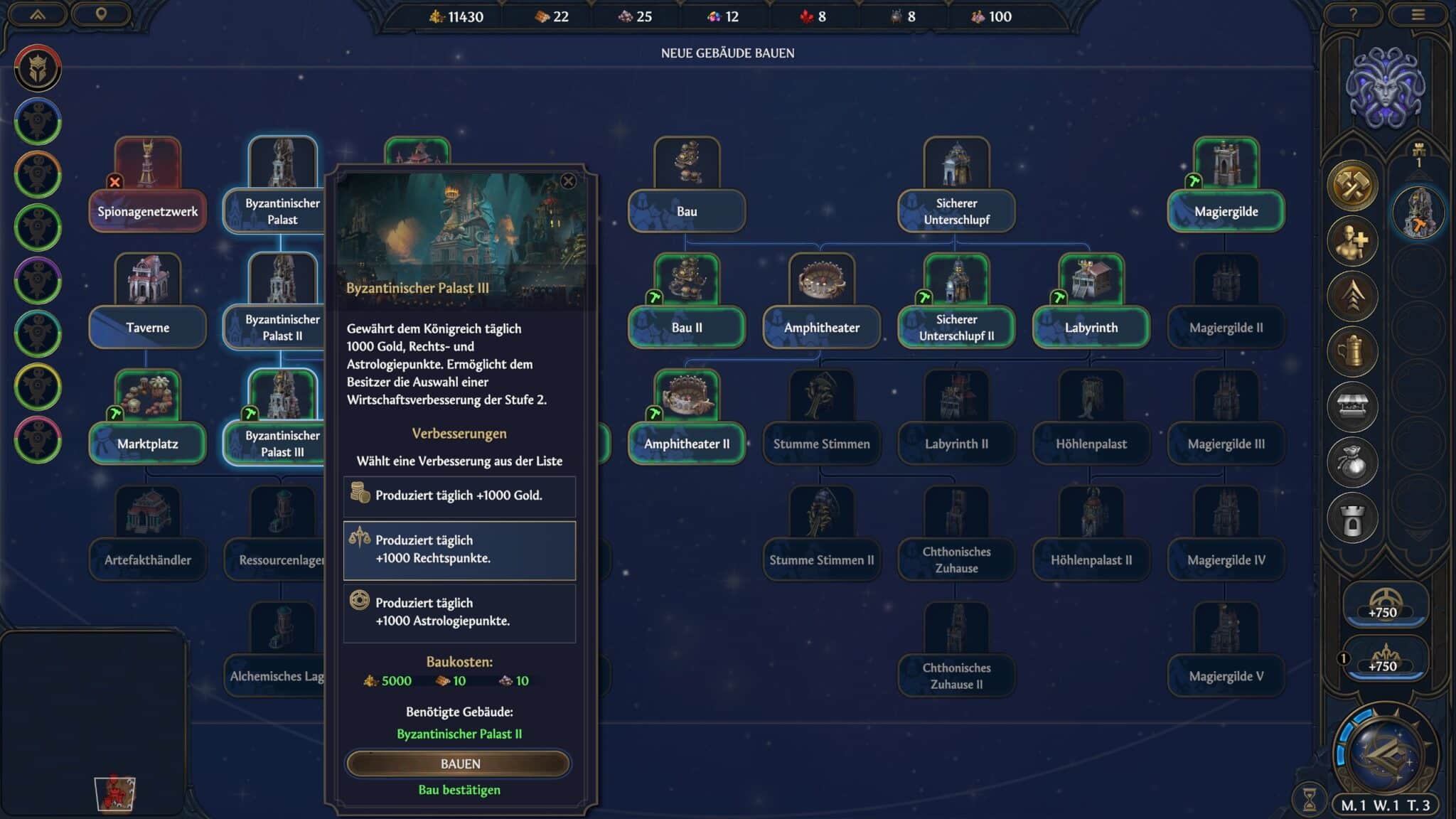
The escalation system is fueled by one of the few genuine innovations in Olden Era. You now collect Law Points primarily through your cities, which you use to enact laws. This is simply another bonus tree where you unlock faction-specific advantages.

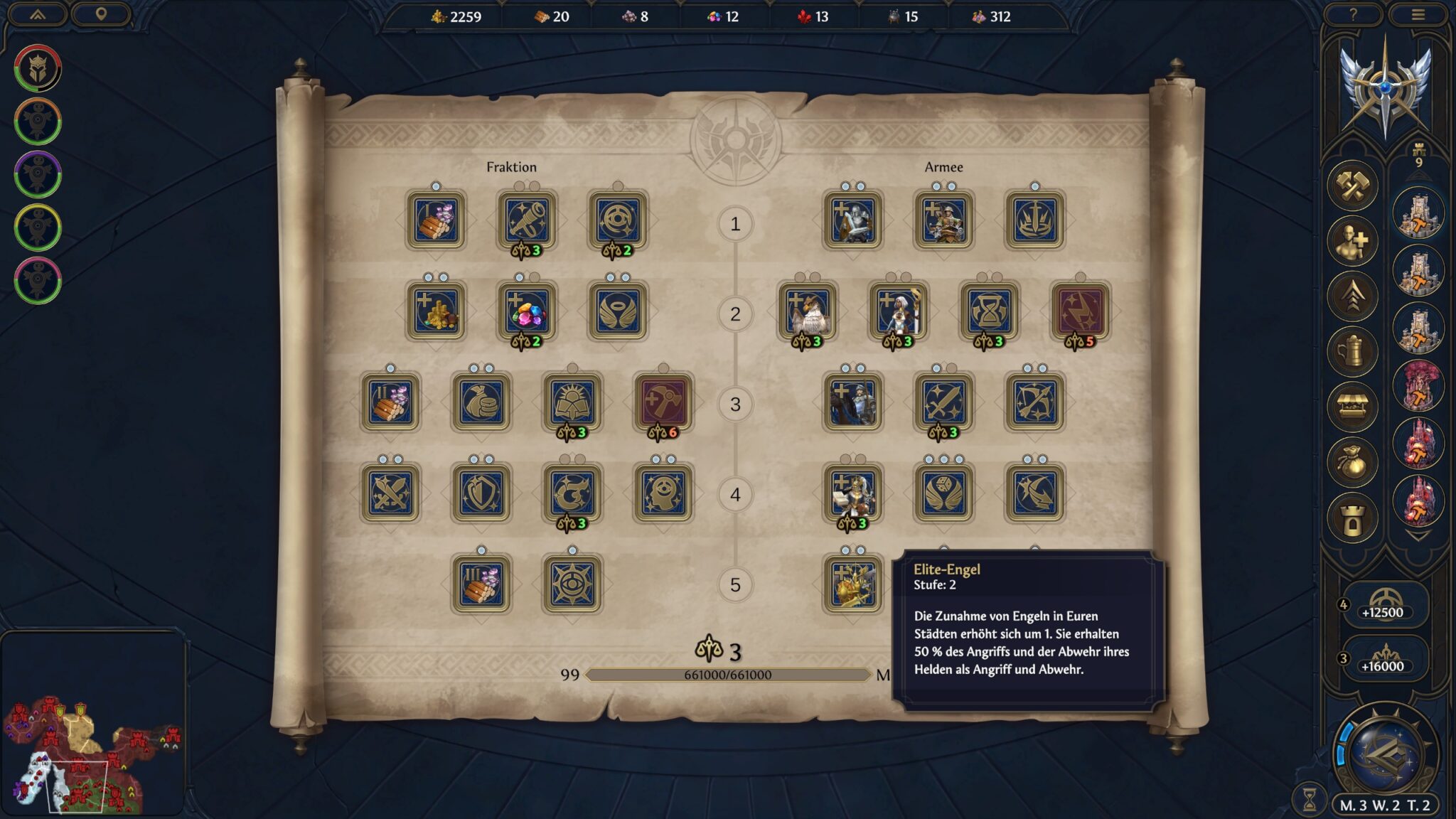
In itself, this is a nice extra, because generating Law Points usually comes at the expense of higher gold income. So you’ll be forced to make trade-offs, especially at the start of the game. In practice, however, the laws grant too many one-dimensional stat improvements.
https://www.global-esports.news/wp-content/uploads/2026/05/You-can-zoom-in-close-at-any-time-scaled.jpg
As a result, they lead less to a further refinement of your own playstyle and more to a general increase in strength—which then favors snowballing in the long run. After all, more cities produce more law points.
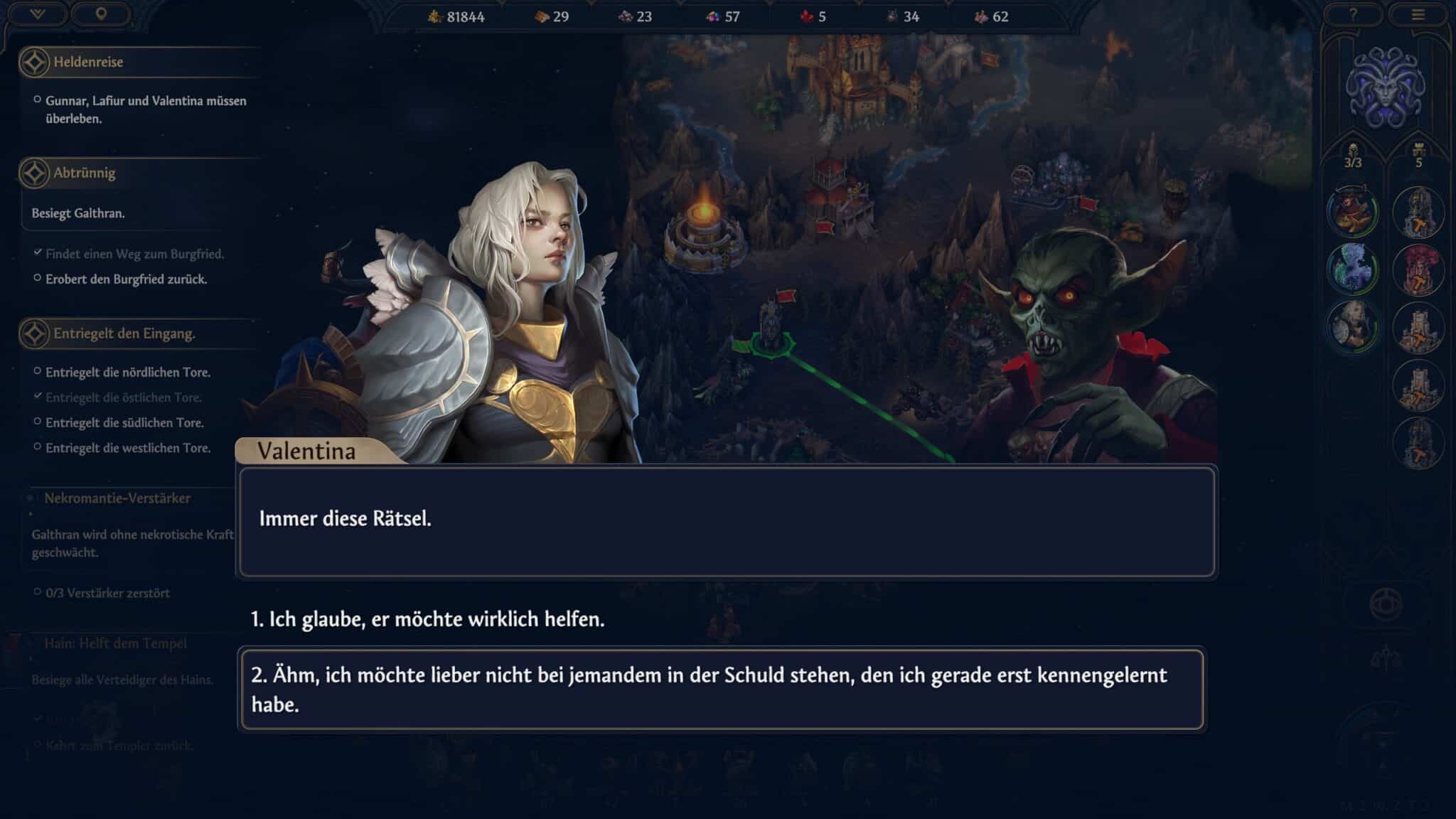
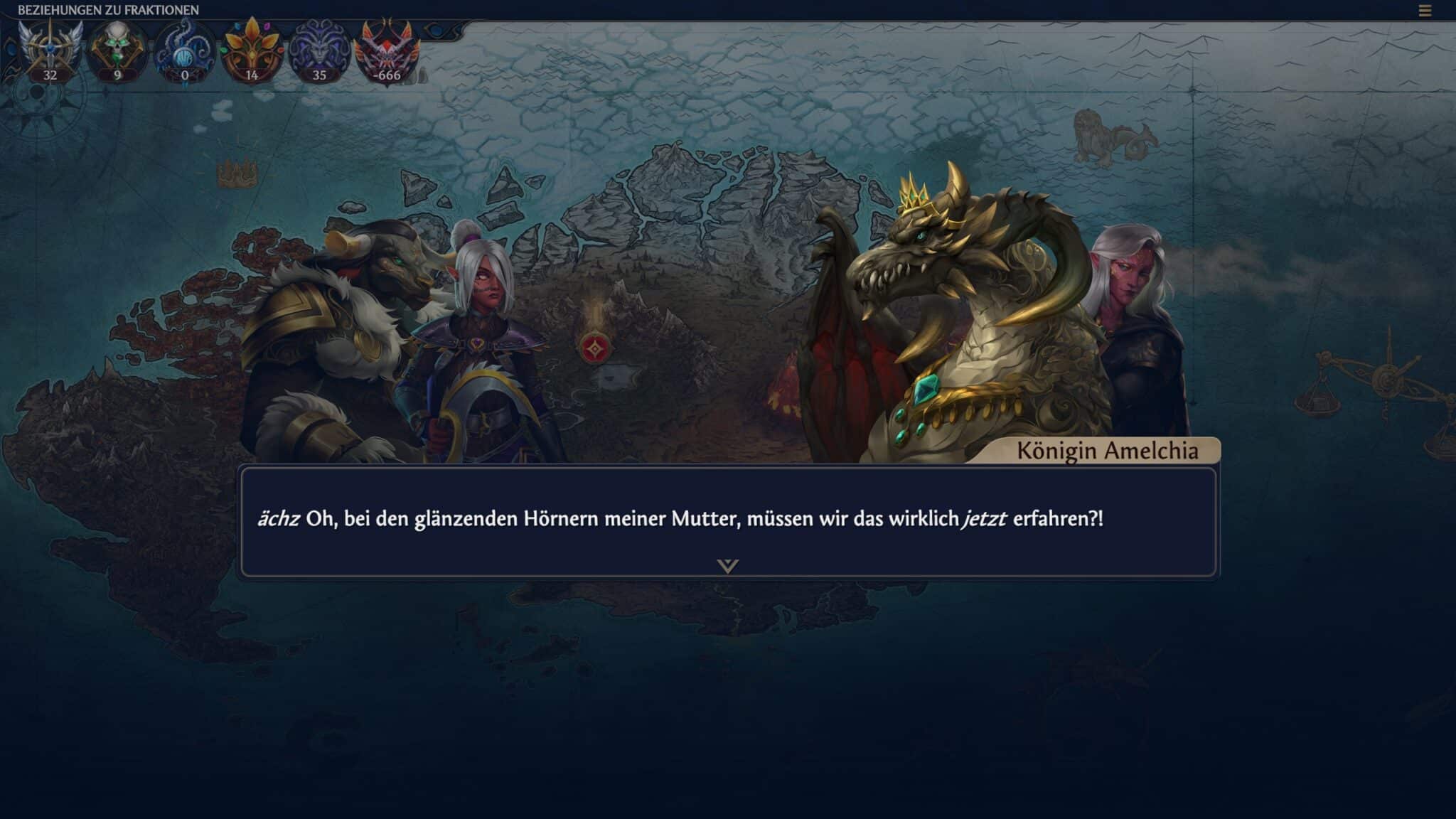
We’re accordingly looking forward to the additional acts planned for the future, as well as the Underworld level familiar from earlier installments. The same praise applies to the scenarios, which also feature some storyline and are available to you independently of the campaign.
Overall, the content is fantastic, especially for an Early Access title. In addition to the classic game mode, campaign, and scenarios, you get many very different pre-made maps, as well as a random map generator and a map editor. There’s a hot-seat mode, multiplayer with leaderboards, a spectator mode, and an arena where you face off against each other in a single battle.
The game also scores points when it comes to graphics. It evokes nostalgia while still feeling modern. Developer Unfrozen just needs to polish the interface and controls a bit more. Some actions require an unnecessary number of clicks, and the tooltips don’t follow a consistent system, which sometimes makes it frustrating to access certain information.
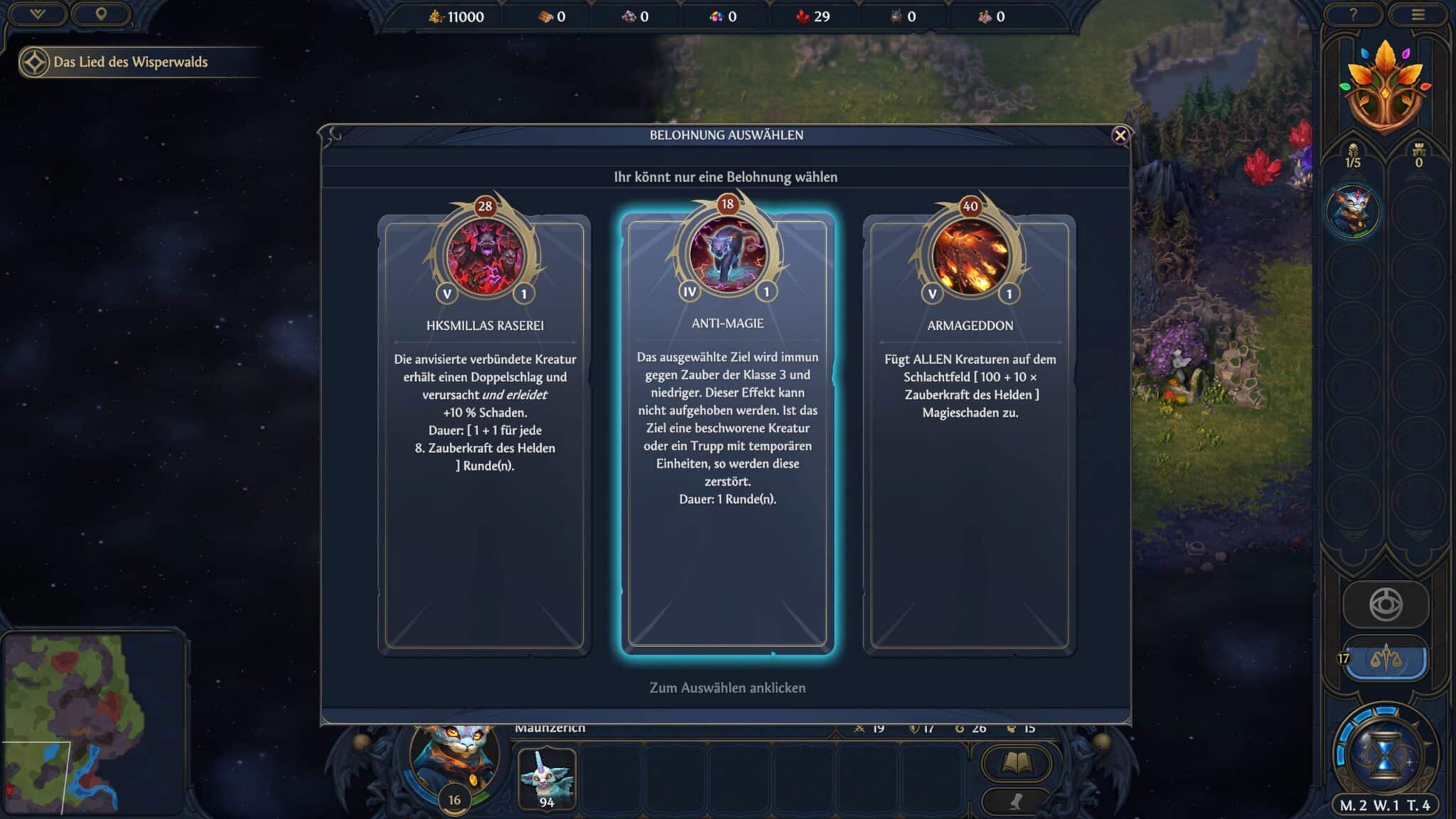
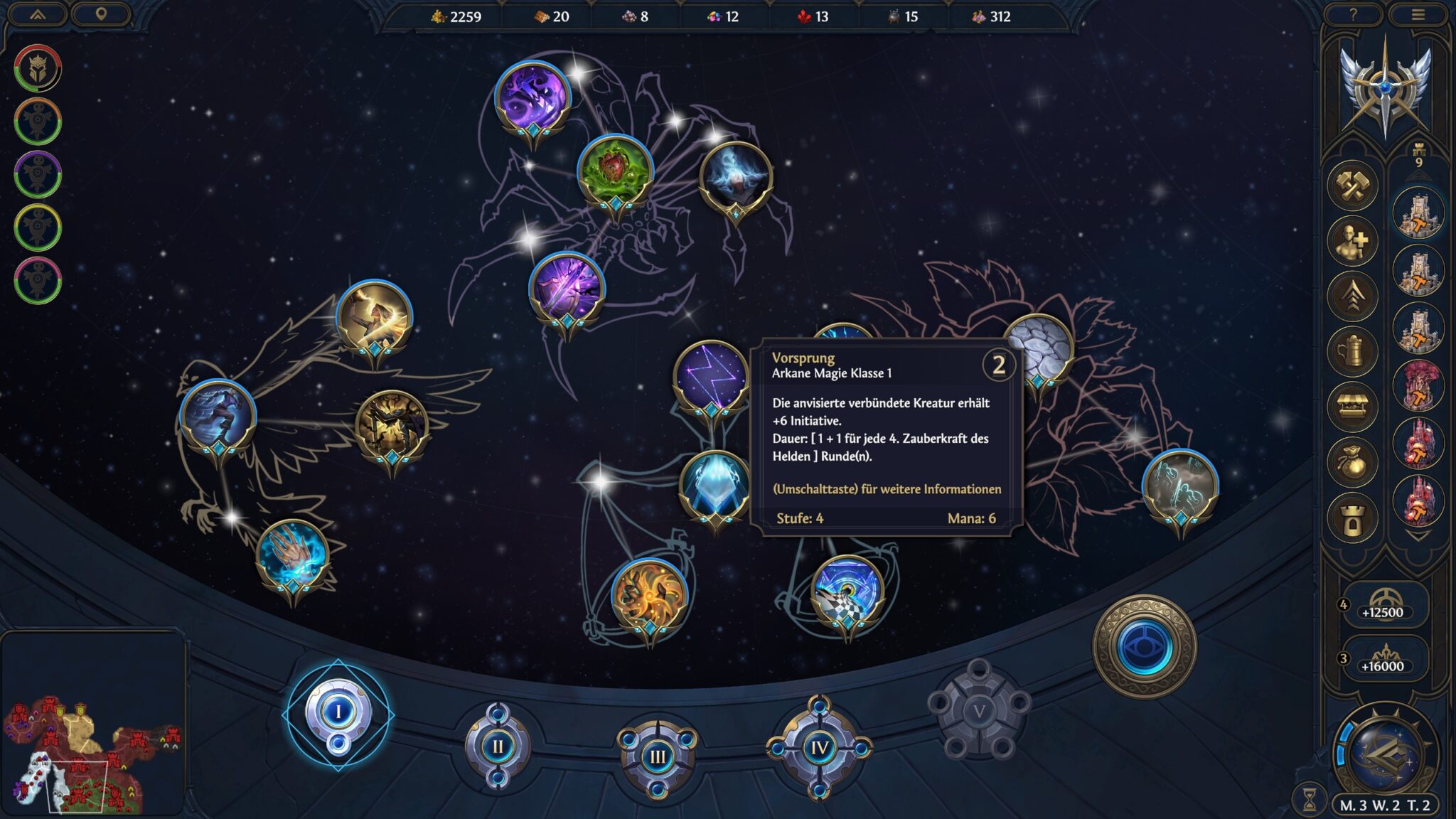
In return, you get tutorials and challenges that clearly demonstrate key gameplay mechanics and encourage you to think for yourself. The only thing missing so far is a proper introduction to the factions. Just like with the balance, the developers should address this during Early Access. But that’s exactly what the early release is for.
Despite these minor flaws, Olden Era could easily launch as a finished game if a large portion of the campaign weren’t still missing. Otherwise, Olden Era wouldn’t even need Early Access.
Preliminary Rating Box
| Category | Pros and Cons | Rating |
|---|---|---|
| Presentation | + Detailed visuals + Pretty city screens + Ability to zoom in deeply – Interface controls sometimes suboptimal ? Will there be a glossary? | 3-4/5 |
| Game Design | + Gameplay with a smooth flow + Factions are clearly distinct + Always something to do. + Power fantasy to live out – Not all units are interesting | 4/5 |
| Balance | + Resources well-balanced + Spells serve a purpose. + Clever tutorials and challenges – Loss of tension halfway through the game ? Are the difficulty levels still being refined? | 3-4/5 |
| Story/Atmosphere | + Art style fits the series + Atmospheric background music + Decisions have consequences – Lackluster campaign presentation ? Does the story stay engaging? | 3-4/5 |
| Content | + Many game modes + Six factions with unique units + Many specialization options + Long first act of the campaign ? What else is coming (e.g., Underworld level)? | 4-5/5 |
| Rating Trend | “Olden Era delivers a more than worthy prequel by skillfully capturing the essence of Heroes of Might and Magic.” | 85 to 88 |
Editor’s Conclusion
Before testing Olden Era, I had my doubts about whether I would enjoy the familiar Heroes of Might and Magic formula as much as I used to. Twenty years ago, after many hours, it had simply become a bit stale.
But far from it! I immediately had a lot of fun with it again, partly because Olden Era beautifully highlights the series’ core features and presents them in a modern package. The varied campaign missions, in particular, won me over right away.
Only the classic single-player mode, with its one-dimensional dynamics and snowballing, just doesn’t do it for me anymore. It really needs some new approaches to break out of the same old routines.


