





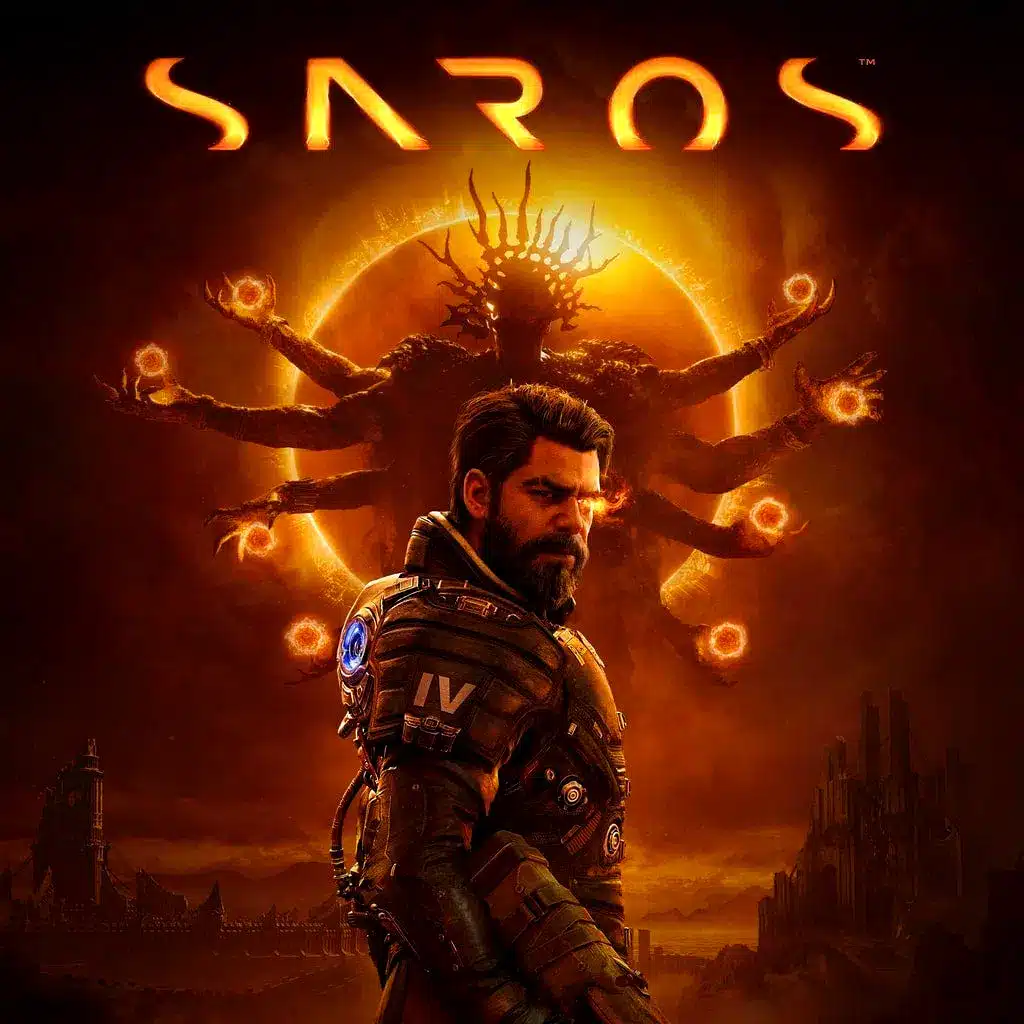
Books and movies tell good stories, too. But only games like Saros put you at the center of a drama you can experience with all your senses.
Dying is fun. At the end of my adventures in Saros, this single sentence sums up why I consider Housemarque’s shooter to be one of the best action games of the last ten years.
Because, to me, modern games have forgotten how to do death right. Either I don’t care at all because there are no relevant consequences. Or it frustrates me with excessive penalties that don’t respect the time I’ve invested.
Above all, there are hardly any single-player games left that give me the feeling of getting just a little bit better with every minute. And not because I have better stats or stronger weapons, but simply because I’m actually playing better. Because even though I may have just died, I’m absolutely convinced that things will go differently next time.
Why Saros has reignited this long-lost fire of ambition within me is something that’s very easy to feel, but very hard to explain. Of course, I’ll still do my best. Because it’s you guys.
Table of Contents
Great storytelling, but a small “but”
Like its quasi-predecessor Returnal, Saros is a roguelite shooter that tells an exciting story despite—or perhaps because of—the constant need to start over from the beginning.
You play the so-called Enforcer Arjun Devraj, who, together with his team, is tasked with uncovering the fate of three missing expeditions on the planet Carcosa. However, the Soltari Corporation, which commissioned the mission, isn’t all that concerned about the missing people; they’re much more interested in how to mine Lucenit—the miraculous material native to Carcosa—as profitably as possible.
Problem number 1: Something goes terribly wrong during the landing, leaving you stranded on the planet with no hope of rescue.
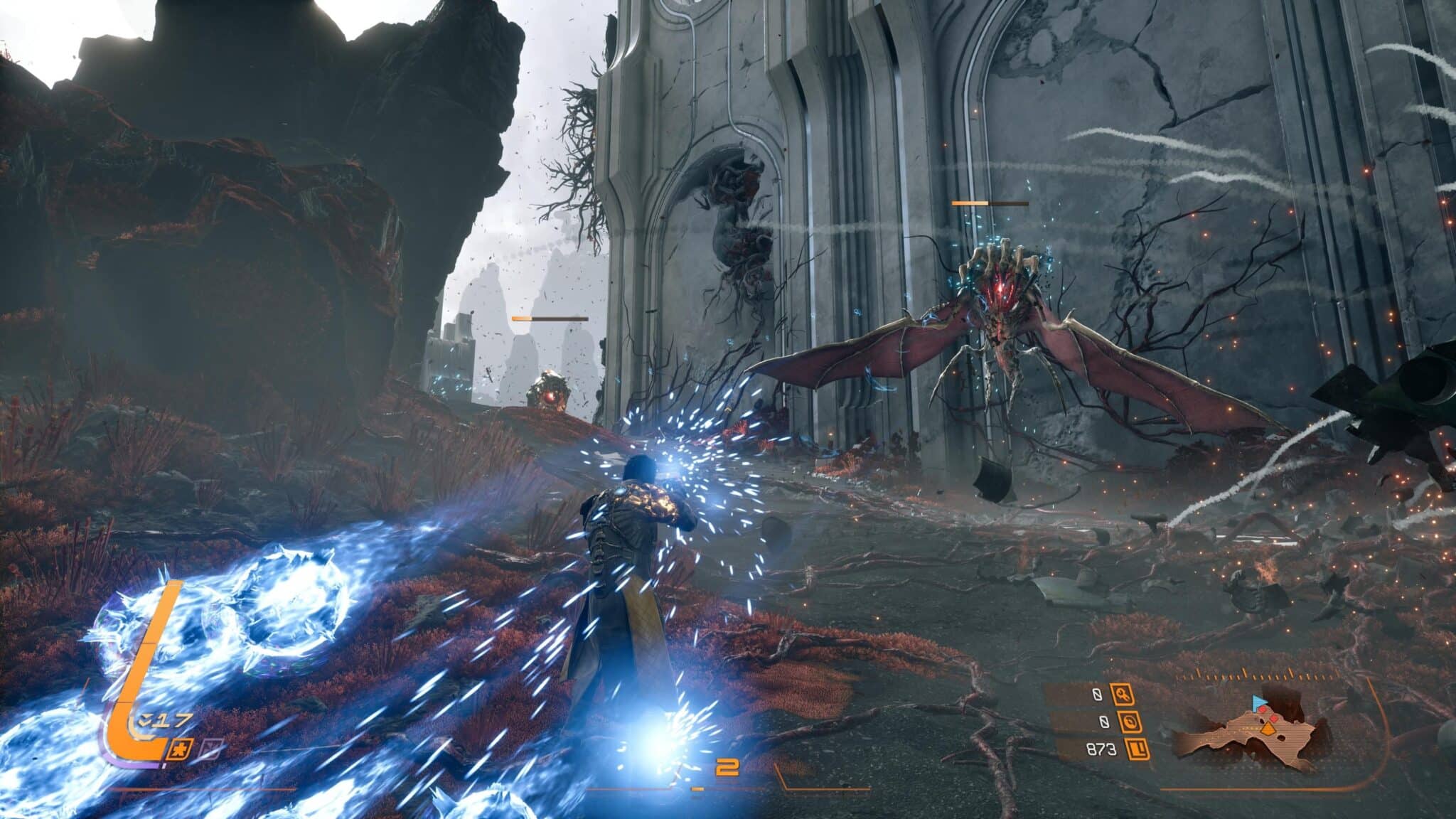
Problem number 2: Everything on Carcosa wants to kill you. This applies not only to the native fauna, but especially to the planet itself, which is plagued by a mysterious solar eclipse that apparently drives all living things mad. Unfortunately, this also applies to your crew.
I don’t want to reveal much more about the story, because a major appeal of Saros lies in deciphering this sci-fi horror mystery puzzle piece by piece. What happened to the expeditions? Why does Arjun just set off alone, disregarding his commander’s orders? And above all: Why does he wake up alive and well in the crew camp after just being torn to shreds by a monster?
Like its quasi-predecessor Returnal, Saros raises an insane number of questions, especially at the start of the game, but it answers nearly all of them satisfactorily by the end of the roughly 20- to 30-hour campaign.
Saros also takes the storytelling up a notch. For one thing, there are significantly more cutscenes that reward you appropriately, especially after successful boss fights, and help fill in the crucial missing pieces of the puzzle.
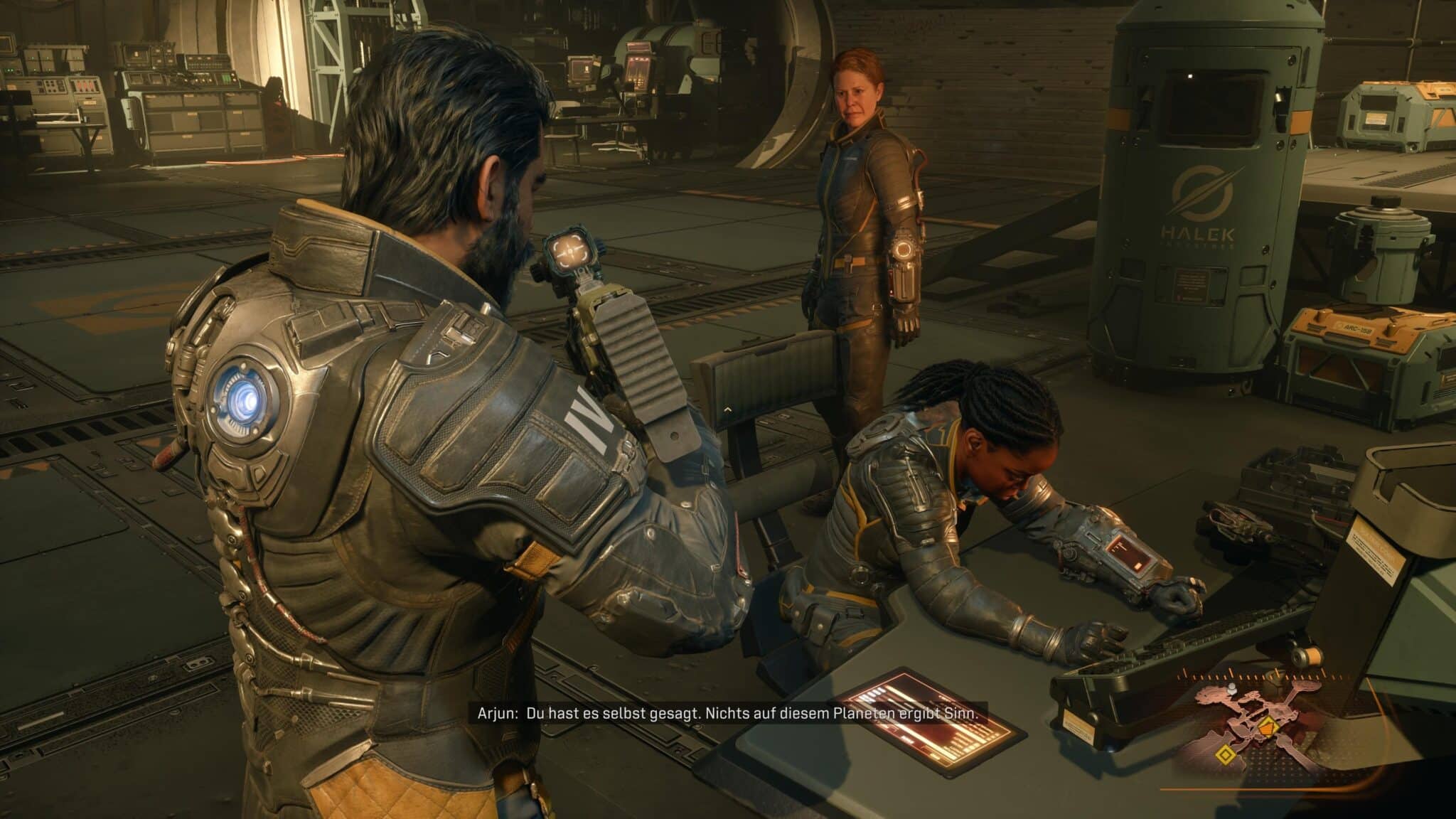
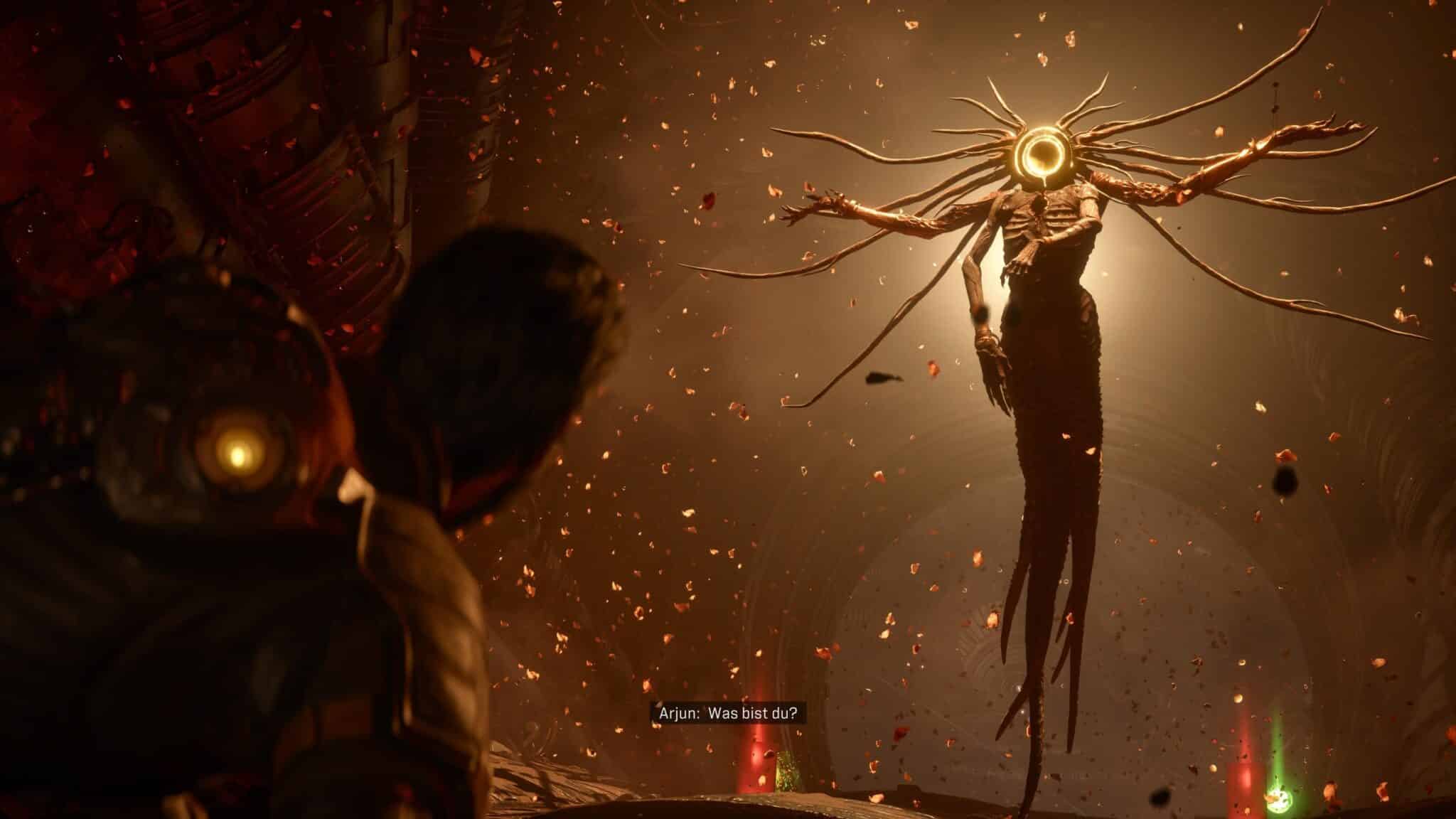
On the other hand, Saros’s narrative style borrows almost brazenly from its roguelite counterpart, Hades. Just like in its obvious inspiration, you’ll repeatedly encounter other characters during your runs whom you can talk to. And just like in its obvious inspiration, after every run you’ll also chat with your crewmates at camp, who reflect on what happened and thus drive the story forward.
However, Saros offers significantly less dialogue than Hades, which eventually becomes an atmospheric issue. Because if you die too often, your companions will eventually have said everything they have to say and will just stand around silently. The camp becomes a lifeless backdrop. And believe me: you will die often!
Bullet Hell as a Gamer’s Heaven on Earth
Saros offers an incredible amount in terms of story and gameplay, but it also demands a lot in return. Namely, that you immerse yourself in one of the most complex combat systems in the history of action games.
The basic principle remains the same as in Returnal: Saros combines classic third-person action with a so-called bullet hell shooter. In plain language, this means that dozens, if not hundreds, of projectiles rain down on you every second of the game. This makes proper positioning and dodging much more important than actual aiming.
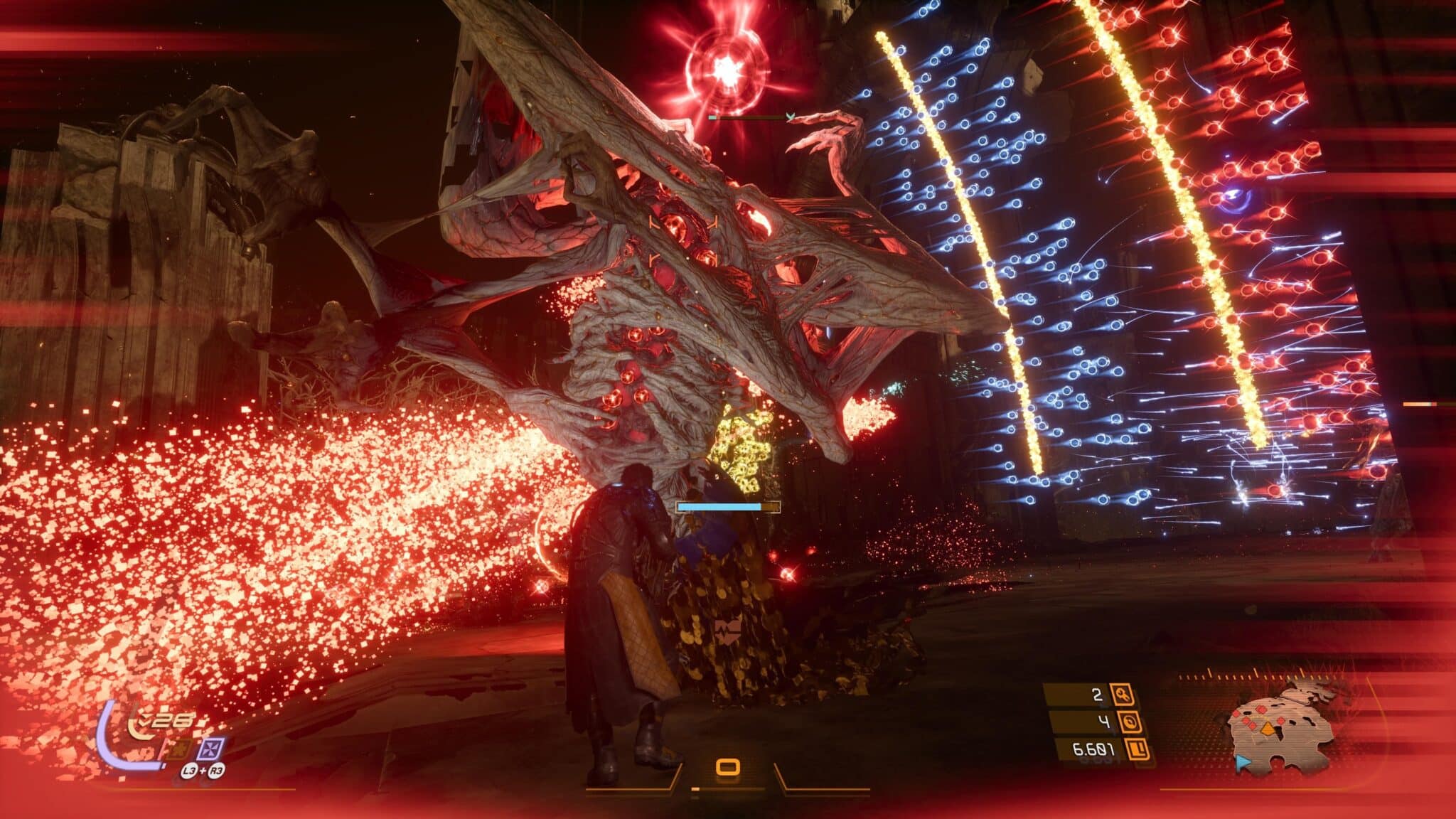
So far, so Returnal, but its bullet hell feels like a relaxing vacation compared to Saros. Here are just the most important things to keep in mind in the heat of battle:
- Arjun can activate ashield that converts blue projectiles (and only those!) into energy for his special weapon.
- Only by firing yourspecial weaponcan you heal corruption, which otherwise permanently reduces your health bar and is triggered by hits from green projectiles.
- Red projectilesdrain your shield in no time. The only solution here is to dodge. Or use a defensive counter, which you unlock about halfway through the game and which, if timed correctly, fires the projectiles back at enemies.
- Yellow area attacksdestroy your shield on the very first hit. However, your dodge dash makes you immune for a fraction of a second.
- Some enemies have ared shieldthat you can only break with a melee attack.
- Other enemies deploy apurple shieldthat covers what feels like half the battlefield, protecting all enemies beneath it and forcing you into close combat.
- Green towersconstantly heal the enemies connected to them and must therefore be destroyed first.
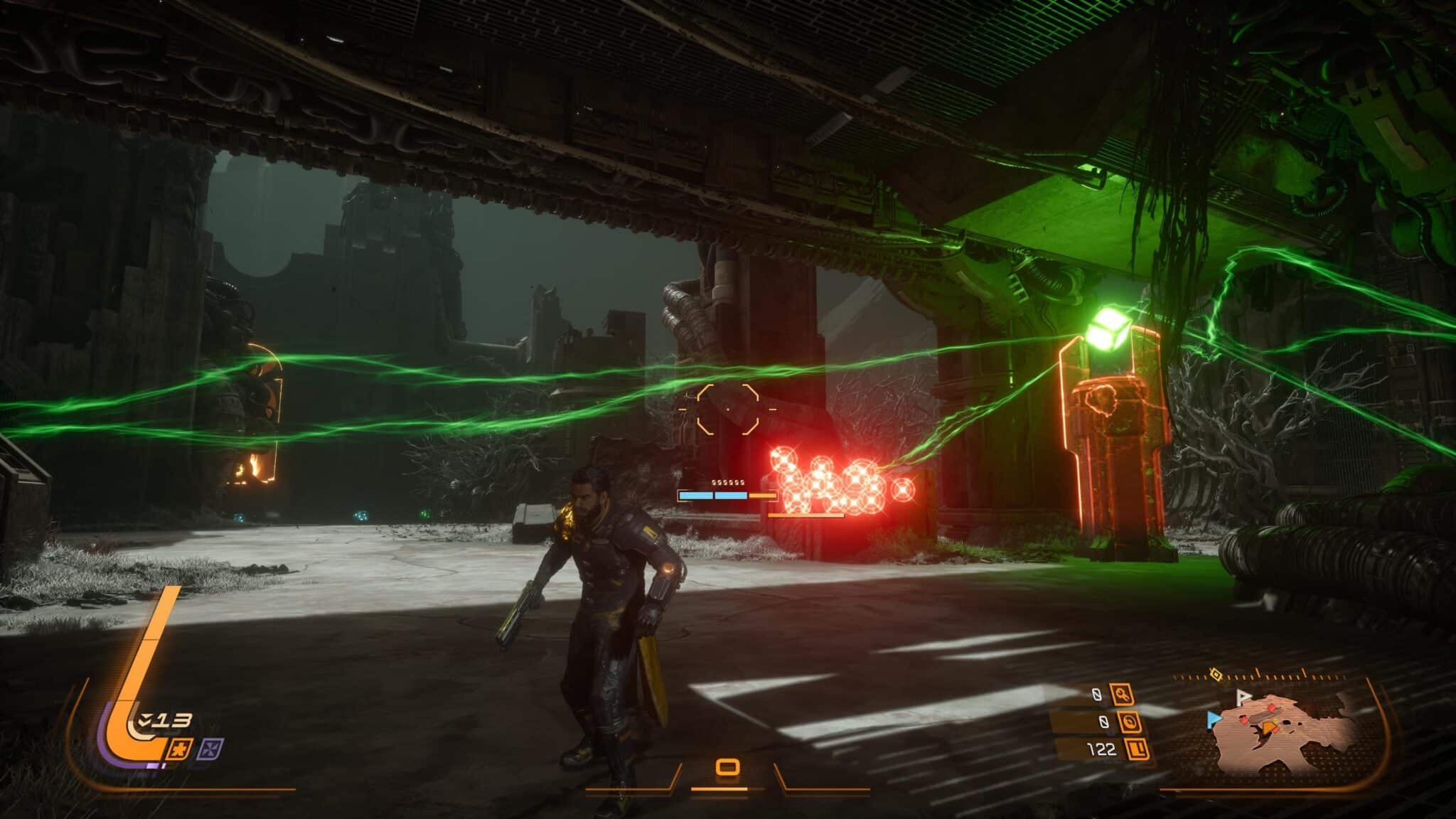
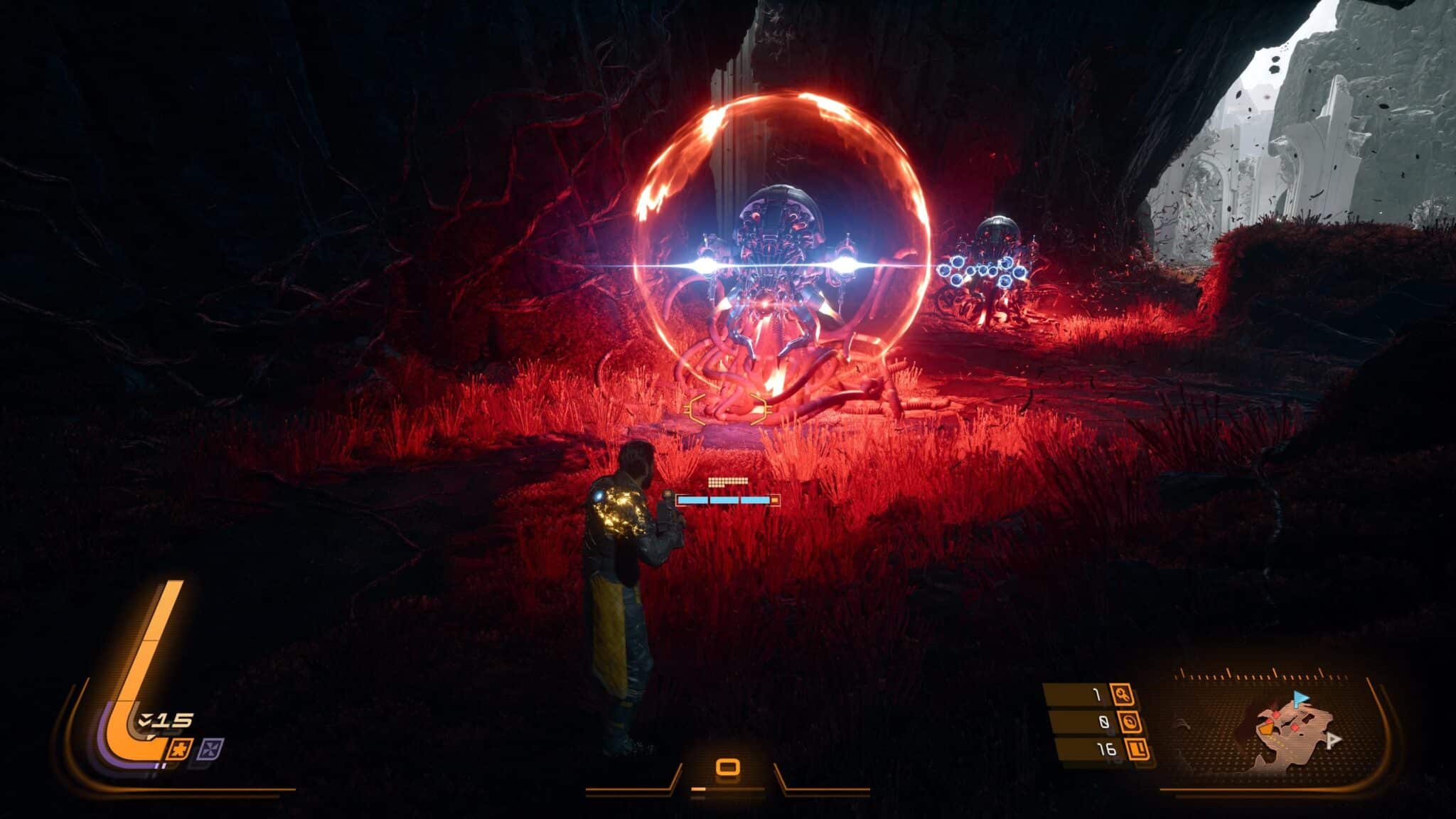
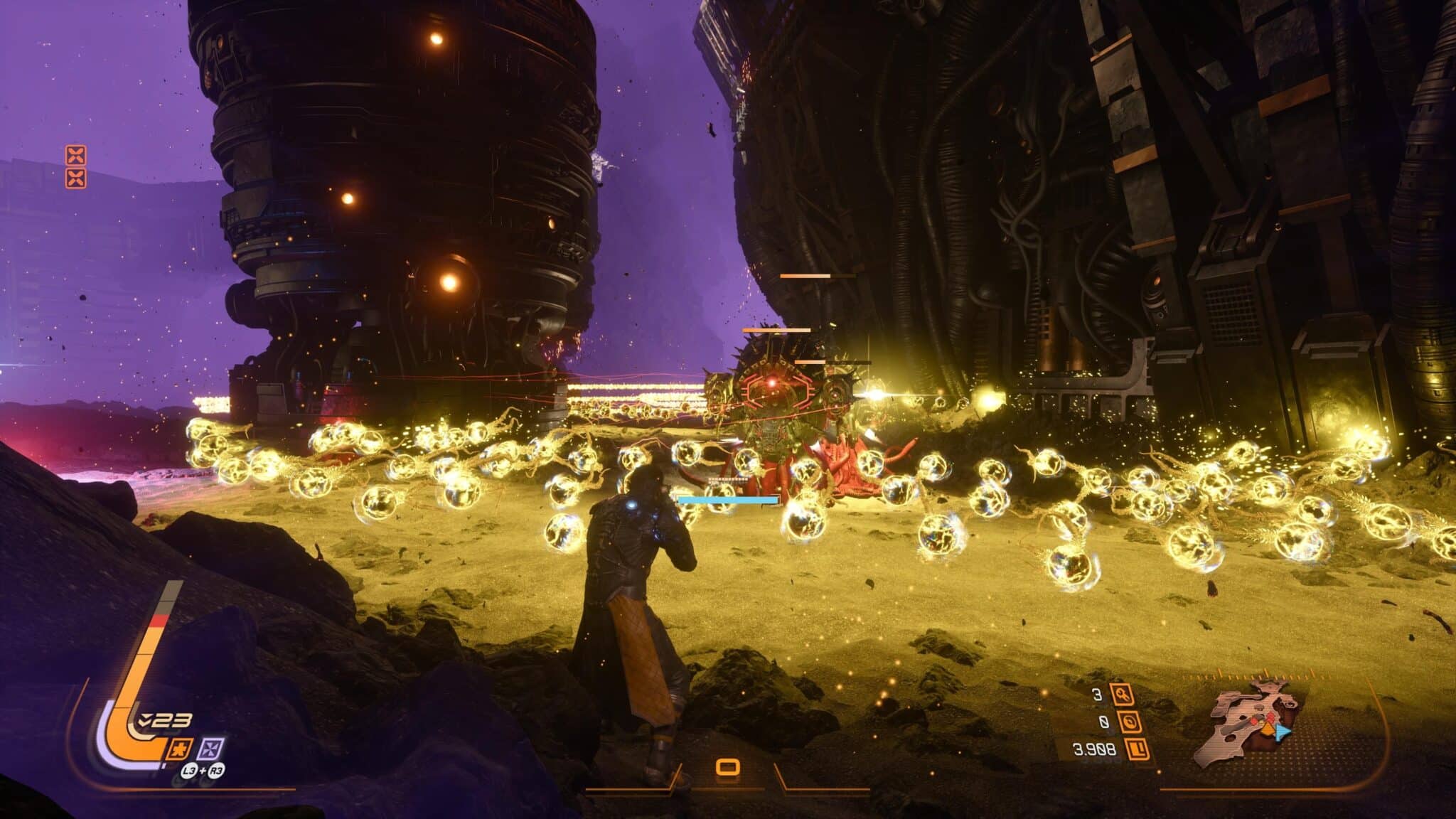
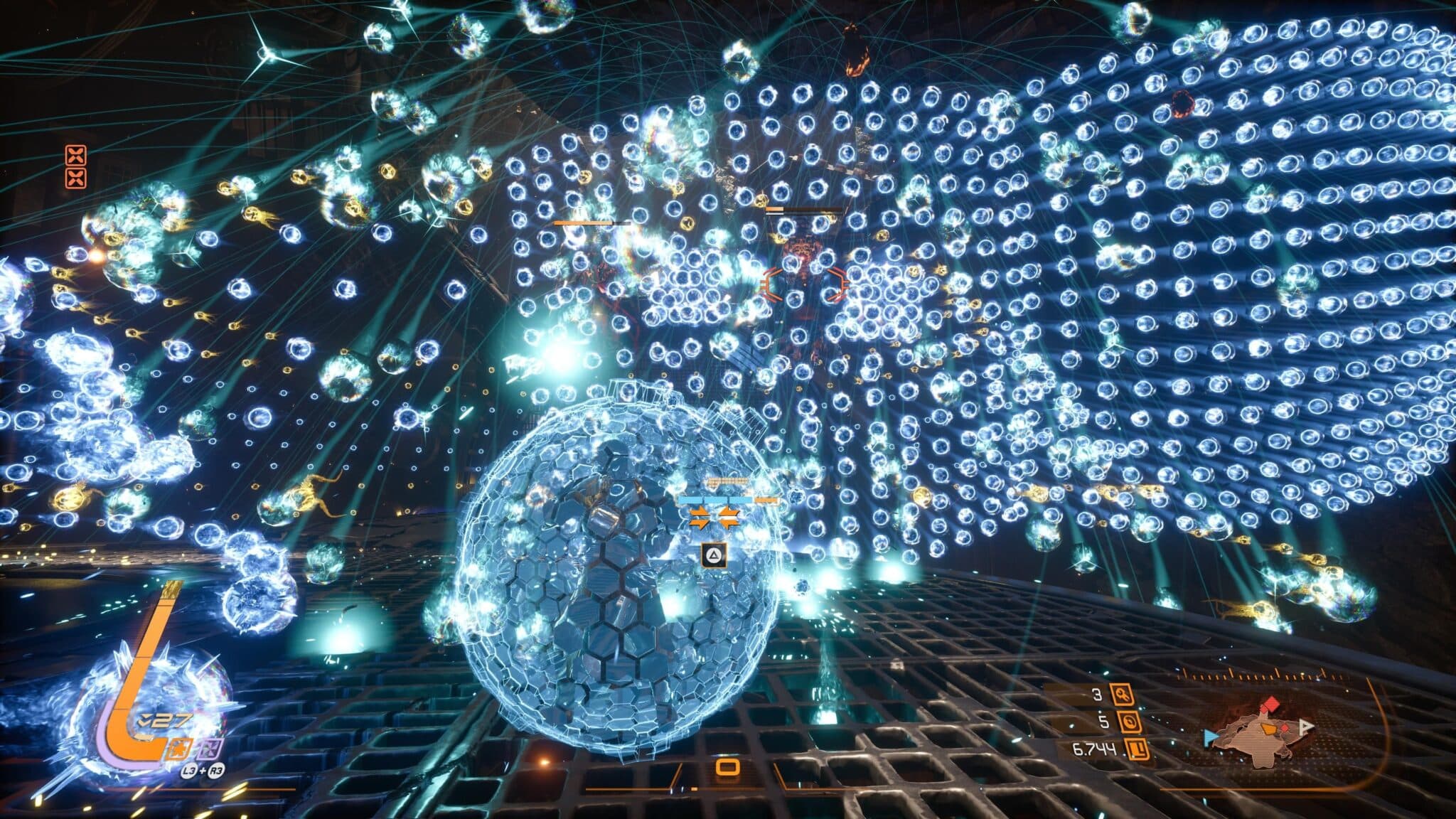
And of course, Arjun gradually expands his arsenal and repertoire of maneuvers throughout the campaign—including the aforementioned defensive counterattack, a grappling hook, and a powerful super attack, which you’ll need to painstakingly charge up with adrenaline.
When it clicks, it really clicks
Well, is your head spinning yet? What sounds like hopeless sensory overload in theory turns into a virtuoso combat ballet in practice, for two reasons—something I’ve rarely experienced in my 40 years as an action fan:
- Perfect control:Whether running, jumping, dashing, parrying, aiming, or shooting—every second of the game, Saros gives me the feeling that Arjun obeys my commands with the precision of a Swiss watch. When I die, I always know exactly what caused it. And it’s never the game’s fault.
- Perfect clarity:It was, of course, no coincidence that I mentioned the bullet colors above. Saros uses all your senses to convey information. Thanks to the PS5 controller’s sensational haptic feedback, you’ll feel hits just as intensely as the perfect reload of your weapon. And thanks to support for Tempest 3D AudioTech, you can use 3D headphones or a surround sound system to pinpoint your enemies acoustically almost as precisely as you can visually.
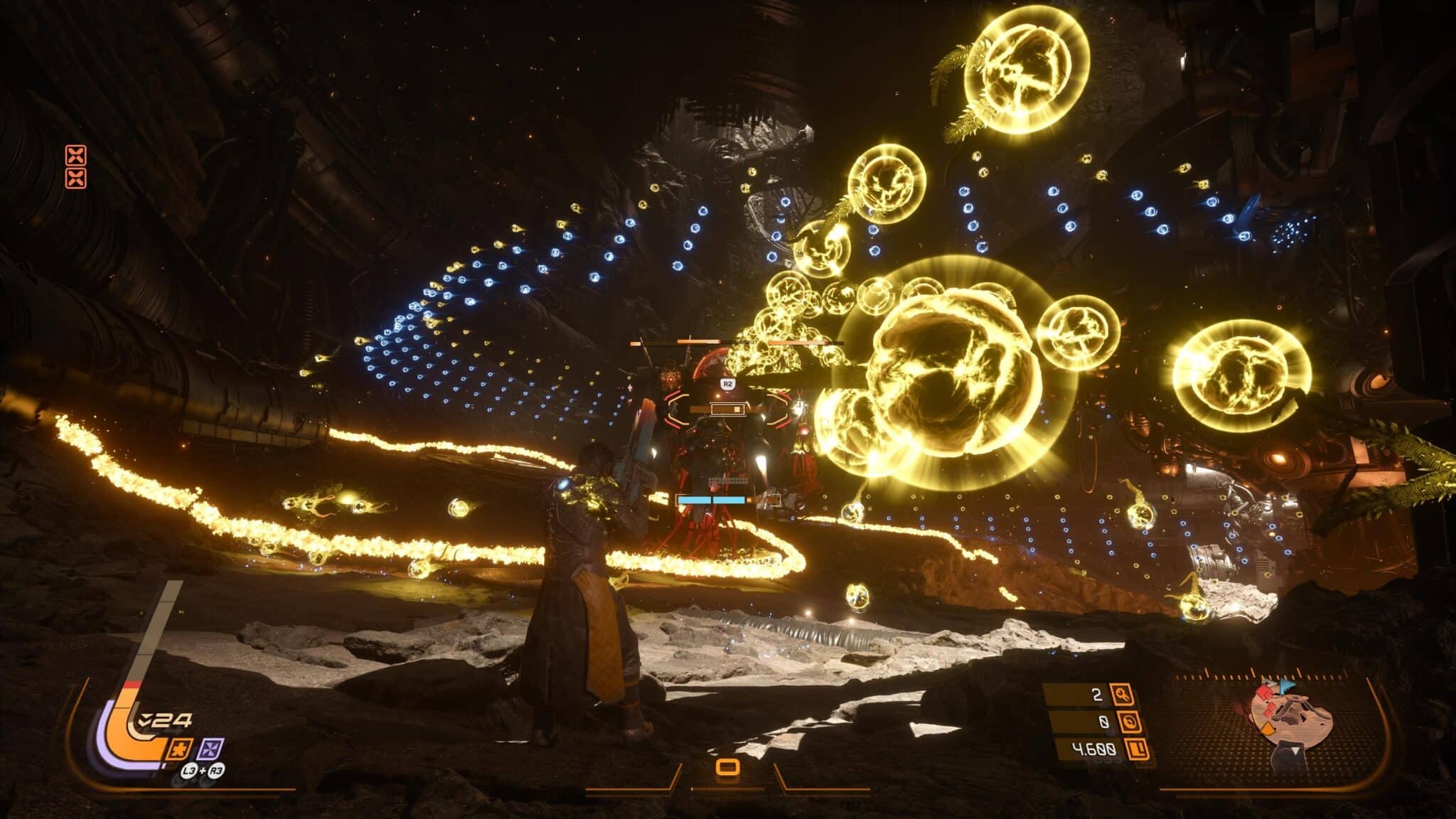
The complexity, precision, and clarity of the combat are also so important because they allow you to actually improve just a little bit—but often crucially—with every playthrough. And at some point—maybe after 90 minutes, maybe only after three hours—it clicks so loudly that it’s probably the loudest click you’ve ever heard in a game.
Suddenly, you recognize the patterns in the hail of bullets. The chaos turns into a puzzle that you just have to solve. You no longer see the enemies as mere obstacles, but as part of the solution. A solution that you think about less and less with every run, but instead feel more and more intuitively.
This “click” moment was also present in Returnal, though the path to it was paved with far more pain. Which finally brings us to the fun of dying.
Motivating Failure
In addition to your steadily improving feel for the game, there are two other reasons why death in Saros is more motivating than frustrating.
1. The short runs:In Returnal, if you died from a silly mistake, you could end up wasting 90 or 120 minutes of survival gameplay if things went wrong. In Saros, it’s a maximum of 30 minutes, during which you almost always discover something new—especially recordings from previous expeditions.
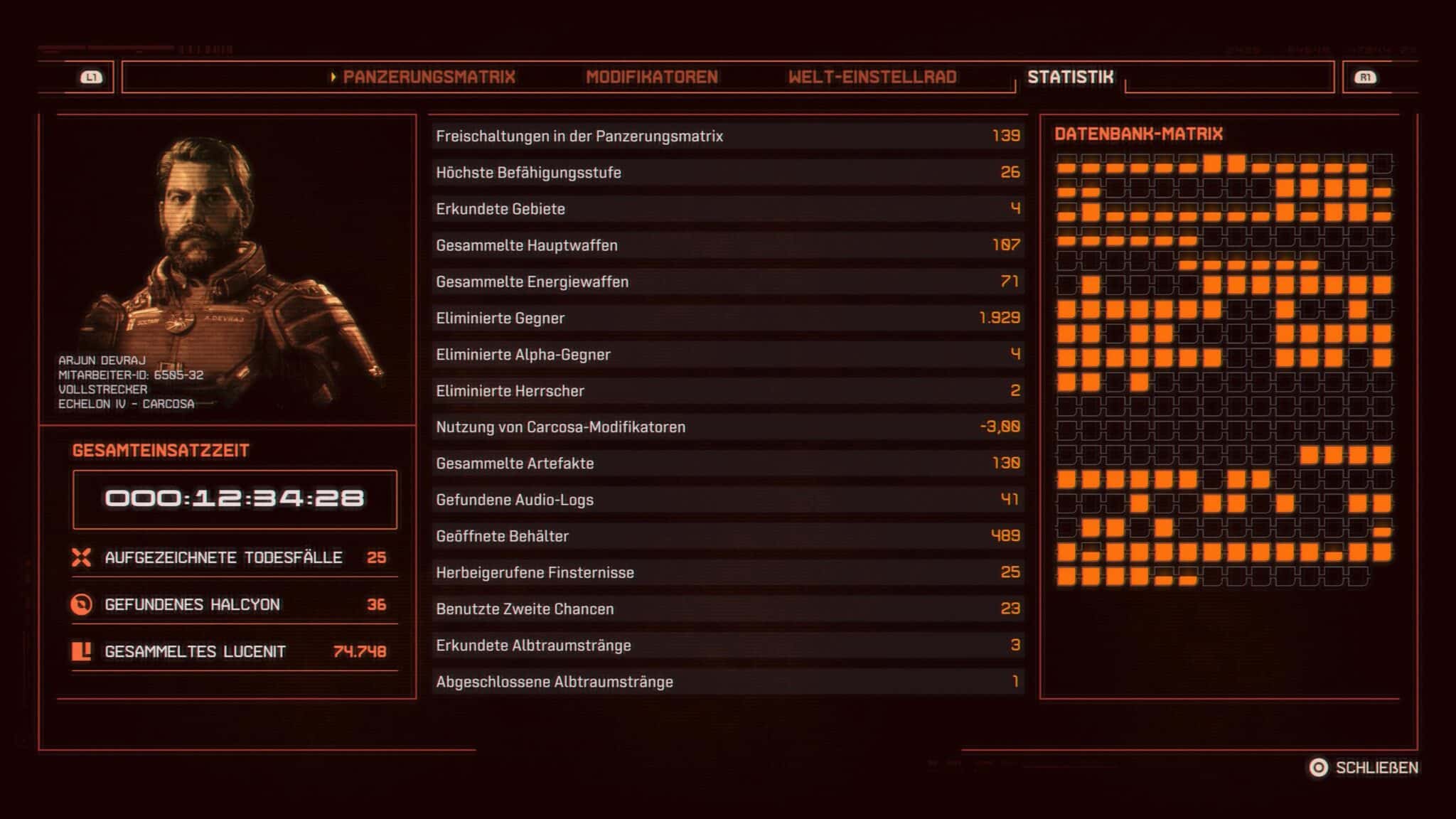
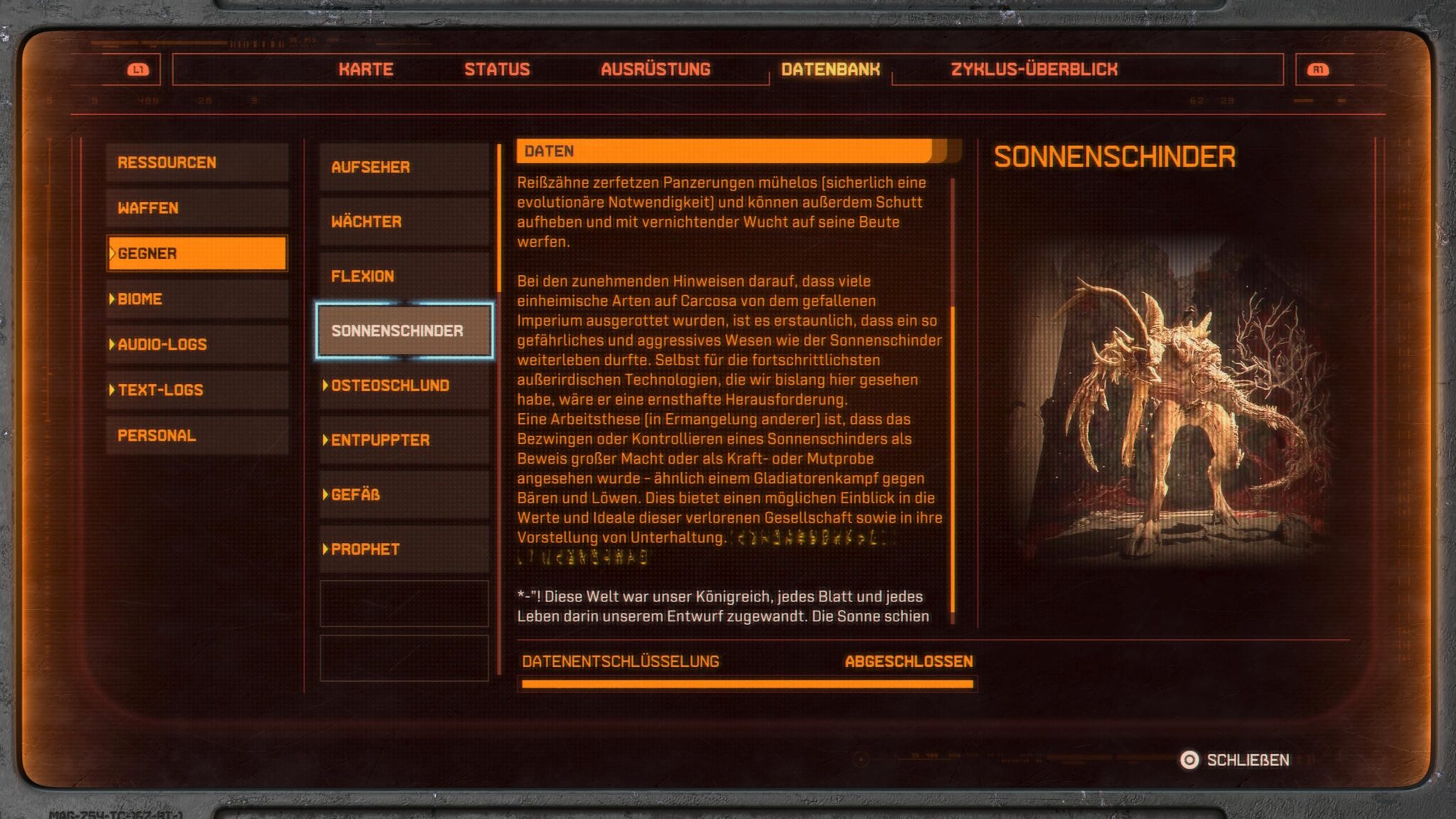
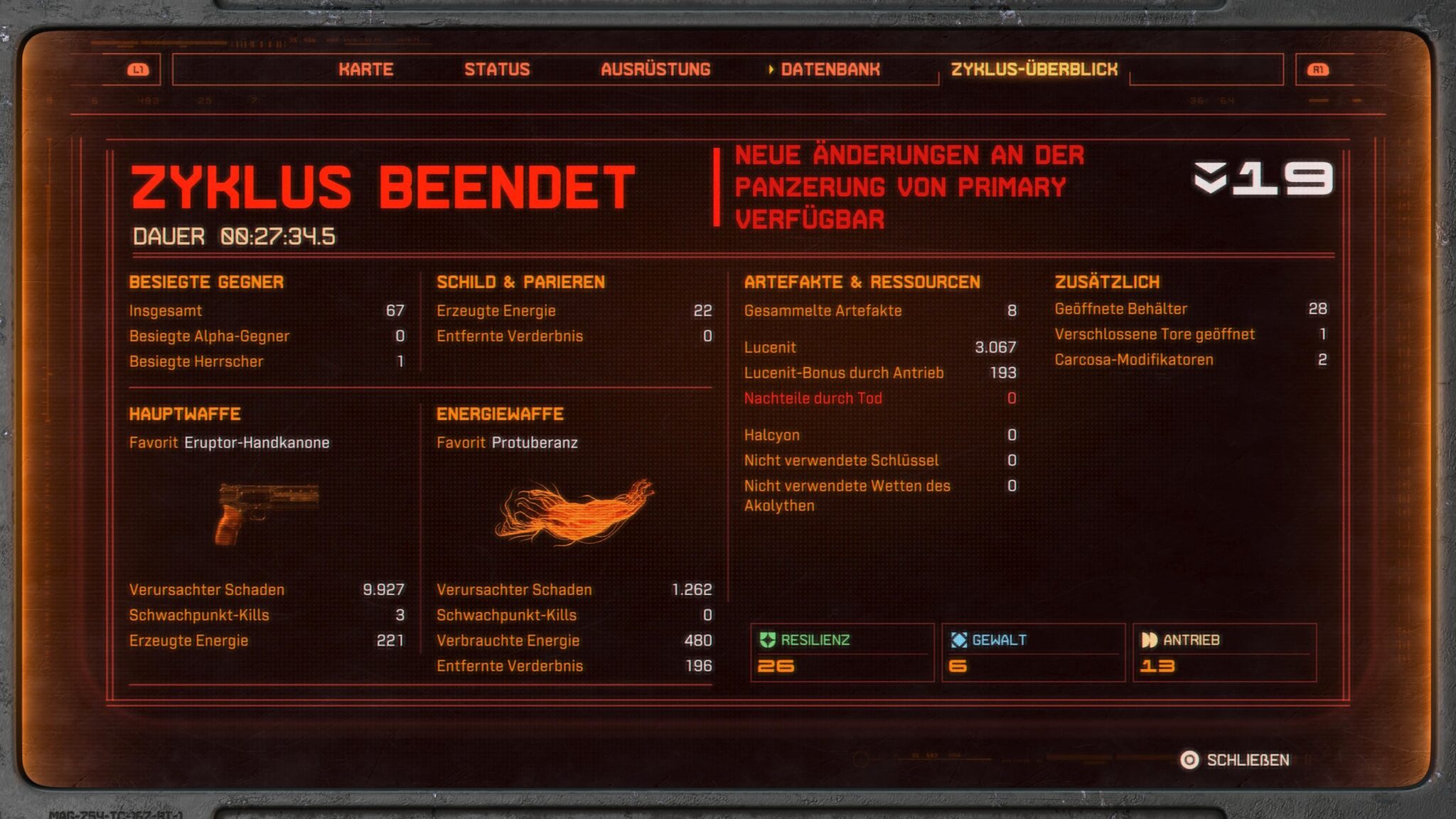
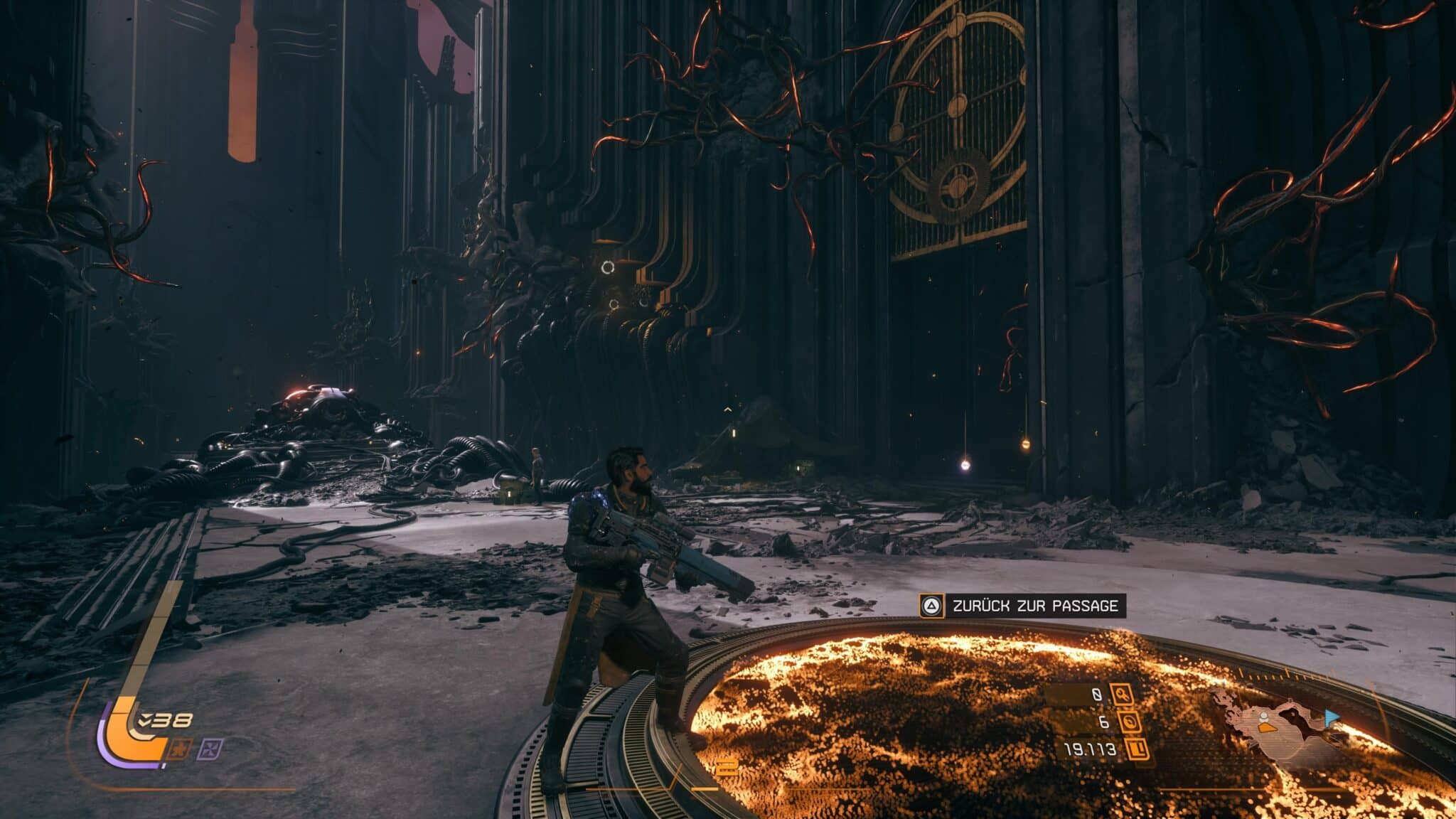
With each new biome, you also unlock a new teleport, so you can always start your run in the current area. But since the world of Saros is interconnected, roguelike purists are also welcome to complete the entire journey.
A minor drawback of the new system: Because the many repetitions of the starting areas are eliminated, most players will finish Saros quite a bit faster than Returnal, even though it offers significantly more content. On the other hand, the playtime feels much less stretched out.
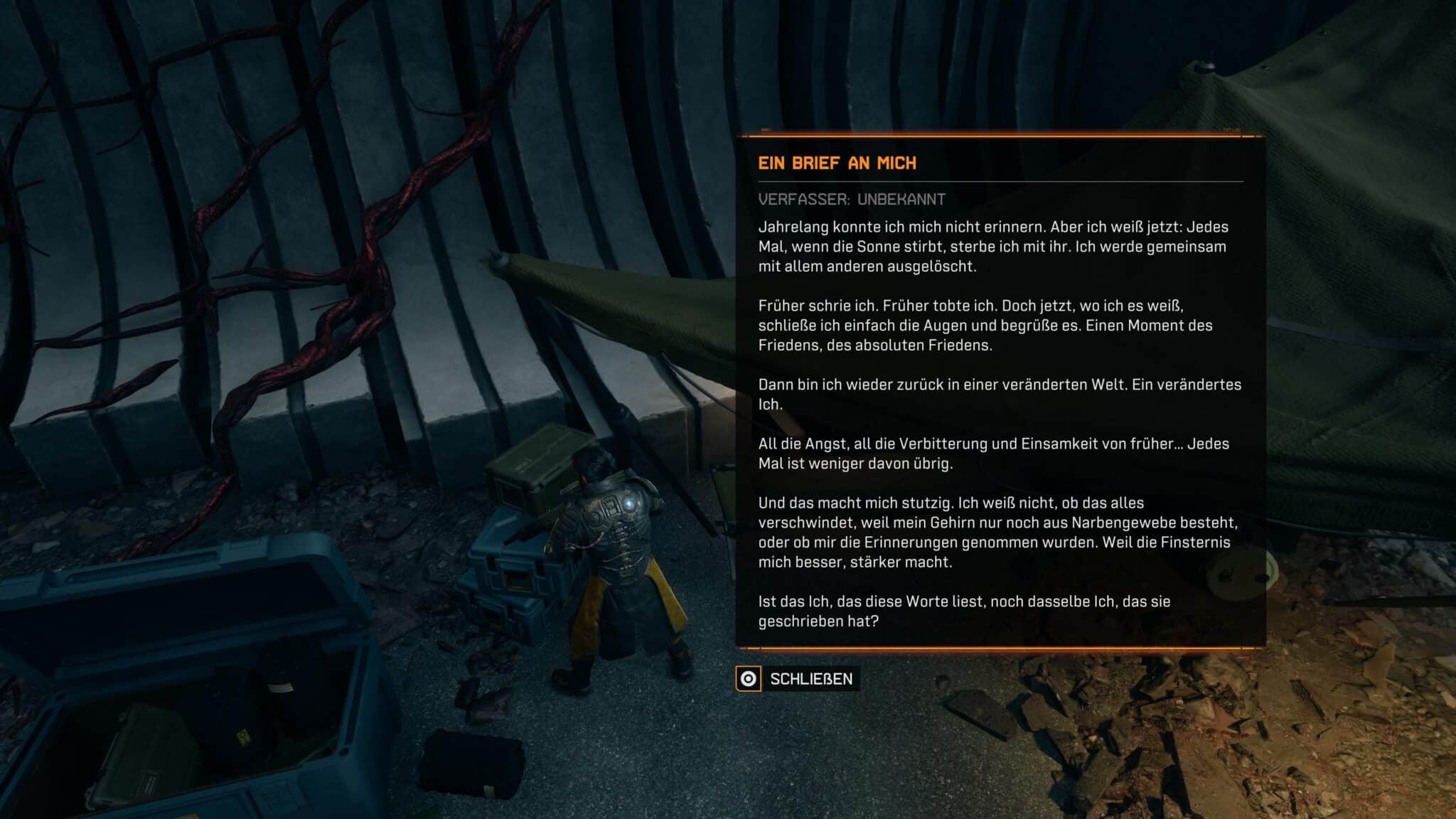
2. Constant character progression:& nbsp;In Returnal, you lost nearly all your progress upon death; in Saros, you at least retain the majority of the Lucenit you’ve collected. And this resource allows you to upgrade your suit at a robot station set up by Soltari using the so-called Armor Matrix.

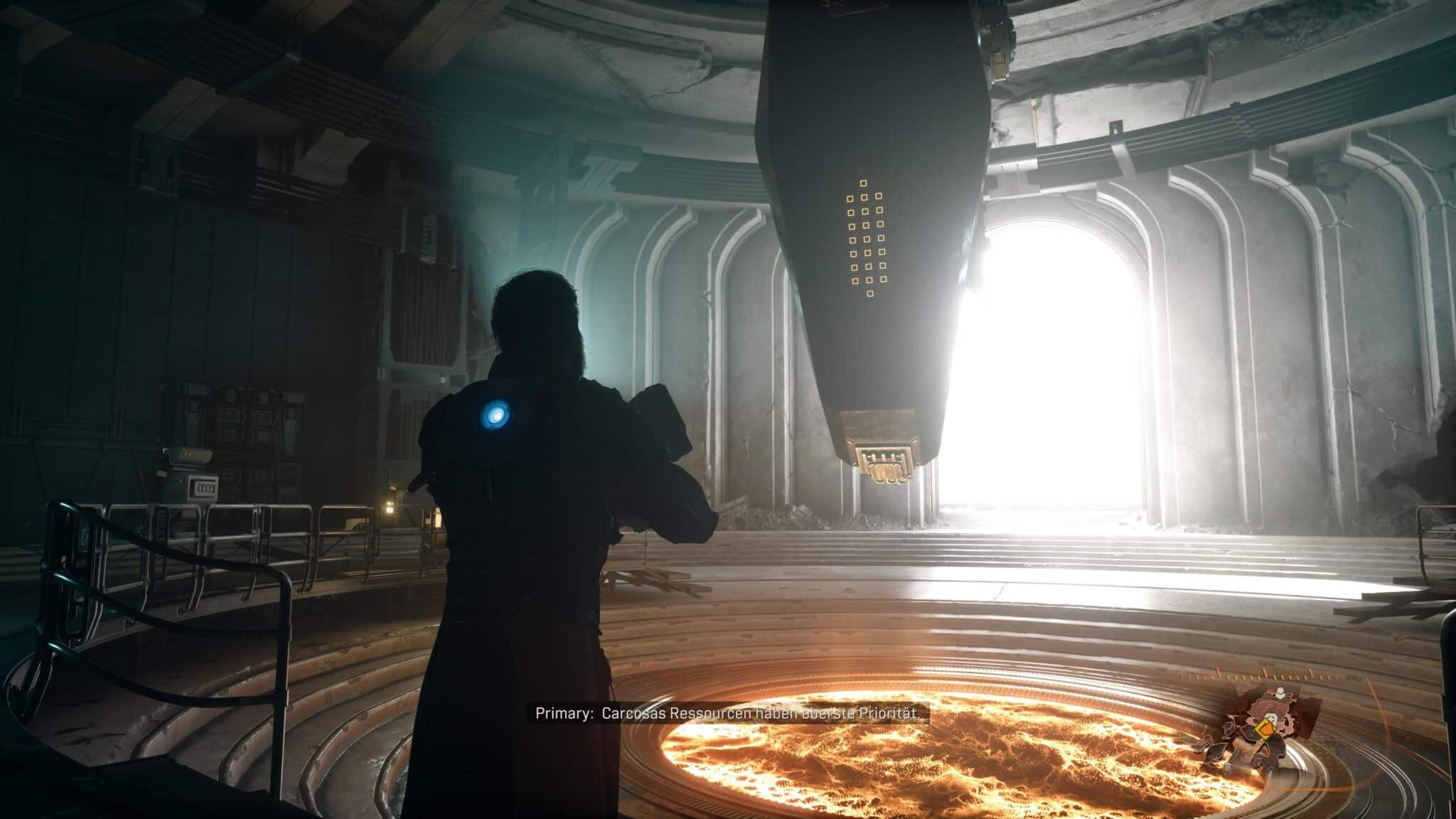
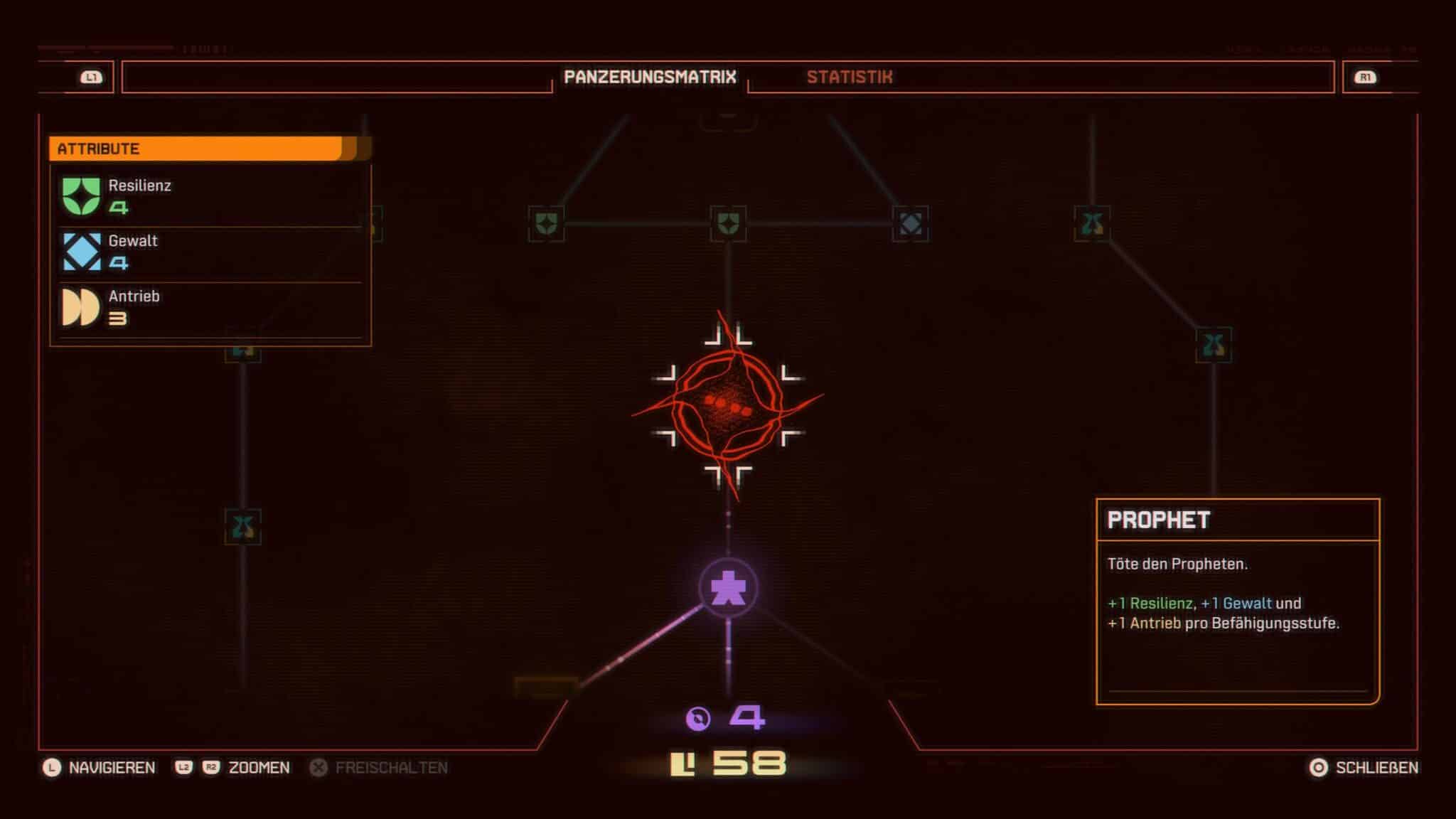
Essentially, this is a massive skill tree where you use the collected Lucenit to unlock permanent improvements for Arjun. These range from simple character stat and weapon level boosts, to nice bonuses like more frequent drops of health capsules, all the way to truly game-changing upgrades, such as immediate resurrection on the spot after your first death.
Even Freedom Has Its Limits
Combined with the camp conversations, these measures ensure that your frustration over a fatal mistake—much like in Hades—is immediately replaced by curiosity about what you can learn and unlock. And how that might affect your next run.
However, Saros repeatedly sets limits on character progression. After all, you only unlock more advanced sections of the skill tree after defeating the corresponding boss. So you’ll never become overpowered; even with maxed-out stats, Saros remains challenging and pushes you to your limits.
Ironically, Saros sets this hurdle very early on with the very first boss. A few failures are enough to unlock all available upgrades for Arjun. And yet, you’ll still get a real beating if you don’t learn through gameplay—especially the right timing for defense and offense, or how to properly manage corruption using your energy weapon.
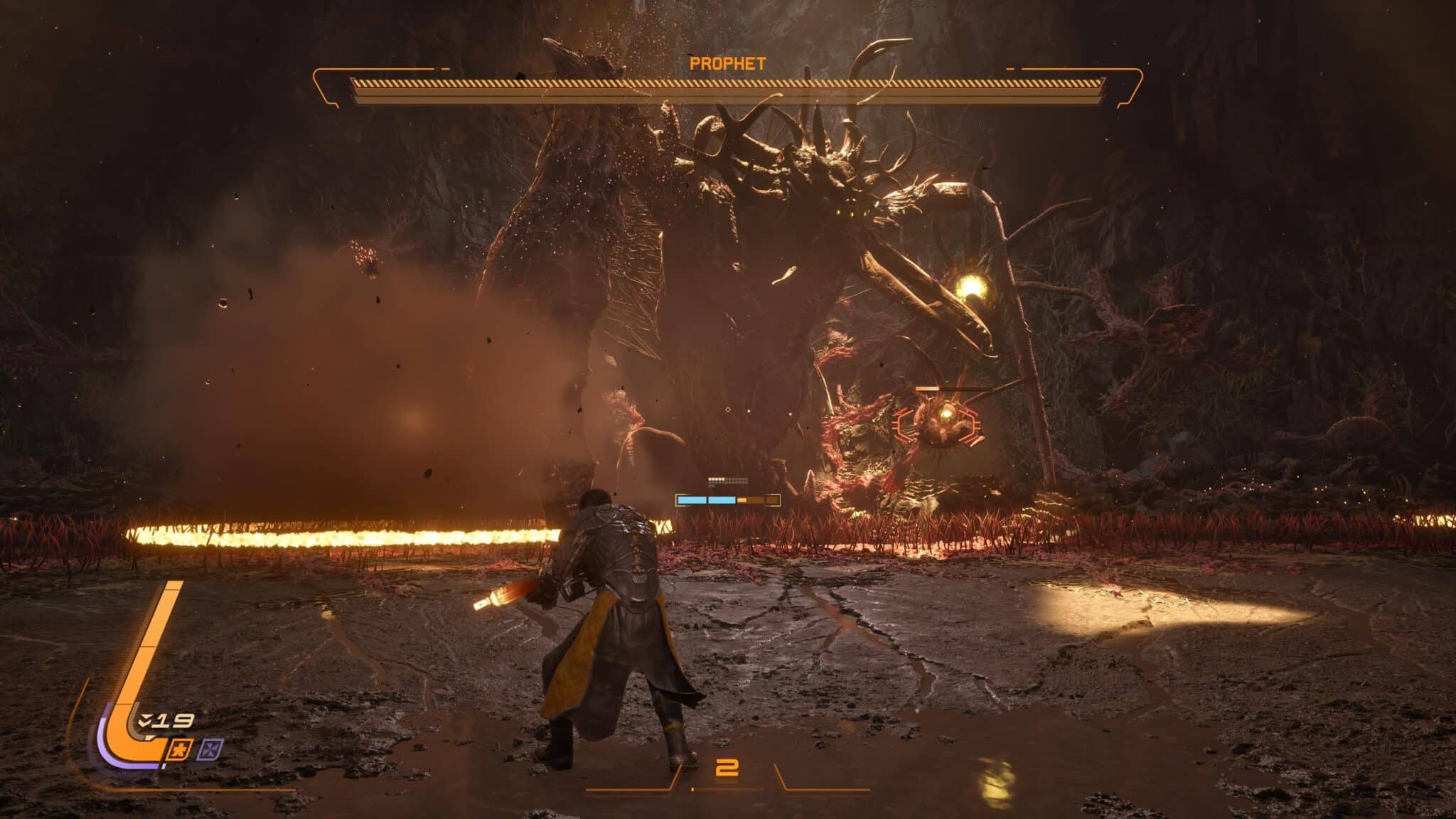
On the one hand, I can understand why Saros, like many Soulsborne games, includes a “make-or-break” boss that only lets you into the real adventure once you’ve proven you’re ready for it. Because that’s the only way you’ll gain the game-changing realization that practice truly makes perfect here, and you’ll quickly get much better than you ever thought possible. After all, that’s exactly what makes Saros so appealing.
On the other hand, I fear that too many players will give up in frustration at the very first boss, thereby depriving themselves of a unique experience.
Above all, Saros actually has game mechanics in place to lower this hurdle—at least to a significant extent. After defeating the second boss, you unlock modifiers that let you make your runs both easier and harder, such as by reducing or increasing the damage taken when hit.
Saros does maintain a certain balance by default here, which is why you always have to accept penalties in exchange for particularly strong bonuses. But you can even disable that in the options. For those less resistant to frustration, however, the flexible adjustment of the difficulty level may still come too late.
Random Elements with a Plan
All in all, despite the one major hurdle at the start of the game, Saros feels significantly fairer than Returnal. Not only because of the constant character progression, but also because it noticeably reduces the luck factor. Like its quasi-predecessor, Saros rebuilds its biomes from scratch with every run, but using handcrafted elements.
The result feels a bit more curated, which sacrifices a little variety but makes your runs more predictable. After a few attempts, you’ll simply know what’s in a specific room and whether the reward in that run is worth the risk.
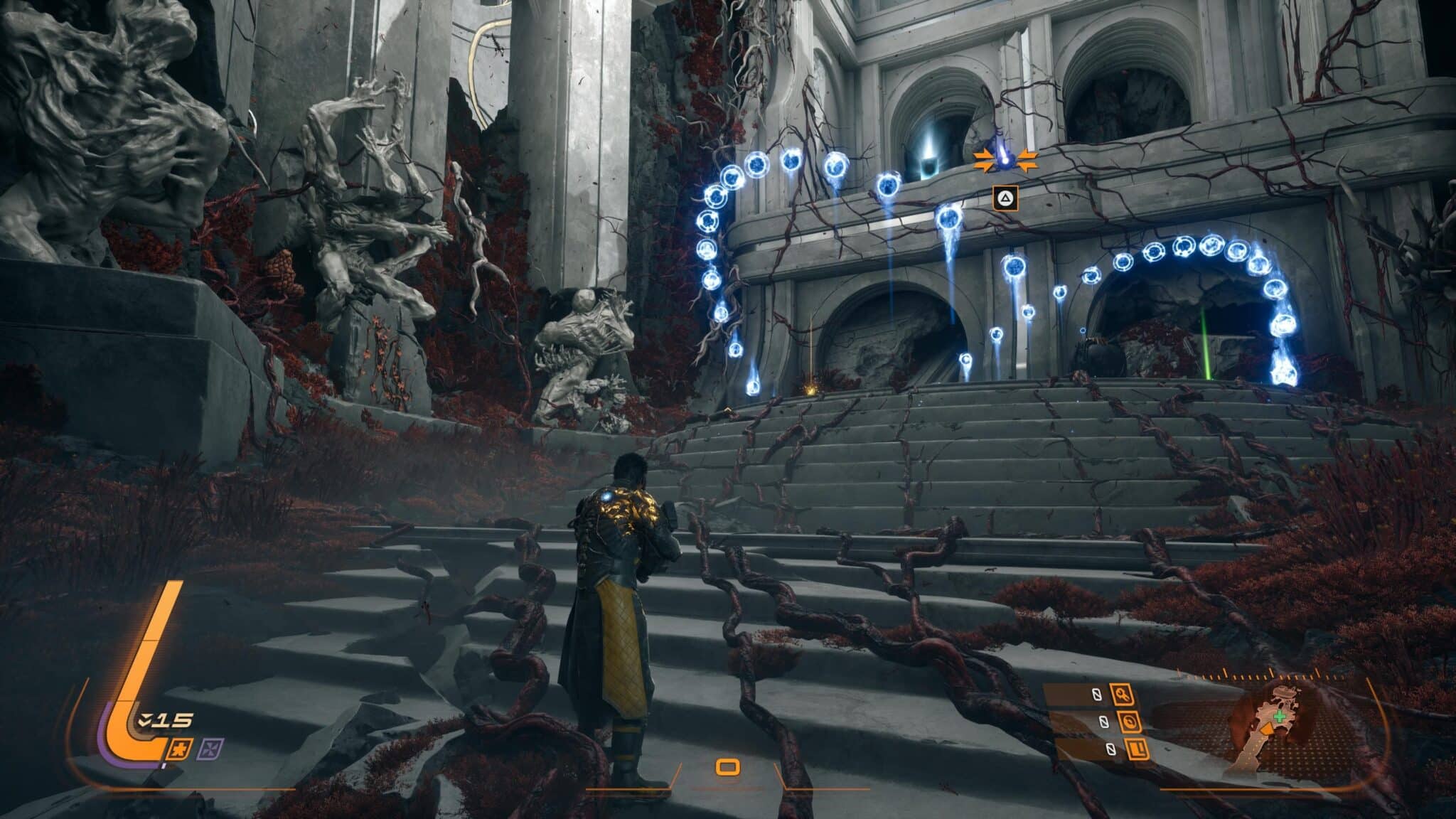
The reward primarily comes in the form of containers that usually offer you new weapons or artifacts—often with two options to choose from. And if even those don’t fit your build strategy, there are still items you can use to reroll your loot.
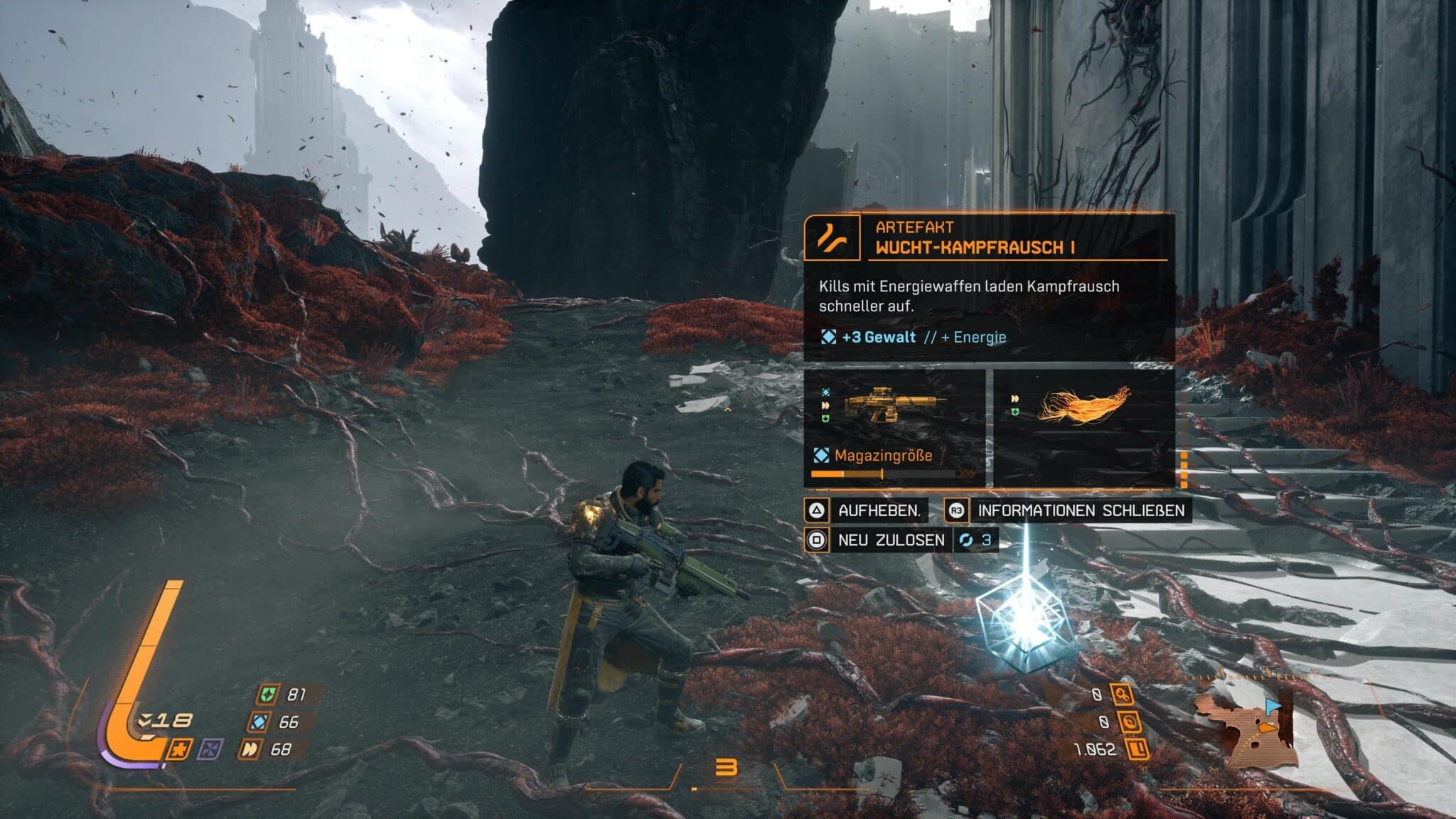
Just like in Returnal, the artifacts not only boost your character stats for the current run but also grant more or less powerful bonuses—for example, causing defeated enemies to increase your adrenaline faster.
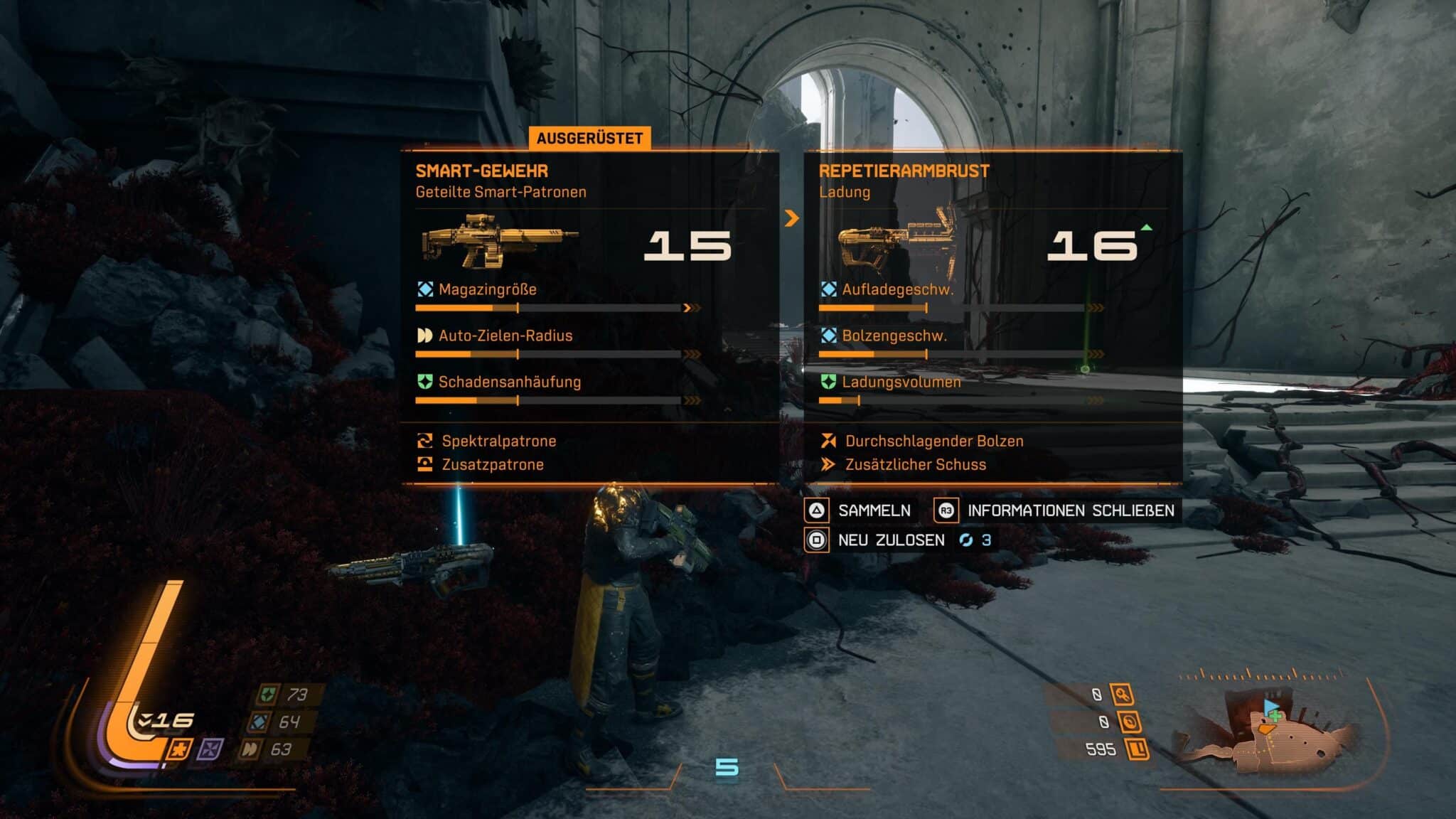
The 14 weapon types—ranging from the classic pistol to the assault rifle and the crossbow—not only all feature an alternative firing mode that is often decisive in battle, but also boast a wide variety of stats and special abilities.
The bottom line is that Saros still manages to strike a balance where every playthrough feels fresh and different, yet never completely random. When I fail, I never blame the game, but rather my own mistakes and decisions.
The greater the risk, the greater the reward
This brings us to another major strength and unique feature of Saros: I can hardly think of any other action game where I have to make such exciting decisions so frequently. Of course, this happens during combat, where I’m constantly weighing risk against reward.
The damage of some weapons increases with my Corruption level. So should I deliberately take a few hits to defeat that giant beast that’s giving me such a hard time faster? Should I dodge the red projectiles, or have I already internalized this enemy’s timing so well that I feel confident in counterattacking? Do I need the superweapon right now, or should I save it for the boss?
Even during breaks, I can’t escape the decisions: Which perk should I unlock next? Which of the two weapons is more helpful right now? Like in Returnal, I also find artifacts that combine particularly powerful bonuses with certain drawbacks, such as increased fall damage or my weapon being briefly blocked upon a hit. Is the bonus worth the risk, or should I steer clear of it?
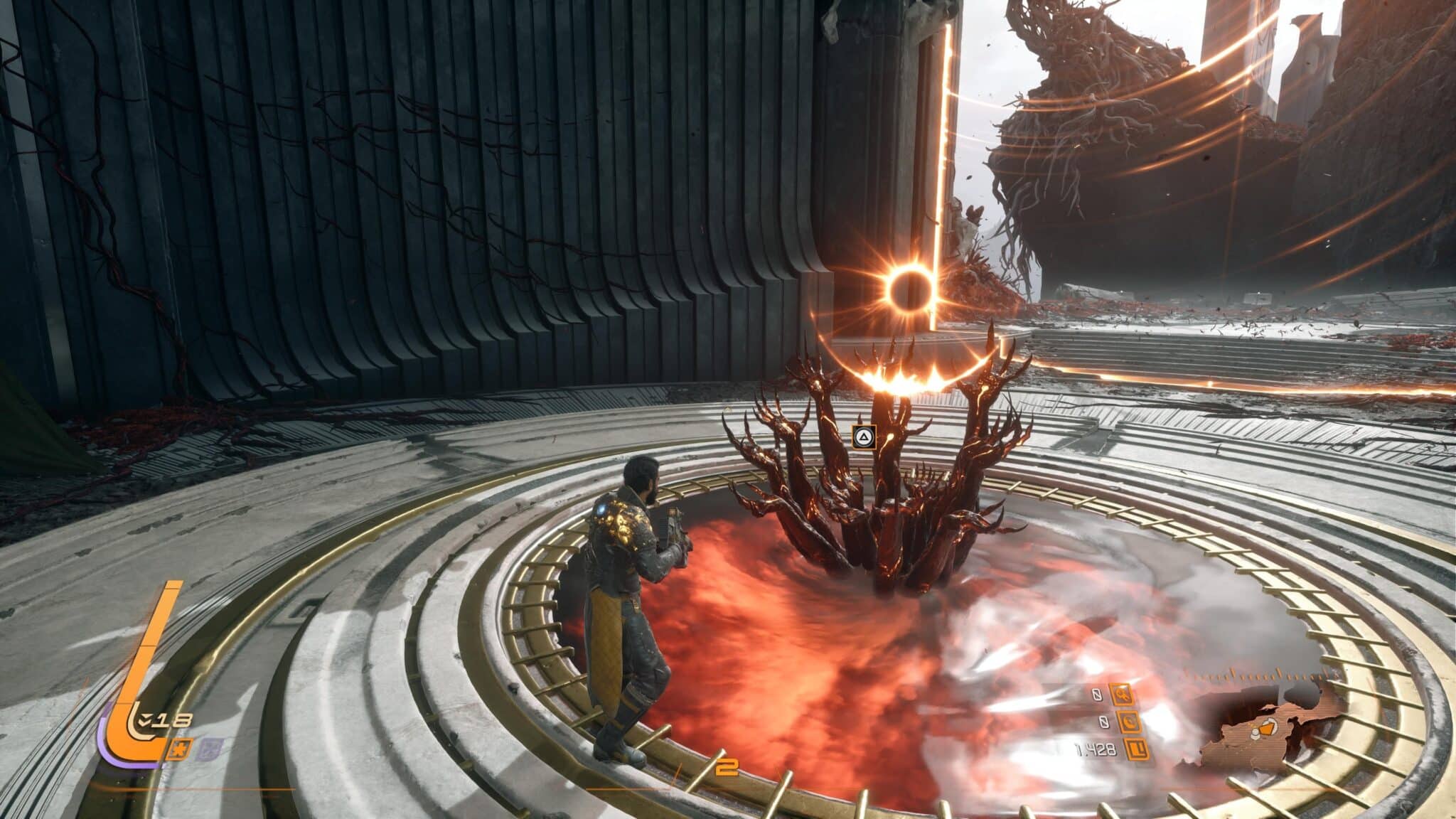
And I haven’t even mentioned my favorite decision yet. At eerie altars, Arjun can summon a solar eclipse, transforming the entire level into a dark parallel world, just like in Lords of the Fallen. This creates different dangerous surprises in every biome—which I’m deliberately not revealing here—and the enemies deal noticeably harder blows. At the same time, I can collect far more Lucenite and find exactly the stronger weapons and artifacts that might give me the decisive advantage in boss fights.

Only in the darkness can I also enter particularly grueling nightmare areas that truly test my reflexes to the limit. I should really avoid them like the Sartori Corporation avoids ethics and morality. But if I manage to make it through, I’ll not only get temptingly valuable loot, but above all, an immediate resurrection!
A dark storm of effects
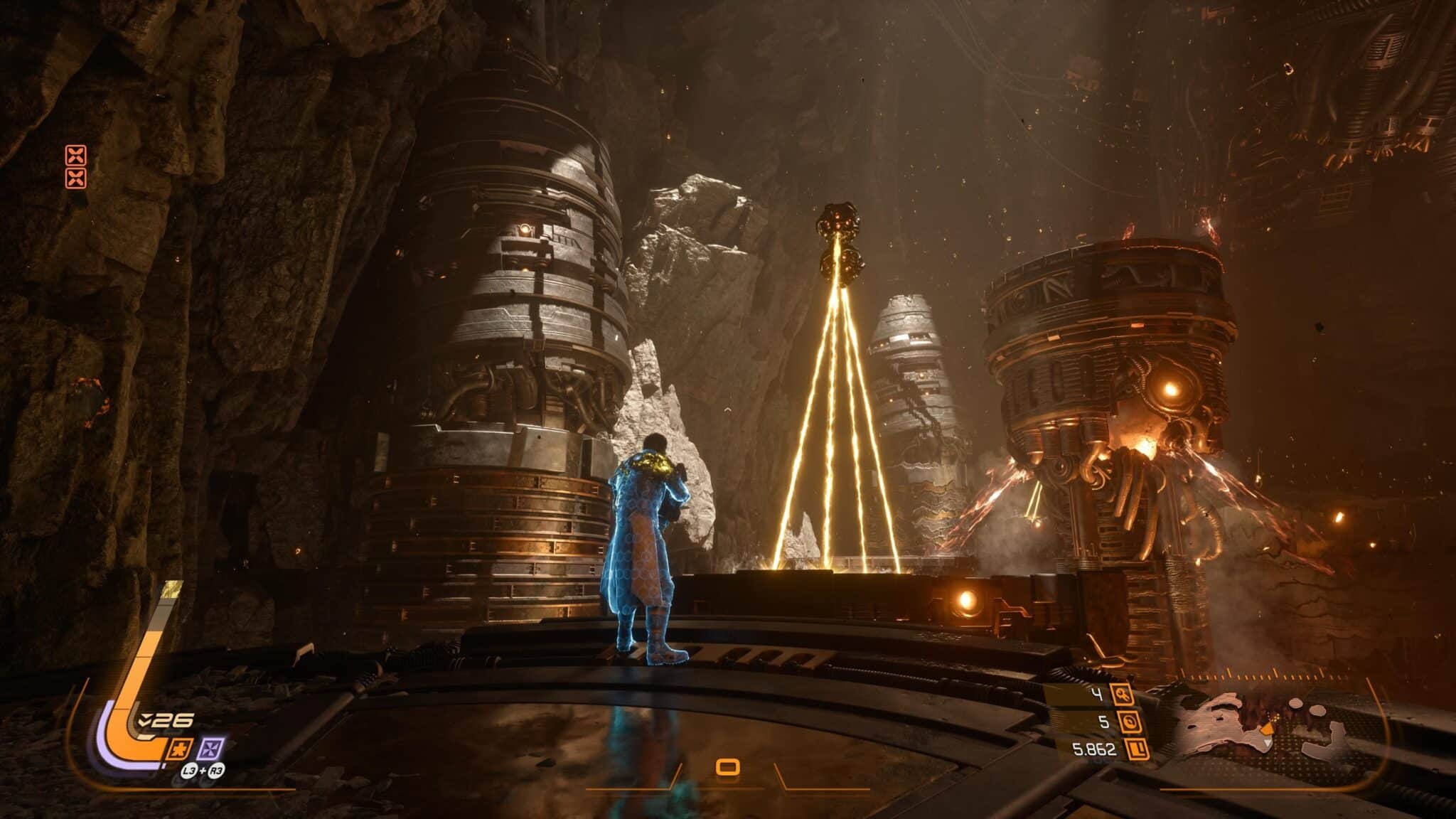
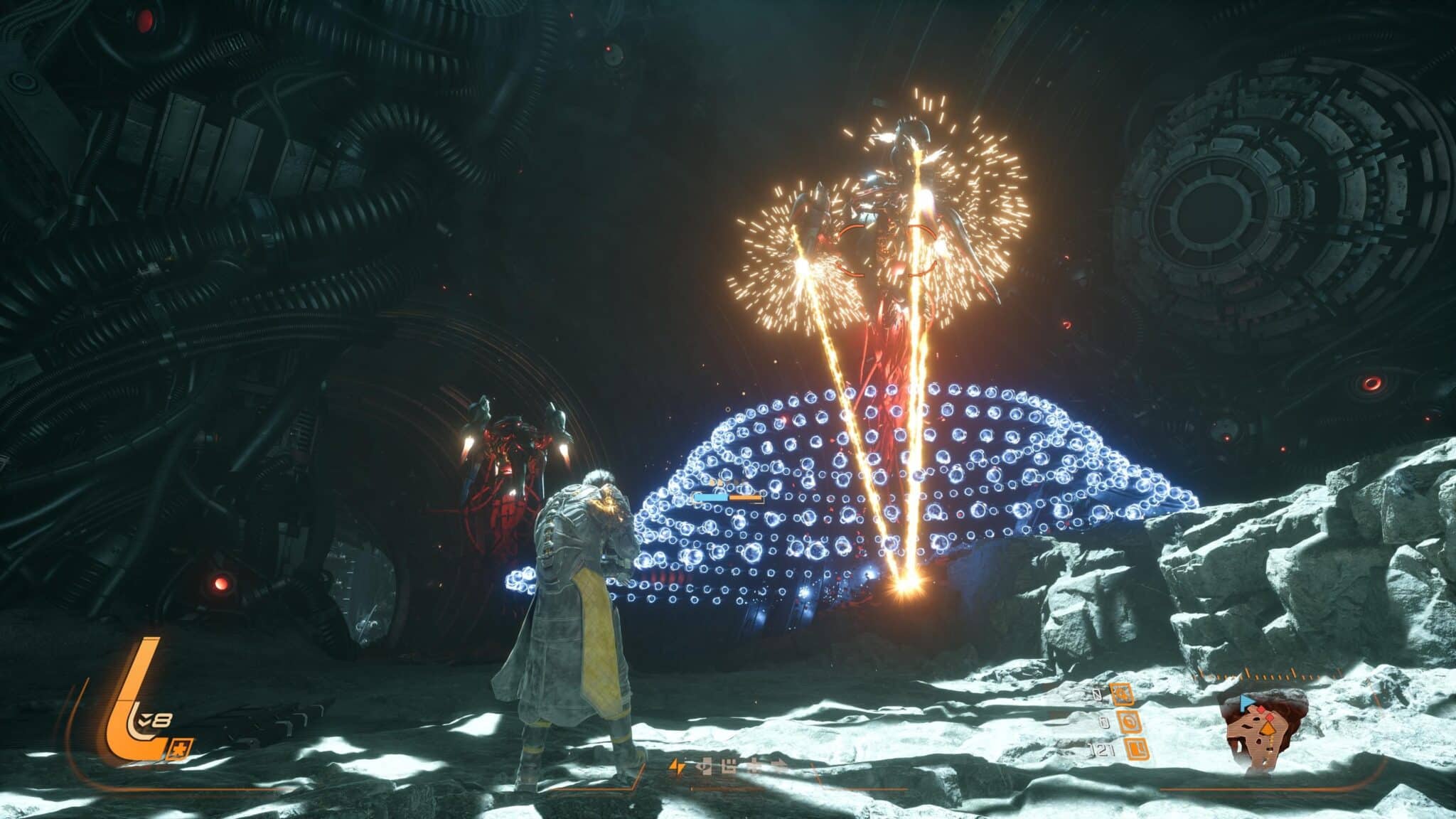
My progress in Saros feels so significant partly because it rewards me not only in gameplay but also visually. Unlike Returnal, Saros remains consistently dark, but it extracts the maximum variety from this darkness—especially since most biomes exist in both a… well… somewhat friendly and a dark version.
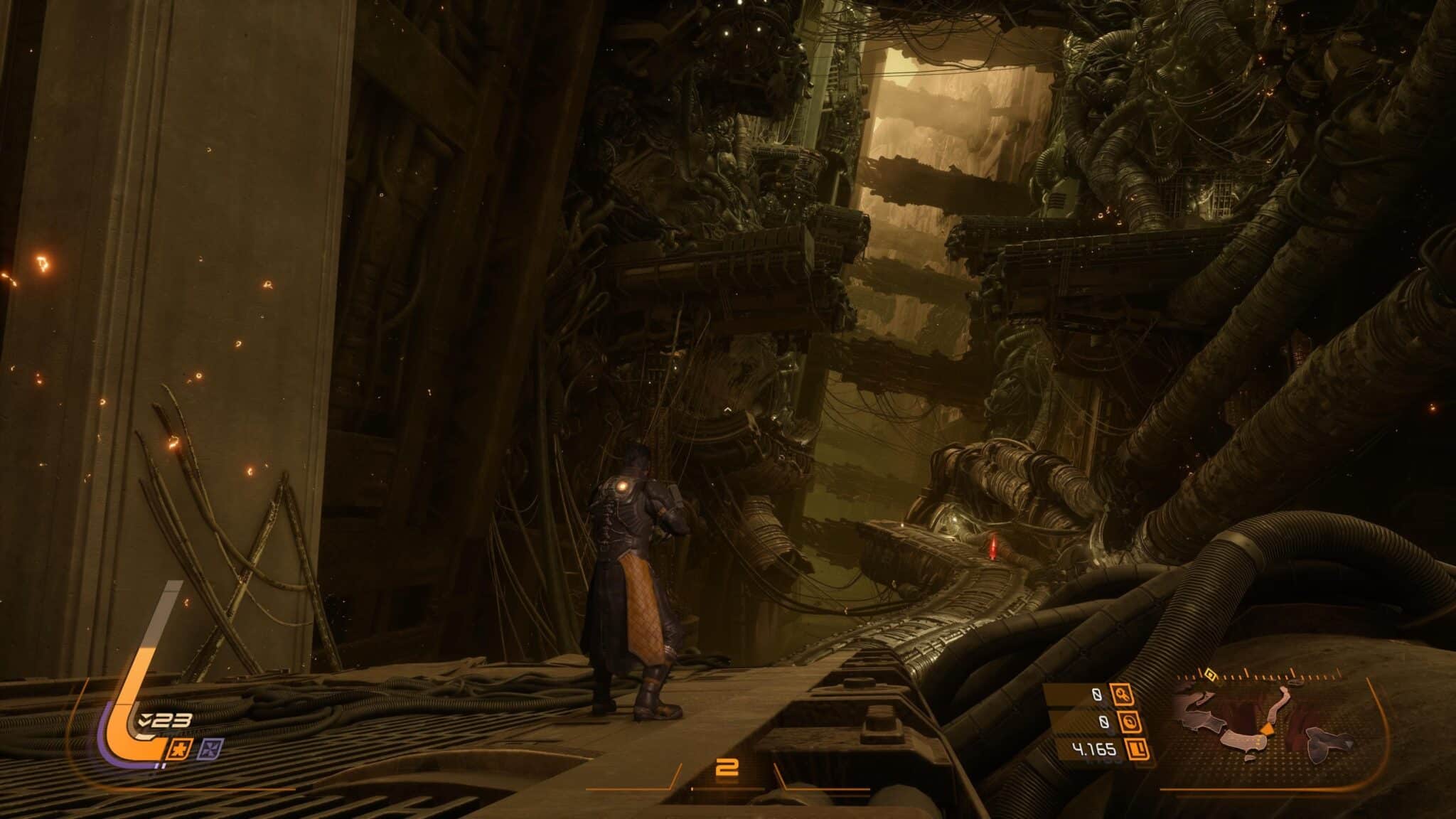
In terms of gameplay and weapon selection, it makes a huge difference where you’re currently fighting your way through. While a shotgun makes little sense in sprawling swamps, things look completely different in narrow mine shafts.
And what about the PC version?
As things stand, Saros is coming exclusively to the PlayStation 5. During Michi’s visit to developer Housemarque, he naturally asked about a PC port. The response was a PR statement: “We’re currently focusing on the PS5 version. ” On the one hand, this isn’t a denial; on the other, there are rumors that Sony isn’t planning a PC version of the shooter at all. If a port does eventually come, it’s unlikely to be released before 2028 at the earliest. After all, it took two years for the quasi-predecessor Returnal to reach the PC.
Saros combines a cohesive design with a visual spectacle unlike anything I’ve experienced on the PlayStation 5. It borders on a miracle that Saros still manages to deliver a butter-smooth 60 frames per second nearly throughout; I only very rarely noticed slight micro-stuttering, especially in particularly large areas. During cutscenes, Saros also drops to 30 FPS, though I didn’t notice this as a negative. PS5 Pro owners benefit from a higher upscaled resolution as well as improved reflections, though the latter are hardly noticeable in the heat of battle.
All the more memorable are the consistently spectacular boss battles, which constantly surprise you with new ideas and leave you in awe. But don’t let that awe last too long, or you’ll die. And even though dying in Saros is fun, there’s no need to overdo it.
Editor’s Conclusion
No, things weren’t better in the past. And simple games have just as much merit as challenging ones. Nevertheless, Saros awakens a sense of ambition in me that I didn’t even feel with Elden Ring—one that actually reminds me of my childhood, when I sometimes had to restart levels hundreds of times to finally conquer them and make the walls shake with my triumphant shout. However, I only stuck with the games where failure felt fair. Where I was convinced I was getting better with every attempt.
Saros’s great achievement lies in how it transports this sense of playful progression into the modern era. It makes no compromises in terms of challenge, but combines its gameplay mechanics so cleverly that even failure feels like progress. Because you unlock new powerful abilities and want to try them out. Because with nearly every attempt, you gain valuable insights into the story puzzle. Because you simply know that you’ll play a little better on your next try. Maybe just that crucial bit.
All of this makes Saros far more forgiving than its brutally difficult quasi-predecessor Returnal, but it’s still far from an easy game. You’ll still need a certain amount of ambition and determination until you’ve truly mastered the core gameplay systems and thus have a chance against the first boss.
But that ambition is worth it, because in return you get one of the most intense gaming experiences you can have in modern blockbusters. And you shouldn’t miss that if you have even the slightest interest in action games and own a PS5.


