





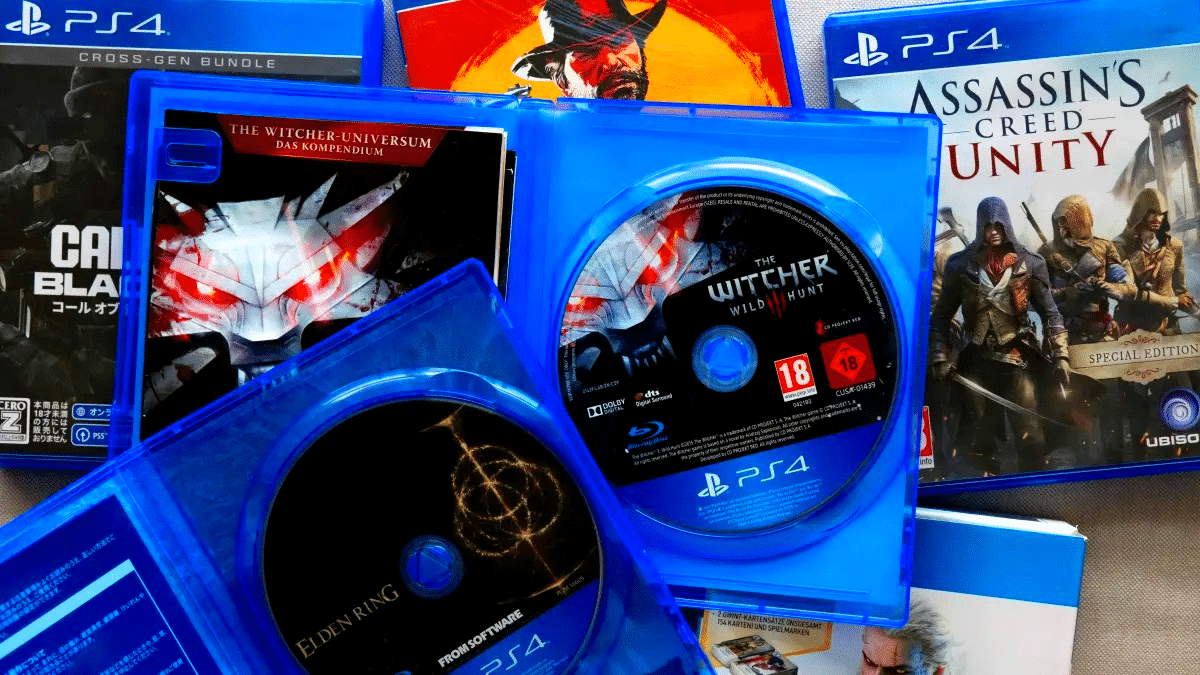
The PlayStation Store as competition for Steam? Sounds absurd—and in my opinion, it is.
In early July, there was a bombshell:Sony is retiring physical discs in 2028; PlayStation games will then only be available digitally.
This caused an outcry.A petition was launched, and this development has generally stirred up the video game community—including me.
ThroughDigitaltrends, I came across a post by Jacob Navok, former head of business development at Square Enix. In it, the industry expert argues that the absence of manufacturing and distribution costs could make digital games cheaper.
Competition between publishers is what drives pricing pressure, not competition between digital stores. This is because publishers set pricing on digital stores.
Competition between stores like EGS and Steam improves the take rates for developers, not necessarily the price for… https://t.co/6ZZw8EUJ5v pic.twitter.com/0QLQmclwsG
— Jacob Navok (@JNavok) August 13, 2026
What’s more: This would supposedly lead to more competition among publishers, which in turn could drive down game prices. He talks about a “Steam-like” situation that we could be facing.
Sounds great, doesn’t it?The PlayStation Store would basically become Steam, and we’d all get cheaper games.
I don’t buy it, and I’ll explain why.
Publishers’ savings aren’t our savings
My first thought was surely the same as yours: If there’s one thing we’ve learned from companies, it’s that they rarely pass on savings. The gas rebate (via Tagesschau) and the reduced VAT for restaurants (also via Tagesschau) immediately came to mind—both were only partially passed on to consumers.
Of course, gas and food aren’t exactly video games—and the situation there looks even more precarious.
Navok is right when he says that a disc doesn’t have to be manufactured, packaged, shipped, and placed on store shelves. All of that adds to the cost—and yet digital versions of new titles don’t cost any less than physical ones. Let’s take Marvel’s Wolverine as an example, which is set to be released on September 15, 2026.
- OnAmazon, it costs 80 euros if you pre-order it.
- Inthe PlayStation Store, Sony is also charging 80 euros.
If many top titles are priced the same in both versions, why should that change in 2028 when discs are phased out?
Of course, publishers could pass on the savings—or increase their margins instead. They’re obligated to turn a profit. There won’t be a price cut out of the goodness of their hearts, especially not for the release of a highly anticipated game.
PlayStation Isn’t Steam
As appealing as Novak’s statement may seem, it unfortunately falls short.
Steam doesn’t exist in a vacuum, unlike the PlayStation Store. If I want to buy a digital game for PC, I can also do so through the Epic Games Store. Or GOG. Or the Microsoft Store. Or any other legitimate store.
In short: If a title seems too expensive on one platform, I can shop around elsewhere to see if I can get it cheaper.
I don’t have that freedom on my PlayStation; there are no third-party digital game retailers there. If I want to buy Marvel’s Wolverine digitally, I can only do so through Sony’s own store. Yes, competition among publishers can have a positive impact on prices from our perspective. However, there’s no competition among online stores on the PlayStation.
Physical games can do something digital ones can’t
Let’s stick with retailers for a moment. Suppose Marvel’s Wolverine sits on a retailer’s shelf like a lump of lead—that would cost the retailer real money. Physical shelf space is expensive, and if a title doesn’t sell, it incurs costs.
In such a case, a retailer could discount the gameand offer it at a lower price. That doesn’t happen at the Sony Store because digital titles don’t take up any space. They stay on the shelf whether they’re flying off the shelves or not—the price remains the same regardless.
And then, of course, there are the advantages of physical discs that you all know:
- I can resell it.
- I can buy it used.
- I can lend it to friends.
- I can trade them in.
- I can score a bargain at an electronics store.
Will games get cheaper—or even more expensive?
I’ve now given you three reasons why I don’t think games will get cheaper by 2028. Ultimately, it depends on Sony—and unfortunately, I have bad news on that front.
The Dutch consumer protection organizationStichting Massaschade & Consumerbelieves that Sony’s sole control over its PlayStation Store has led consumers to pay up to 47 percent more for digital games and DLCs than for their physical counterparts.
Sony faces similar allegations in the United Kingdom, among other places (viaCompetition Appeal Tribunal), Portugal (viaCompetition Policy International) and the U.S. (via PSN Digital Games Settlement).
An important note:Rulings regarding the aforementioned cases are still pending; the final word has not yet been spoken.
In addition, according to Digitaltrends, Sony appears to be testing dynamic pricing on its PlayStation Store. This means that two different players could be offered different prices for the same title—one paying more than the other.
All these examples point to one thing above all:If Sony only offers games through its store, it will have significantly more control over pricing. Phasing out physical discs therefore doesn’t just mean that cheaper games would be possible, but that pricing could become considerably less transparent.
Conclusion
I could go into this much further, but for now I’ll stick to the arguments I’ve mentioned to keep the focus. I don’t believe that doing away with physical games will automatically make them cheaper.
- On the one hand, costs such as manufacturing, logistics, and storage are eliminated.
- On the other hand, Sony isn’t going to start giving away its games like a Good Samaritan.
I believe that a digital-only model will make pricing even more opaque for us consumers than it already is. I suspect that Sony—if at all—will increase its margin on digital games rather than offer us a discount. That’s not happening with digital games right now, anyway.
There’s no real competition for the PSN on PlayStation consoles, which is why I don’t think we’ll be hopping across green meadows and sniffing flowers on thesupposed PlayStation 6(only to pick the cheapest option).
Although, Sony does have one competitor after all: Microsoft. They’re also turning their backs on physical discs,but they have Project Helix in the pipeline. This is intended to allow compatible discs to be converted into digital usage rights. “If you sell or lend the physical disc to someone, this digital right automatically transfers with it,” we wrote in the article above.
That won’t stop the rolling stone, but at least Microsoft has a carrot to offer compared to Sony. Of course, I can’t predict what the gaming market will look like in 2030, but I’m relatively certain of one thing: our hobby isn’t going to get any cheaper.
What are your thoughts on this topic? Do you think offering games exclusively in digital format is the right way to go? Or would you rather stick with physical copies? Feel free to share your thoughts in the comments.


