





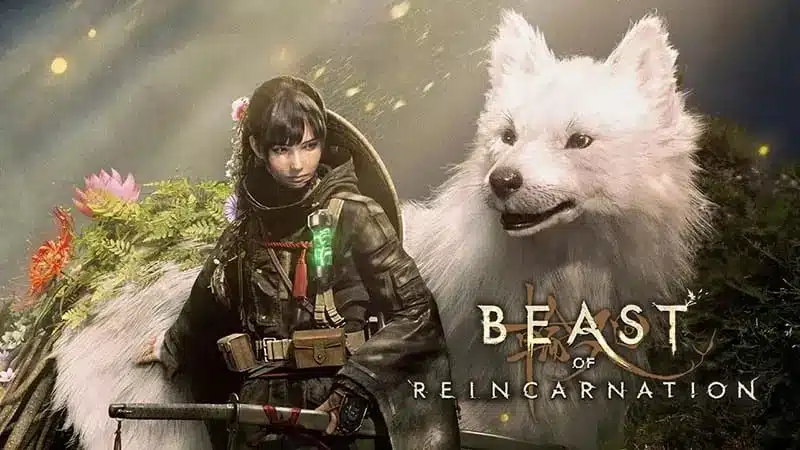
The new action RPG from the creators of Pokémon impresses with a strong combat system, but suffers from extreme repetition as the game progresses.
In the first few hours, Beast of Reincarnation felt like a gaming revelation. I roamed through overgrown ruins, took in the view of the game world from vantage points, and sliced my way through infected beasts with a big grin on my face. The combat system struck exactly the right chord with its clever blend of fast-paced action and tactical depth. My enthusiasm was so great that I almost forgave Game Freak for ever having plagued the world with the Pokémon epidemic.
But then that promising foundation began to crumble rapidly. In many moments, the game feels like an unfinished major project. It’s as if Game Freak designed a massive world, only to realize that neither the time nor the budget was sufficient to fill it with varied activities, a strong story, and life.
The result is by no means a bad game, and that makes the whole thing almost even more frustrating. Because *Beast of Reincarnation* has a rock-solid foundation, a wonderfully unique style, and some really good ideas. However, the game noticeably lacks enemy variety, diversity, and—above all—the willingness to wrap things up at the right time. Like a three-hour movie whose story would have worked just as well in a crisp 90 minutes, the game ultimately confuses sheer length with real substance.
Table of Contents
A contaminated Japan and a pretty cool dog
The story takes us to the year 4026. A virulent plague has devastated Japan, causing wildlife to mutate into dangerous malefacts and overrun entire regions. Only a handful of humans have survived the catastrophe; the rest eke out an existence as human souls in artificial robotic bodies.
At the center of the story is Emma, who is able to absorb the corruption, control plants, and use her hair—which has mutated into vines—both as a weapon and for movement. She is accompanied by Koo, a large white dog who, although he himself is one of the Malefacts, is by far the most likable creature in this broken world.
Together, Emma and Koo set out to defeat the powerful Nushi. These giant Malefacts serve as the boss enemies in each zone. The duo absorbs their power, thereby learning new abilities and preparing for the battle against the Beast of Reincarnation, which apparently is considered the source of the Corruption. Or at least something along those lines. At some point, I stopped paying close attention to the story: I found the dialog and cutscenes so boring that my hand kept wandering to my phone. Unfortunately, you can’t skip the sequences. At least you can click through the many dialogues sentence by sentence, thereby shortening the forced narrative break a bit.
Parrying for the Dog
If there’s one area where Beast of Reincarnation truly shines, it’s the combat system. In close combat, Emma relies on a mix of light and heavy katana strikes, while the bow and crossbow handle long-range combat. Add to that evasion maneuvers, blocks, and an essential parry system: perfectly timed counters not only break the enemy’s stance but also charge up Flower Points—the fuel for your companion’s valuable abilities.
When you open Koo’s command menu, the game switches to slow motion, giving you plenty of time to select the right ability. Koo pins enemies in place with magical roots, pushes them back, inflicts nasty status effects, or fills Emma’s health bar. This creates a wonderfully dynamic rhythm: You fight in real time, generating resources through precise parries and freezing the action for a brief tactical moment to plan your next move.
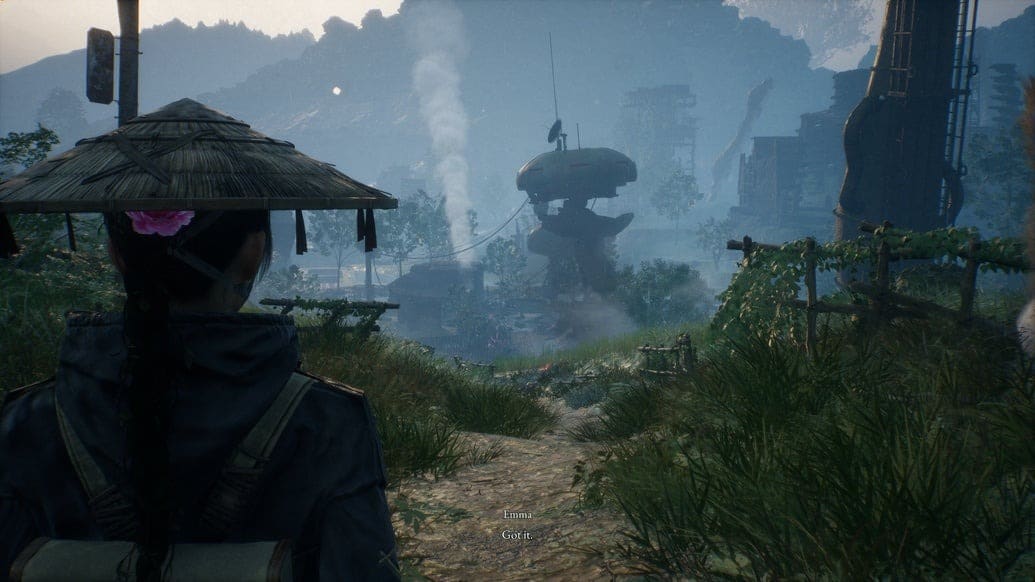
By the way: Even on normal difficulty, the parry windows are relatively generous—so if you’re all thumbs, you don’t have to switch to the easiest difficulty right away. While *Beast of Reincarnation* borrows elements like campfires and challenging enemies from the Soulslike genre—some areas even evoke a slight *Elden Ring* vibe when exploring—it punishes defeats much less harshly. When you die, you lose neither equipment nor experience, and the save points are fairly spaced out.
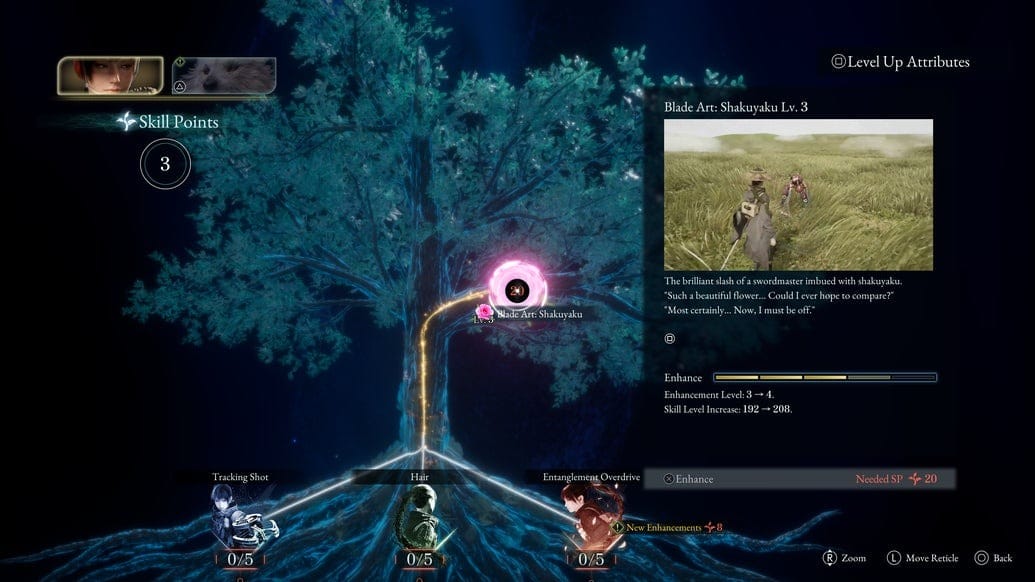
Thanks to extensive talent trees, extremely versatile builds are possible. Specialize Emma in melee, ranged weapons, or plant magic, and use Koo either as a healer or an attacker. So Beast of Reincarnation certainly doesn’t lack for tools. As a result, the game presents you with new challenges far too rarely. The limited variety of enemy types is just one problem—the fact that many of them can always be defeated using the same pattern further dampens the fun.
An Empty World
Beast of Reincarnation does not feature a cohesive open world. Instead, you travel through several expansive areas that you can freely explore. This concept works exceptionally well, especially in the early chapters.
But as sublime as it feels to climb to a high vantage point and spot promising places in the distance—appearances can be deceiving. Overgrown ruins, dilapidated factory complexes, forests, and wastelands may make for photogenic backdrops, but they quickly lose their appeal up close. When you explore a gigantic, multi-story cave complex, only to face the same recycled enemy types yet again and receive a chest of no value whatsoever as a reward, the illusion completely shatters. You can’t shake the impression that the developers ran out of steam in the home stretch when it came to filling the magnificent game world with compelling content.
On the plus side, Emma’s abilities make movement pleasantly swift. Her hair functions like vines: it forms bridges over chasms, catapults her into the air, or allows her to attack from above. In addition, Emma’s hair can be used like a grappling hook to pull you toward anchor points, allowing you to effortlessly cover greater distances and overcome elevation changes. That’s really cool, but it doesn’t always work precisely.
As appealing as exploration is at first, this world doesn’t feel organic. Rather, it resembles an artificial habitat where someone has released a few creatures and then scattered loot around. Enemies and the environment rarely tell a shared story. Furthermore, Koo automatically tracks down enemies, loot, and interesting locations, leaving little room for surprises or the true joy of discovery during exploration.
Beast of Repetition
After a few hours, it becomes clear just how little the basic flow changes. You enter an area, follow the tracks of a Nushi, defeat ordinary enemies, collect materials, and finally face off against the giant creature. After that, the next chapter begins with a very similar routine.
A game this combat-heavy needs a diverse roster of enemies that regularly puts its systems to the test. That’s exactly what’s missing. Beast of Reincarnation has you repeatedly taking down the same animals, machines, and humanoid enemies. Later variants can take more damage or deal greater damage, but they rarely require a different tactic.
Even the Nushi lose their terror over time because Beast of Reincarnation keeps pulling them out of the closet. A rematch can be appealing if the conditions and tactics change fundamentally. Here, however, the familiar monsters are usually only slightly tweaked and unleashed on the players all over again.
Beast of Reincarnation showers you with weapons, materials, amulets, spirit stones, ingredients, and research quests. Much of this has little impact on gameplay, which inevitably raises the question of why the game is overloaded with such trivialities while skimping on fundamental elements. Cooking, growing vegetables, and hatching eggs are nice additions, but they only make the game broader, not deeper.
If it were condensed to twelve hours, Beast of Reincarnation would likely be a much better game. The strongest areas, boss battles, and abilities wouldn’t have lost any of their appeal, while enemies and gameplay sequences wouldn’t have repeated themselves ad nauseam. Instead, over the course of about 25 hours, my initial enthusiasm turned first into routine and eventually into exhaustion.
Beast of Reincarnation: Review Summary
During combat, I was sometimes reminded of Sekiro, sometimes of Final Fantasy 7 Remake. The game world and atmosphere, on the other hand, reminded me at times of NieR: Automata and Horizon: Zero Dawn. The interaction between Emma and Koo is particularly strong: the two complement each other perfectly, and the epic battles are the reason I’m ultimately awarding three stars instead of two. I also liked the setting and art style. However, the adventure is simply too long for what it has to offer in terms of gameplay.


