





Endless Legend 2 is leaving Early Access after a year. Developer Amplitude has listened to its fans. In this review, you’ll find out what that’s led to.
It’s a massive spectacle unfolding before us. Sun-drenched forests, lush meadows, and rocky plateaus are blanketed in rain as the monsoon sets in, and once-peaceful rivers swell into roaring torrents.
Then, suddenly, the downpour stops. And not only that—the entire ocean, which previously surrounded the few landmasses on the planet Saiadha, recedes, revealing new areas for settlement.
This process—as fantastically staged as it is clever in terms of gameplay mechanics—is the heart of Endless Legend 2, which has now left Early Access after a year and aims to win us over with revamped mechanics, an improved interface, and new factions.
Table of Contents
The story is woven into the game
Endless Legend 2 is an unusual 4X game. On the one hand, as is typical for the genre, you expand cities, research technologies, and vie with your neighbors for land. On the other hand, you also follow your faction’s storylines and encounter a world that continues to open up—thanks to the mysterious tidal pull described earlier—revealing ancient secrets.
These changes, however, aren’t just a gameplay gimmick—they’re deeply rooted in the plot and lore of Endless Legend 2. Across its Endless series, the French development studio Amplitude has created a detailed world-building framework that extends beyond the fate of individual planets. Endless Legend 2 only touches on much of this, but we don’t want to spoil anything for you here.
The game integrates the story by continuously giving you quests from both within and outside your own faction. These are accompanied by short, text-based conversations and grant you small and larger bonuses upon completion. Completing these tasks isn’t necessary for victory, but they enhance immersion and help explain your faction along the way.
Each race has its own goals and mechanics
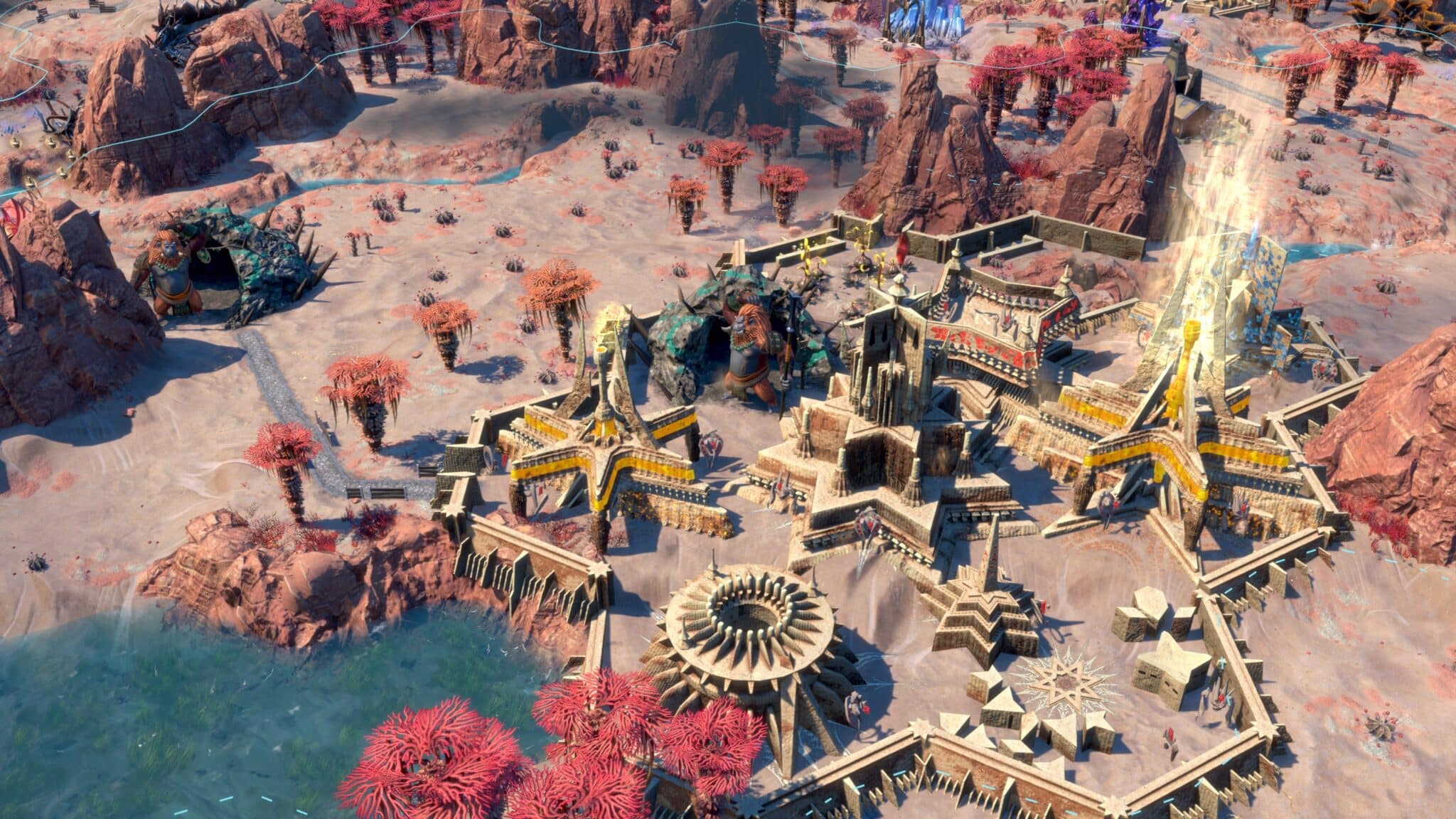
With the newly added Sandformers, for example, it becomes clear right from the start that this species wants to turn the planet Saiadha back into a desert. And this is reflected in the game mechanics as well.
Using the Sandformers’ empire abilities, you excavate ancient ruins of your lost civilization and use them to transform your environment. So you intentionally transform fertile land into plains of sand and glass. This strengthens your economy while simultaneously revealing, layer by layer, the backstory of your people.
However, don’t expect too much from these narrative segments. The mystery behind the events on the planet is interesting—but only the first time around. The same goes for the faction-specific content. While it does deepen your connection to your people, it isn’t particularly exciting.
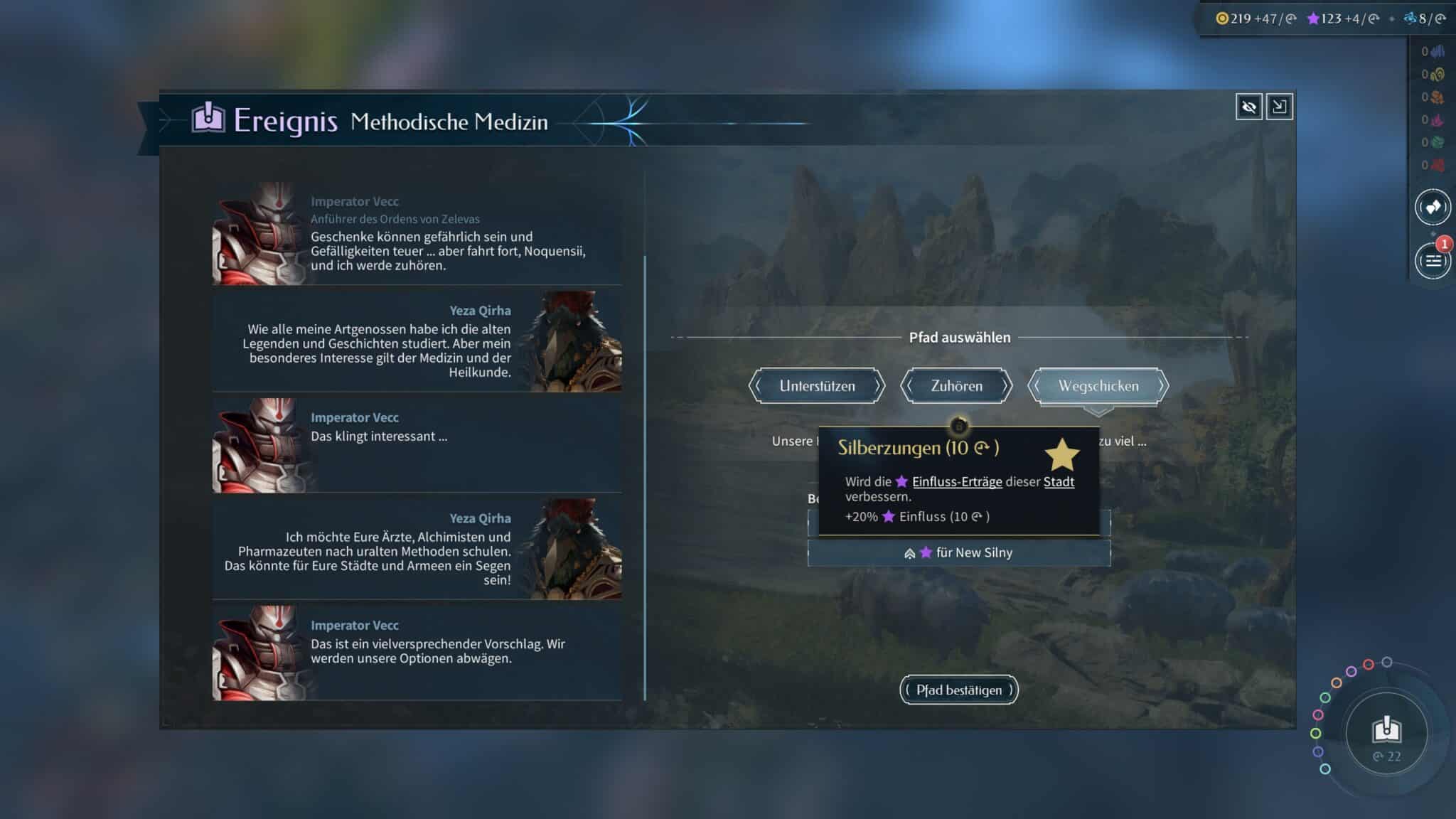
There are a total of eight (sub)factions to choose from:
- The Heirs of the Sheredyn are the classic human faction and representatives of a religiously oriented interstellar empire. You may recognize them from Endless Space.
- New this time is the Order of Zelewas. This sub-faction has broken away from the Heirs because they don’t take a aggressive enough approach.
- The Exiled Lords represent the remnants of the Broken Lords from the first game. For them, everything revolves around the balancing act between chivalry and life-affirming immortality.
- The Necrophages are a typical insectoid swarm race, always bent on war and expansion. They operate from a single city.
- Severed Claw is the name of the Necrophages’ new sub-faction. These insects are hybrid creatures and consist partly of metal. They must enslave others to obtain a labor force.
- The Aspects are a civilization of diplomats—half-machine, half-coral. They believe in coexistence.
- With the Tahuks, you’ll experience a blend of science and religious zeal. Together with them, you’ll embark on research.
- With the Sandformers, an entirely new faction is joining the game at launch. As mentioned above, they want to turn the planet back into a desert.

As you can perhaps gather from the descriptions, the factions play very differently on paper. In practice, however, these differences are undermined by the game’s somewhat overly uniform core mechanics. We’ll get to that in a moment.
Not every settlement becomes a city
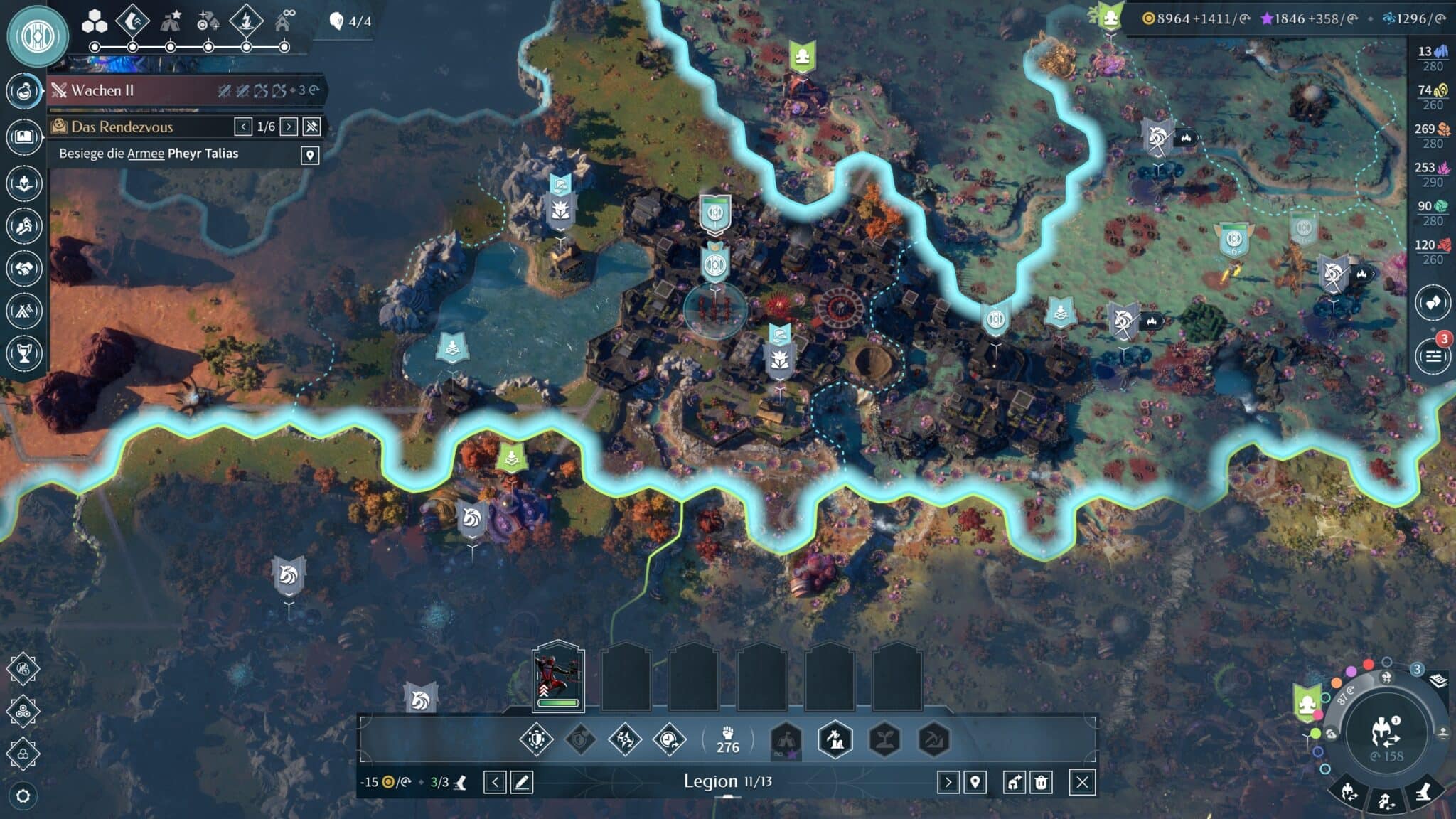
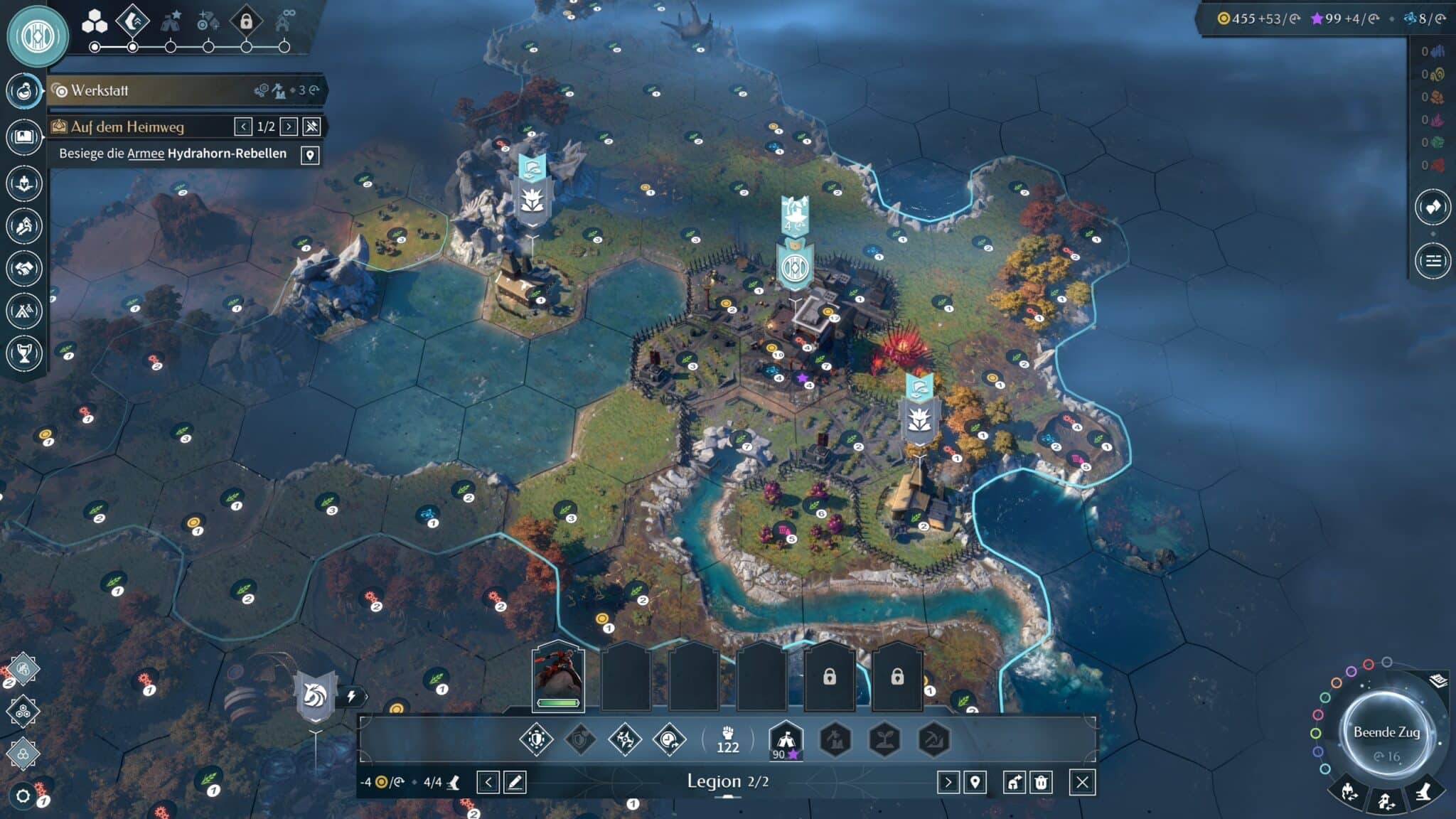
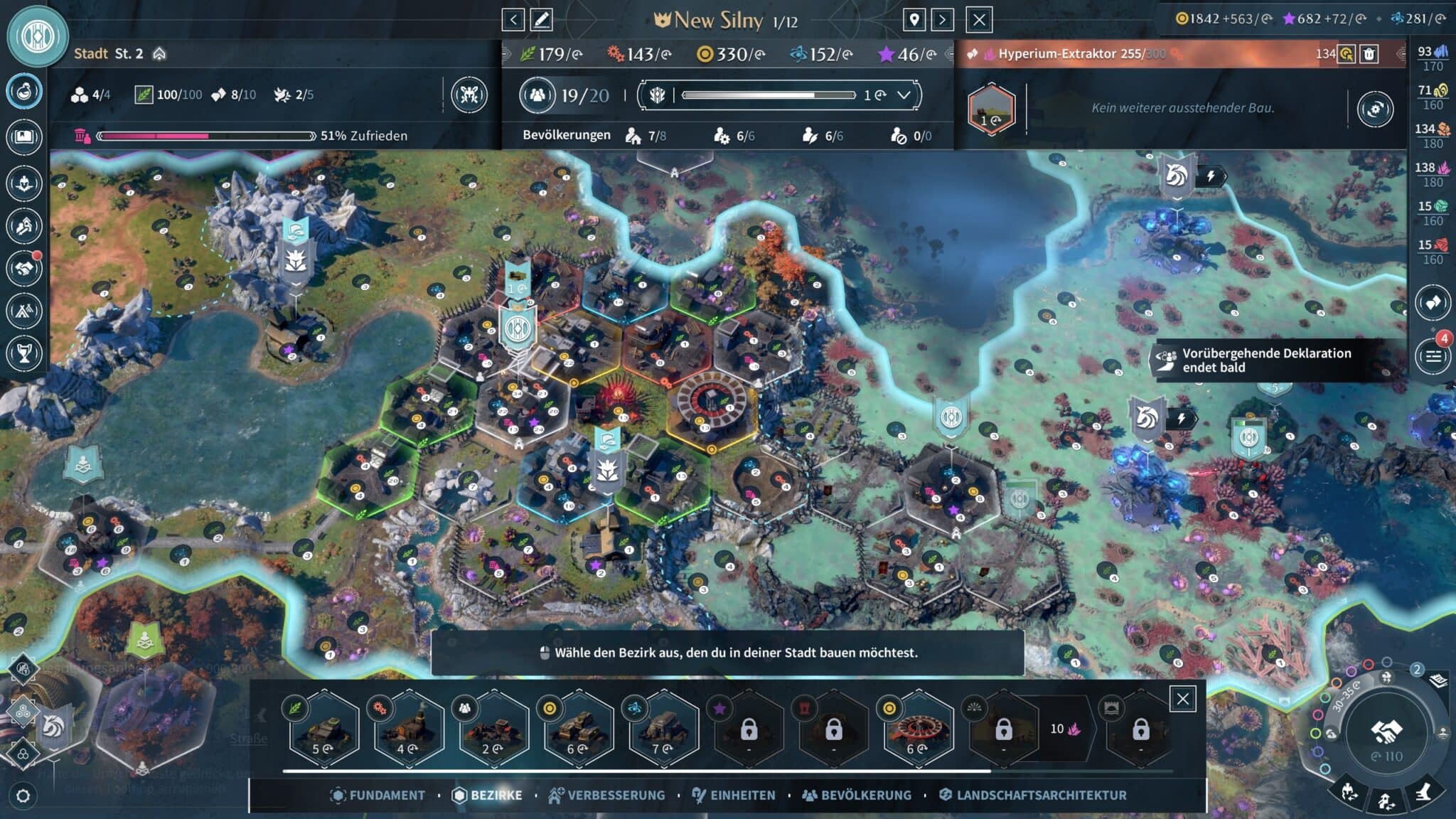
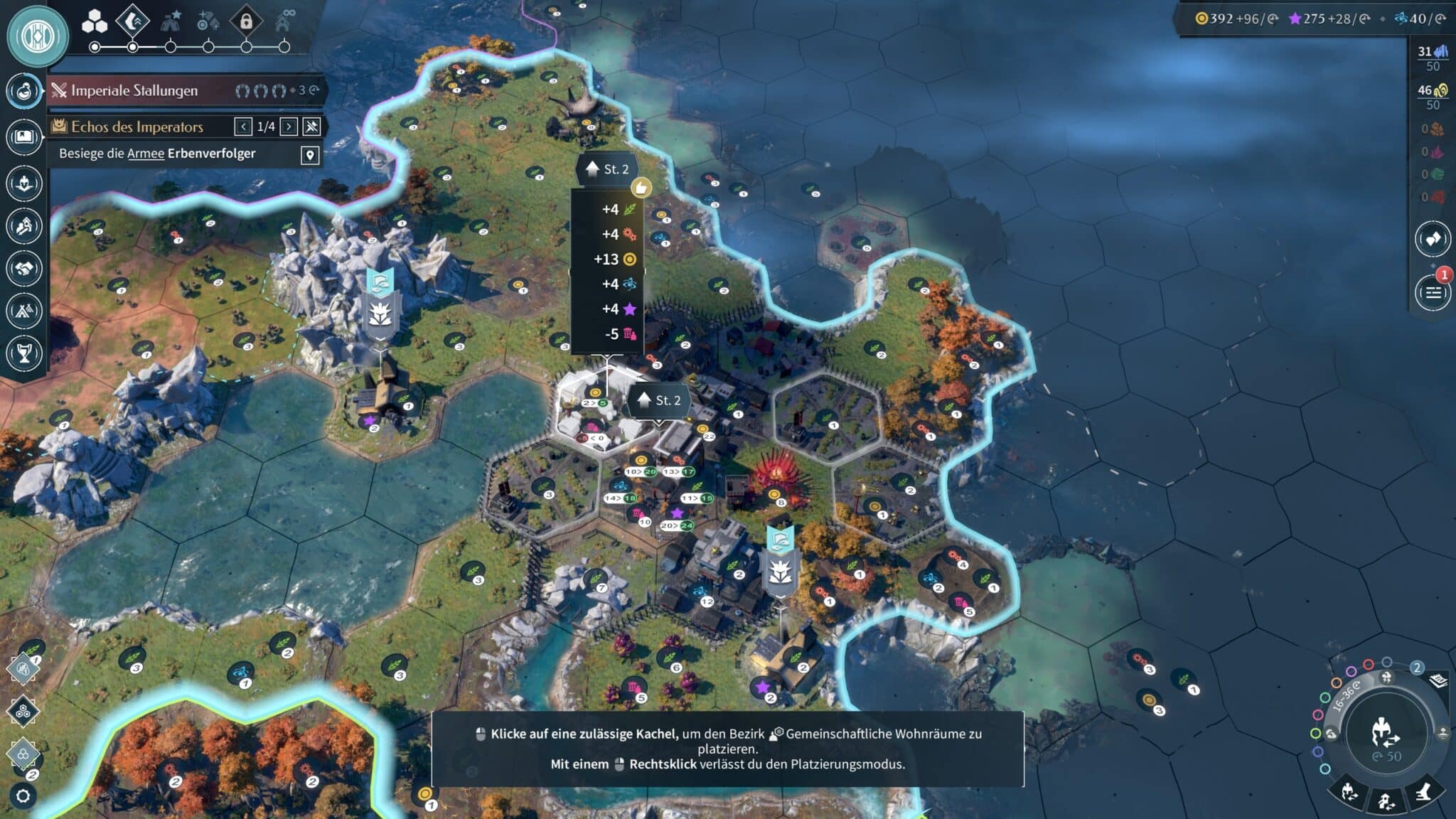
You start a game by founding your first city and then expand from there. The hex-based world is divided into sectors, which you gradually claim for your empire by using the resource “influence.” You can either develop a newly claimed province into another city or annex it to an existing one as territory, thereby increasing that city’s total output of production, food, money, influence, and science.
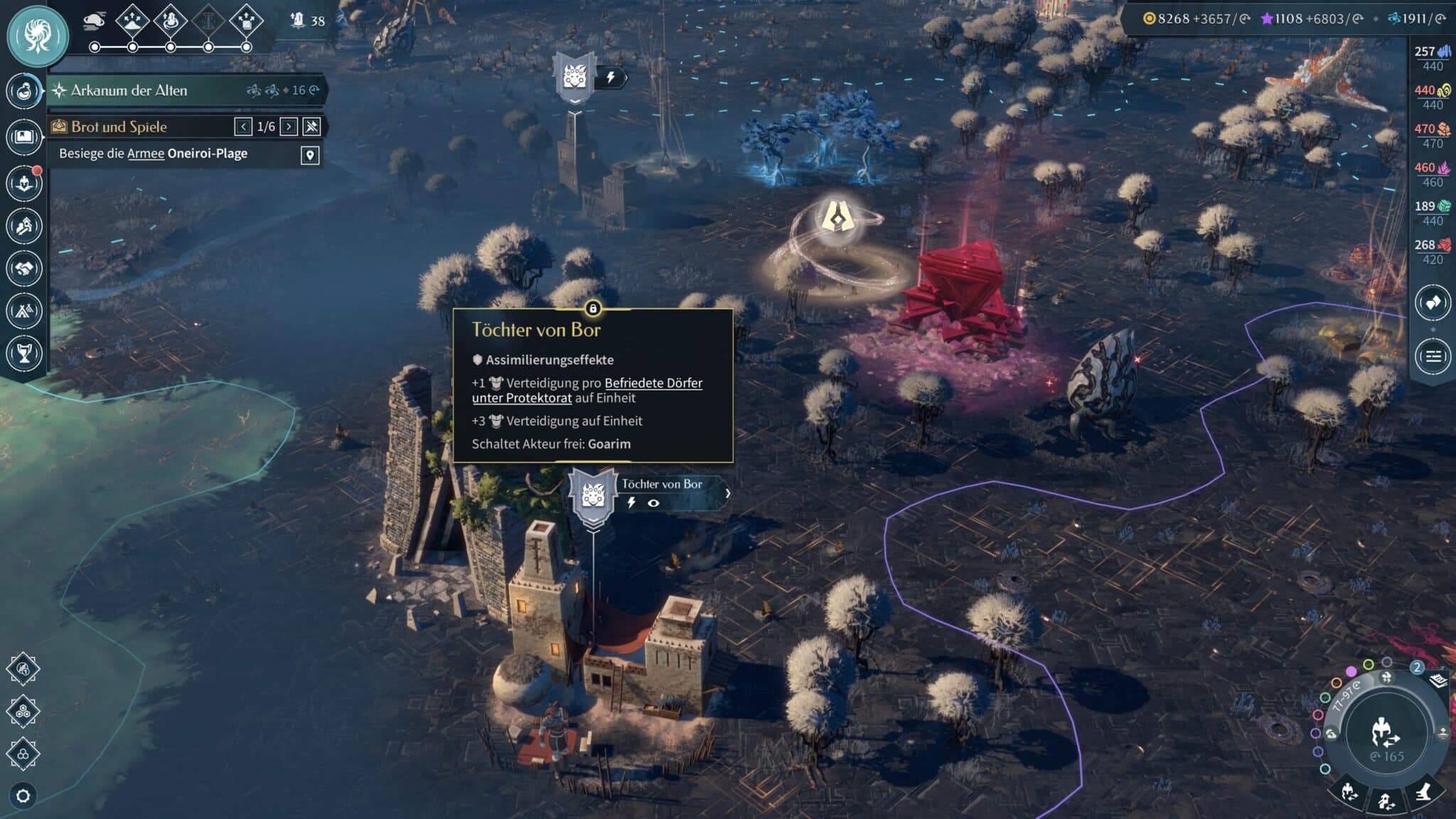
In the vast majority of these sectors, villages belonging to factions—some passive, some aggressive—await you; you can either fight them or assimilate them. To win them over to your side, you can bribe them or complete small side quests for them. Some will demand that you build specific structures, while others will require you to destroy an enemy army. If you’re on good terms with them, they’ll allow themselves to be declared protectorates, which grants you empire-wide bonuses.
This colorful world is also full of anomalies and special resources, some of which you’ll need to upgrade units or construct special buildings. However, these upgrades aren’t displayed as models on the map.
What is visible, however, are new districts that you can build around the city center and expand far beyond the province using additional foundations. Here, you’ll need to pay attention to neighborhood bonuses to increase your total food output, production, and so on.
The Imperial Administration Will Be Tedious
In principle, this system works reasonably well, but—much like *Humankind*, which is also from Amplitude—it lacks a bit of clarity in its design and impact. Unlike *Civilization*, the individual building decisions in *Endless Legend 2* rarely feel significant. Everything merely contributes to the settlement’s total output, but doesn’t unlock new possibilities or hold a candle to the construction of a wonder in comparable games.
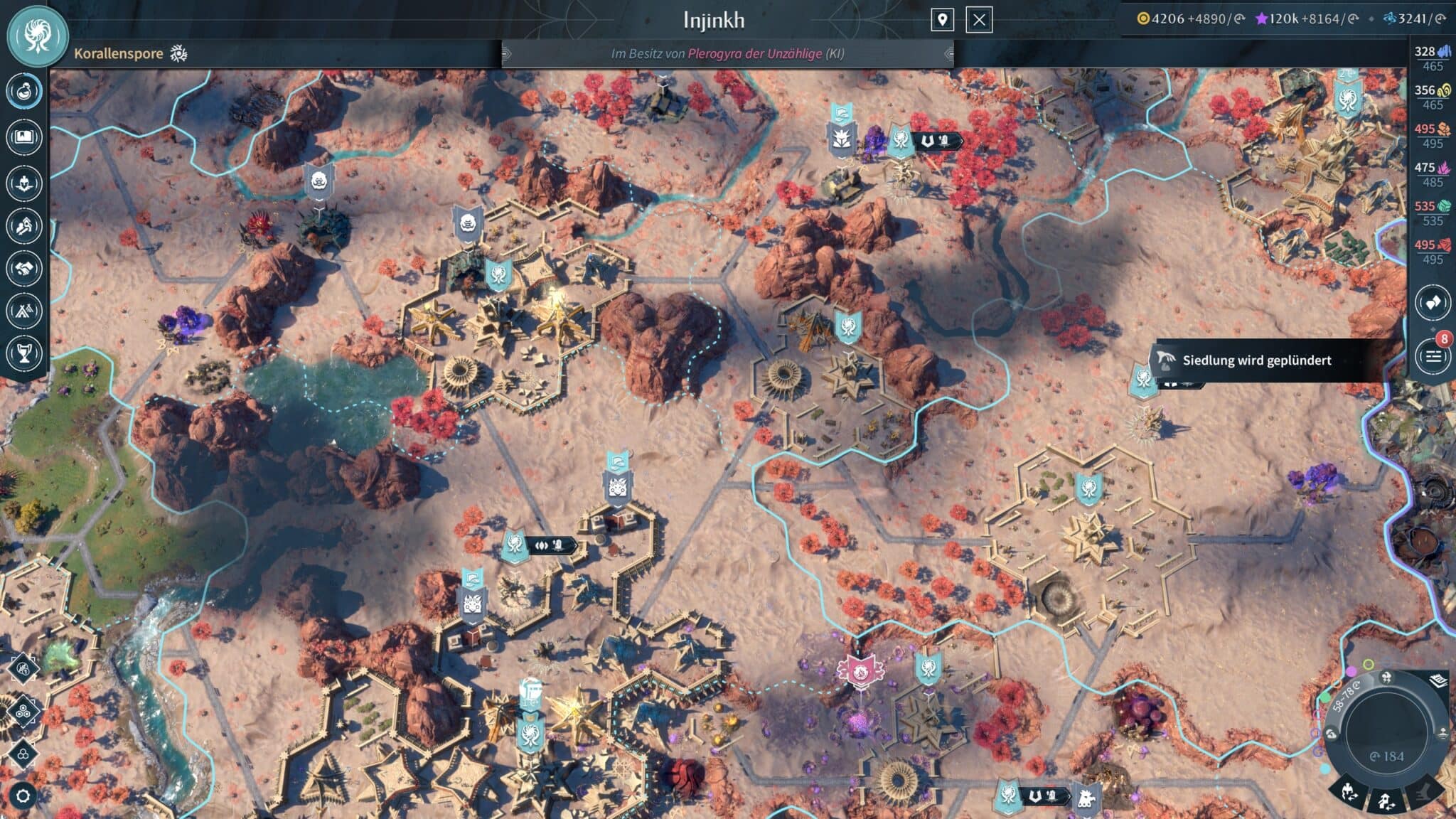
It doesn’t exactly help that the pretty and colorful graphics make it easy to lose track of the big picture. The building designs aren’t self-explanatory; only in the schematic view at a higher zoom level do color-coding make it clear which districts we’re looking at.
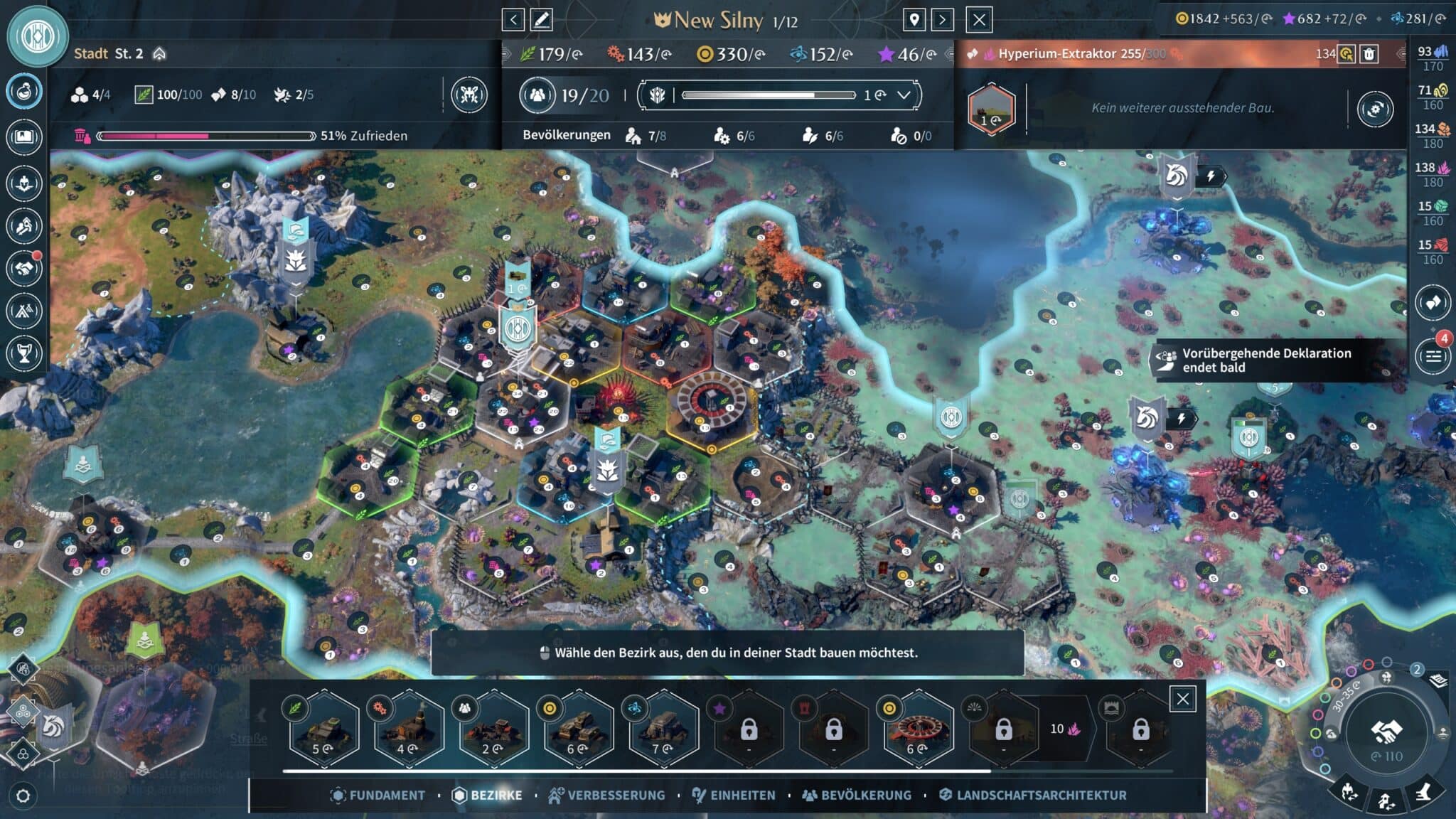
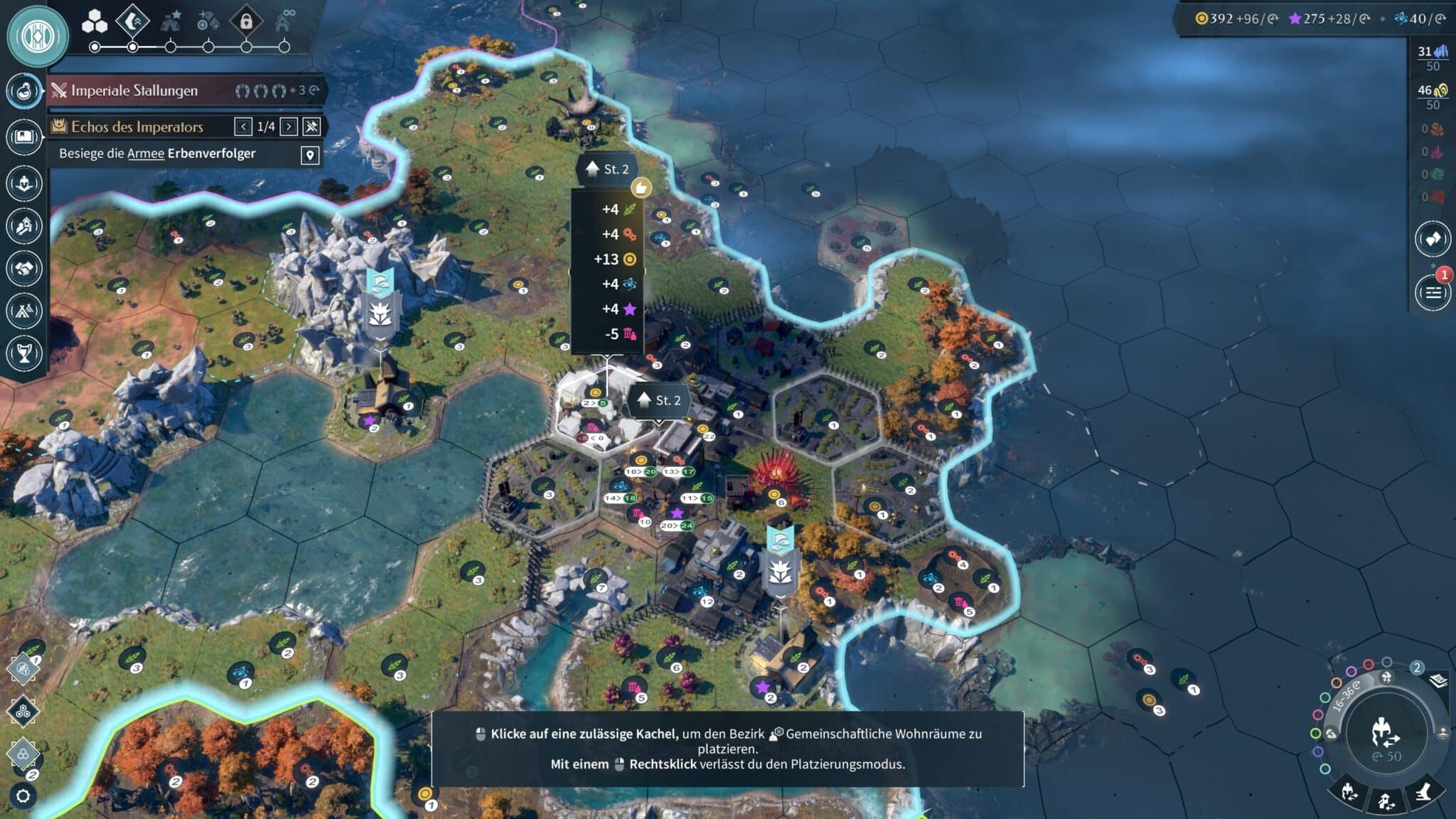
Although Amplitude has done a lot of work on the interface and building system based on player feedback, the overall experience hasn’t improved significantly. City management in Endless Legend 2 simply isn’t fun enough and becomes more tedious with every additional city, especially since the settlements don’t differ enough from one another.
The Race for Land
Even the quests from the minor factions quickly devolve into mandatory tasks that we work through. Especially when the tidal pull reveals new land.
As hinted at in the introduction, a dramatic upheaval occurs on Saiadha several times per game. After a monsoon phase—during which certain special conditions, such as limited visibility, prevail—the water recedes somewhat, revealing new provinces.
And, of course, a race for these provinces begins immediately—a feature that is unique to the genre and brings its own distinct dynamic. On the one hand, we look forward to new opportunities for expansion every time. Not least because this causes the borders to shift dramatically. A city that was once safe, surrounded by the ocean, can suddenly find itself right next to a kingdom that previously couldn’t even reach us.
On the other hand, though, we can’t help but groan a little inwardly every time the waters recede. Because many new provinces mean a lot of micromanagement. The armies have to claim the territories on the ground, watch out for rival factions, and complete quests.
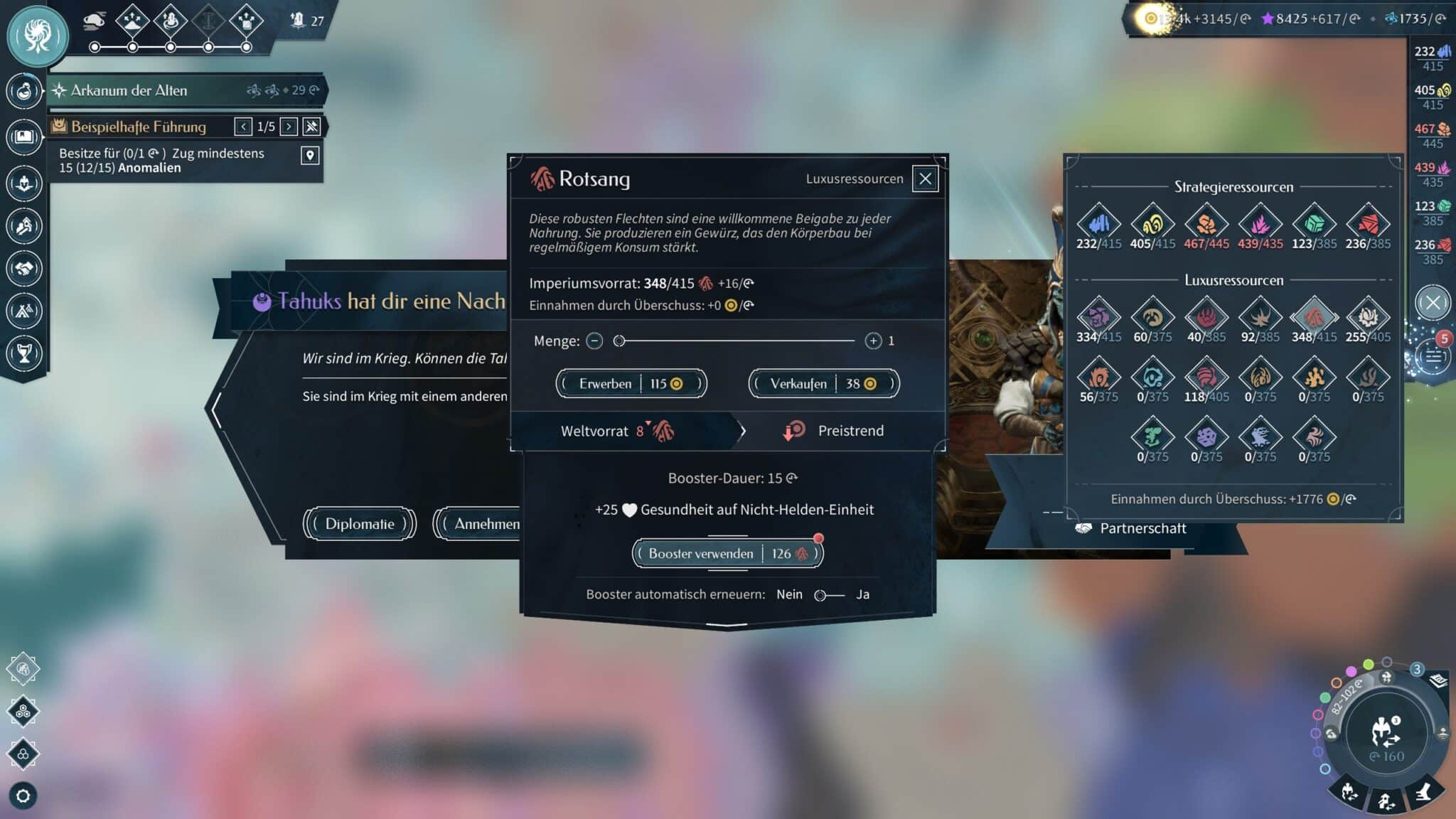
Originally, the idea was apparently that the world would become more threatening with each ocean phase. For example, terrifying creatures emerge from randomly generated rifts in the world and threaten your lands if you don’t fight them. However, many players didn’t like this. The external threats were therefore toned down to the point where they hardly play a role anymore.
Simple Turn-Based Tactics with Hero Units
Like Humankind, Endless Legend 2 features a turn-based combat system where the battlefields reflect the environment in which the armies clashed. This is a cool feature because it lets you use the geography to your advantage right on the world map—for example, by initiating combat from a cliff and thus starting with a height advantage right away.
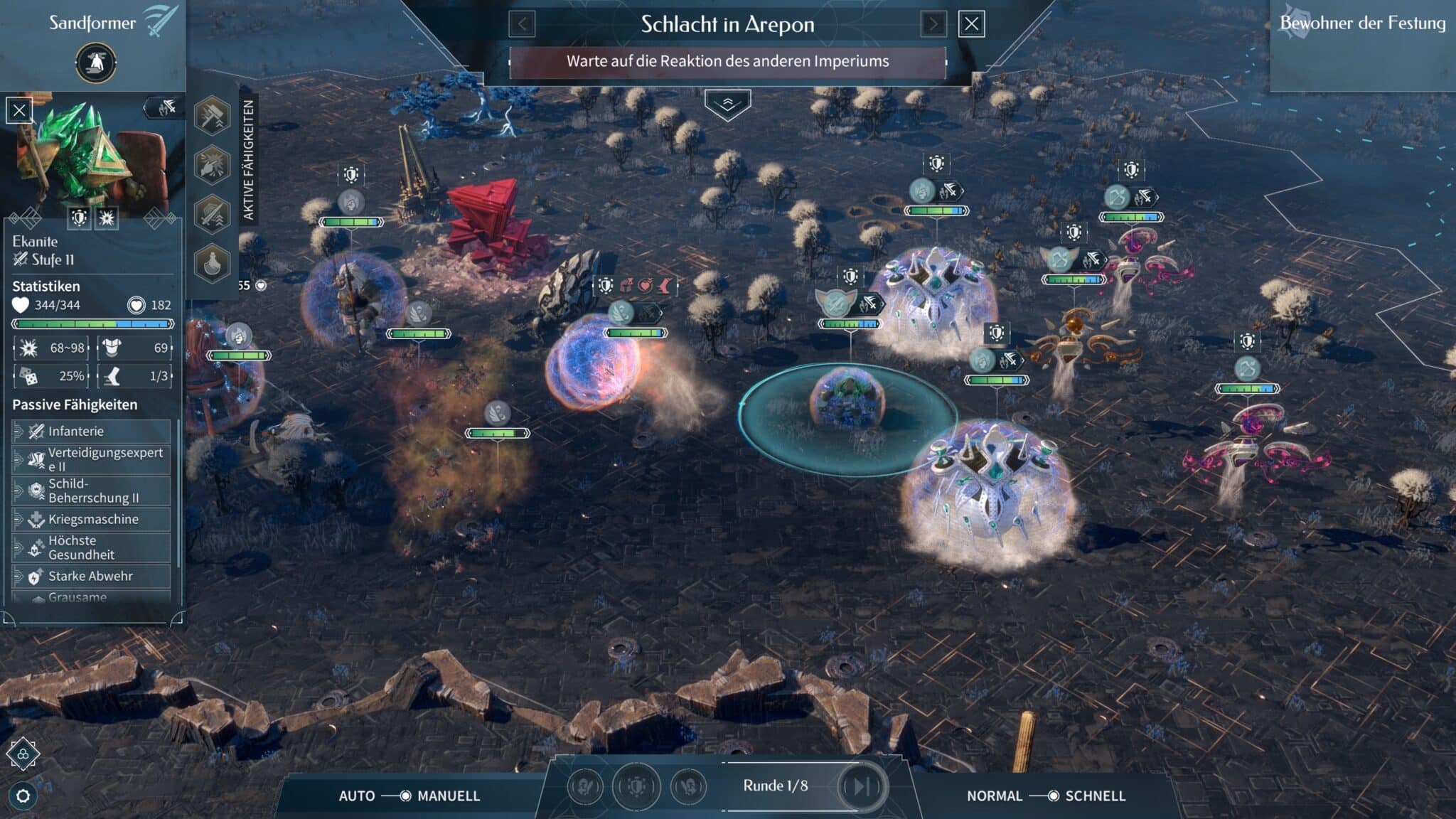
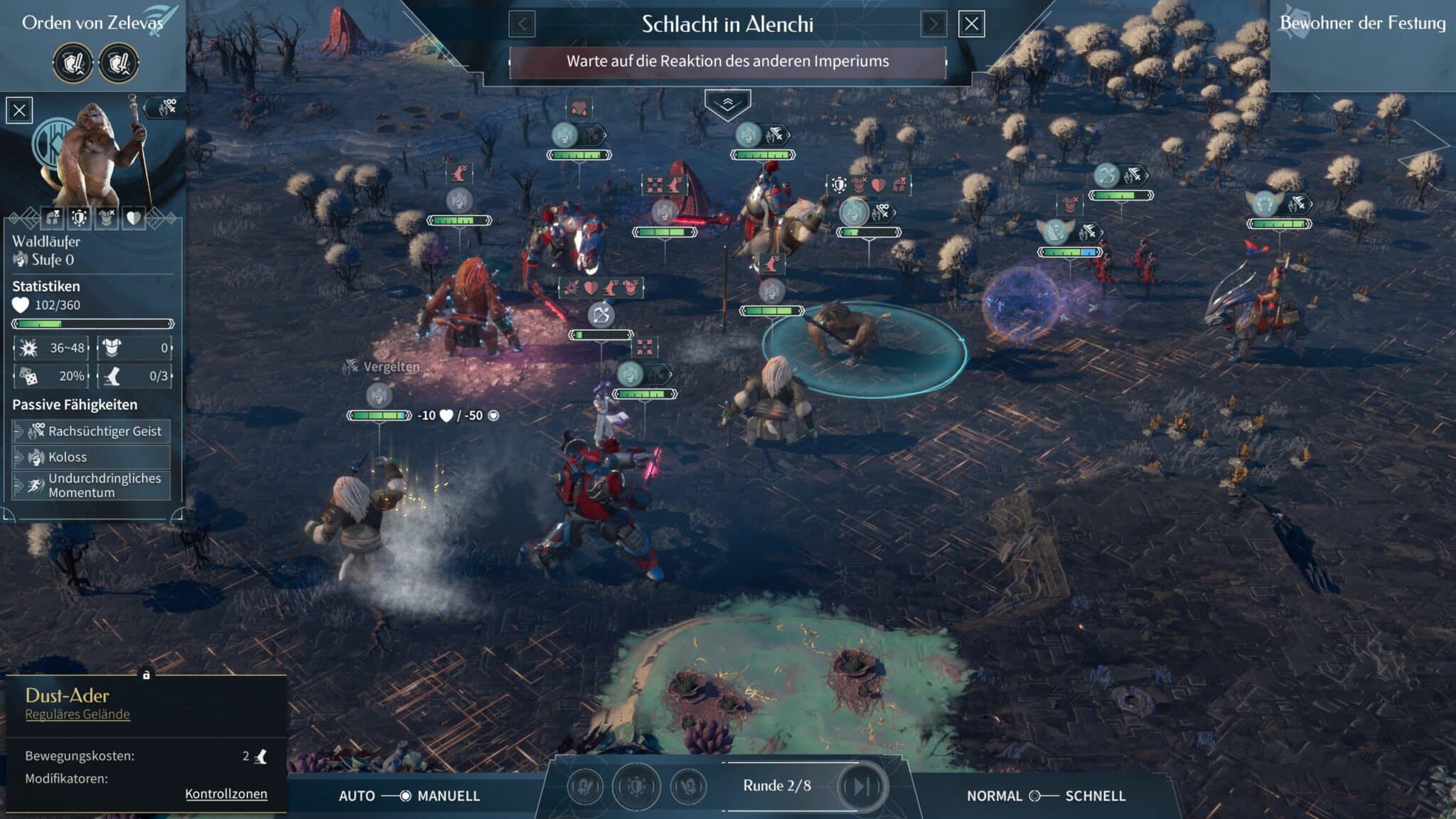
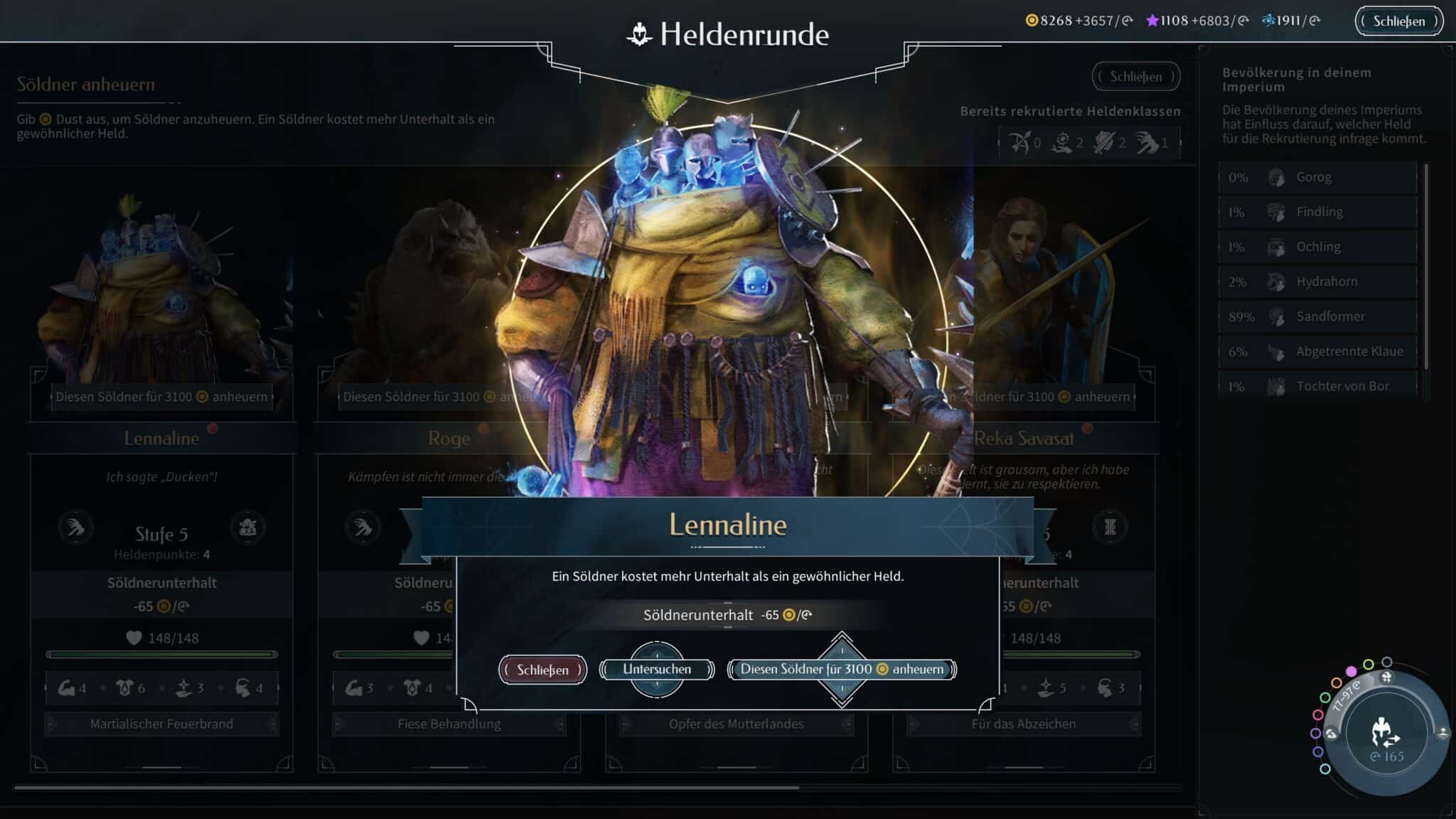
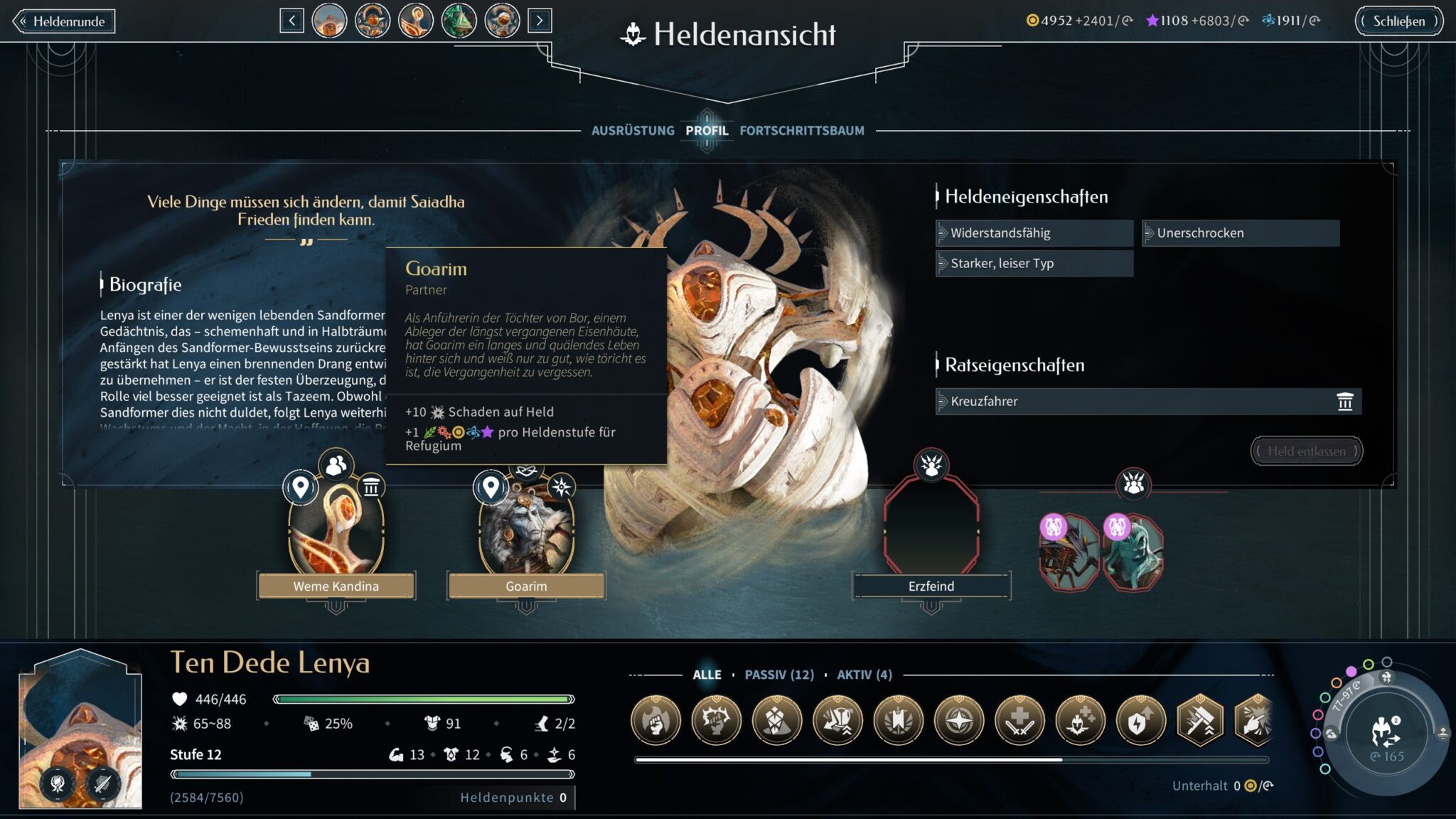
A maximum of two armies per side, each with six units, can participate in a battle. These include regular soldiers, large constructs, and magic-wielding monsters. In addition, you usually have around four or five hero units at your disposal, which don’t necessarily have to act as leaders but can also join an army as a regular unit.
You equip these heroes with items you find in the world or obtain through quests. You also unlock new abilities for them through level-ups.
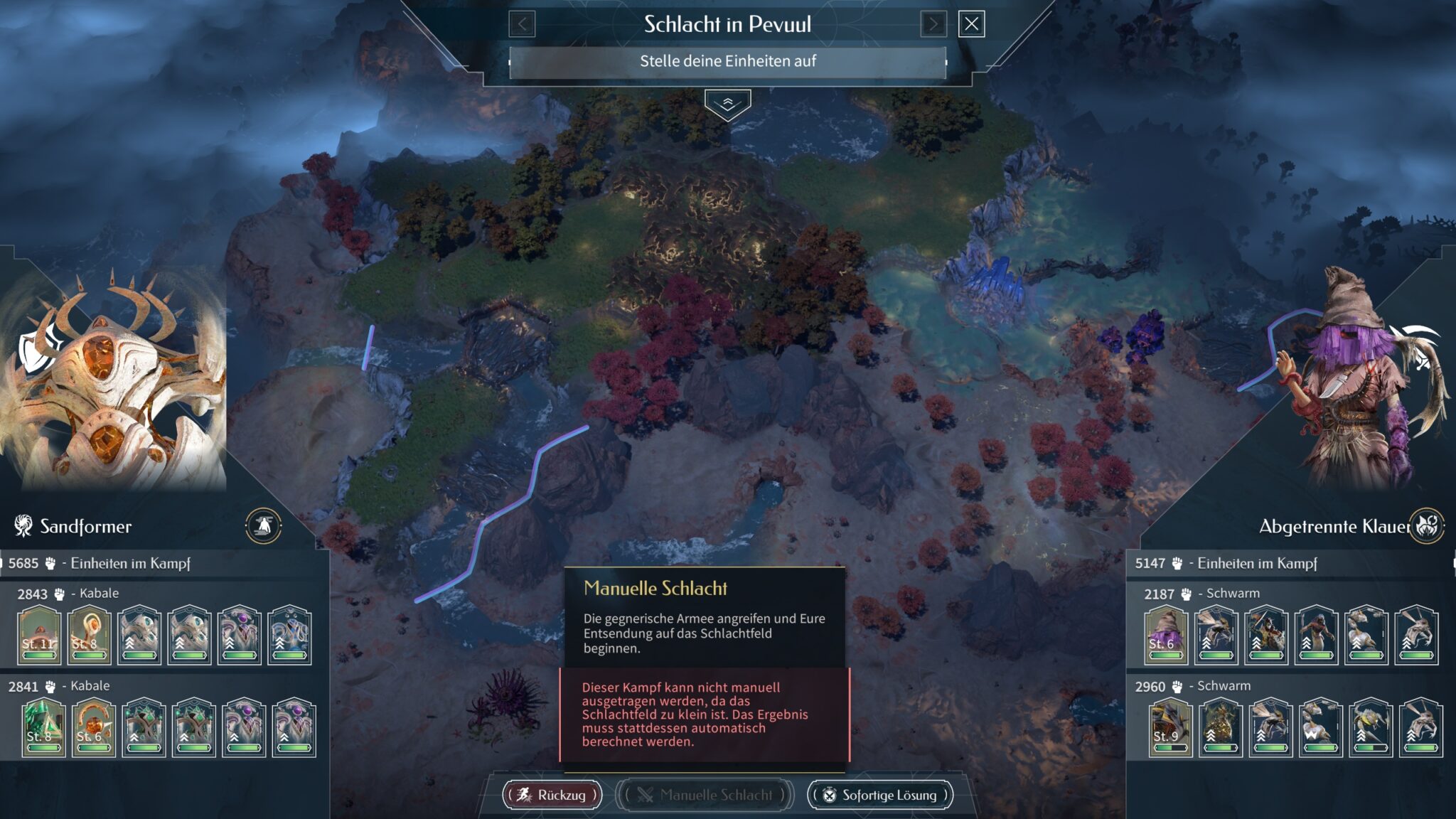
While the heroes develop a lot of personality through their charming portraits and brief dialogues—and end up growing on us more than our cities do—the combat, which has also been revamped, failed to fully convince us, just as it did a year ago.
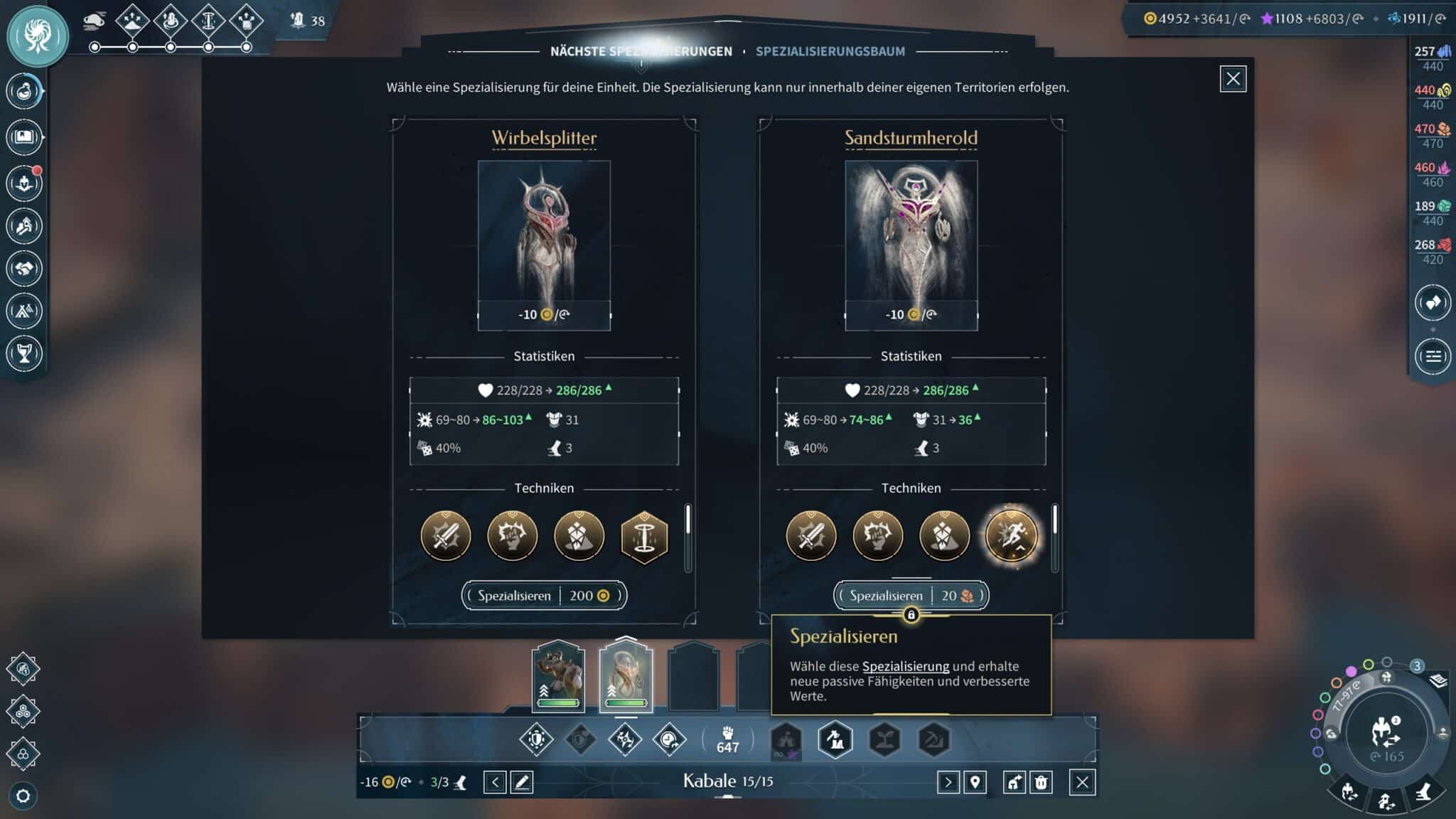
Units now have a control zone and receive additional buffs when they surround enemies. Overall, however, the core gameplay remains too repetitive and one-dimensional. As a result, this aspect too often devolves into a chore that we increasingly let the game handle automatically. Games like Age of Wonders 4 or Spellforce: Conquest of Eo offer significantly more exciting combat.
The AI remains predictable
Diplomacy has also been overhauled. You now have to pay attention to public opinion in both realms and have all sorts of options for negotiating treaties and issuing declarations.
Unless you’re playing for conquest, the need to take action usually only arises when an AI is heading toward victory faster than you are. That can happen easily enough, since the victory conditions are well-thought-out and cater to different playstyles. If you just play aimlessly, you’ll likely lose—at least on the higher difficulty levels.
By the way, we also lost our patience a few times during the endgame. In addition to increasingly lengthy turn calculations, there are significant input delays that can only be resolved by restarting the game. Otherwise, the game ran smoothly.
Editor’s Verdict
Endless Legend 2 thrives on its presentation and story-driven focus. Together, these elements keep the game engaging for two or three playthroughs, but after that—at least for me—the magic wore off. The core gameplay just plods along, without doing anything seriously wrong, but also without feeling satisfying in the long run.
Many well-intentioned updates during the Early Access phase didn’t really change anything. Some changes were even counterproductive or over-polished. As a result, I had less fun playing it now than I’d hoped for a year ago.
If you’re just looking for an unusual experience with a bit of a story, this might work for you. But if you’re searching for the next time-sink that you can play over and over again, you probably won’t find it here.


