





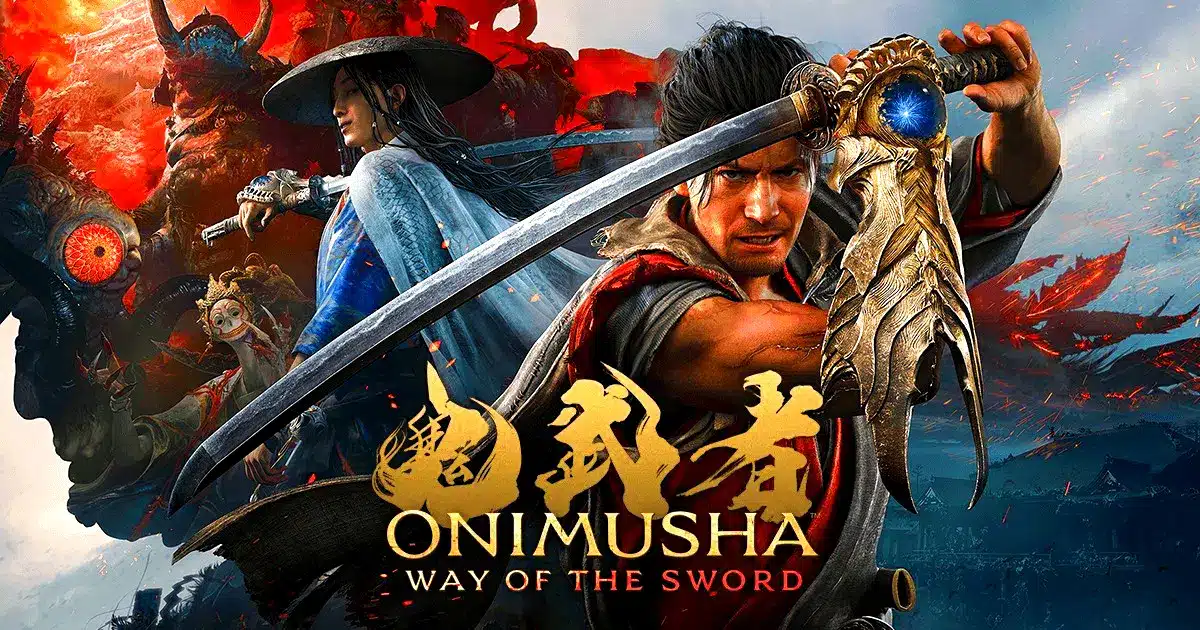
About 20 years after the last installment, the Japanese action series Onimusha is making its long-awaited comeback with Way of the Sword. Jesko has already had a chance to play it and says: Rarely has beating up demons been more fun than it is here.
September is bursting with top-tier game releases this year, as hardly any publisher wants to get run over by the GTA hype train this fall. Those who can afford it are moving up their release dates. Capcom is doing just that with Onimusha: Way of the Sword; the action-adventure game was recently moved up to early September.
Shortly before gamescom, the Japanese publisher visited the GameStar editorial office to present its lineup for the upcoming trade show. As the Japan expert, I was tasked with putting my katana skills to the test and seeing what the comeback of this veteran hack-and-slash series has to offer.
My colleague Phil’s challenge: a no-death run. If I could defeat the three bosses and reach the end of the demo without dying, he’d take care of restocking the candy drawer. So there was a lot at stake.
I actually didn’t die—at least not during the demo’s last two bosses. I think that counts.
Disclaimer:Capcom visited us with a roughly 2-hour demo version for the PS5 Pro, which we were not allowed to record freely. The images shown were provided by Capcom. The lunch we shared as part of the event was paid for by Capcom. Of course, this has no influence on our editorial coverage.
No Vacation Setting
But let’s start at the very beginning. Onimusha: Way of the Sword is the latest installment in a time-honored action series from Capcom that has been dormant for 20 years. In the series, I always take on the role of a famous Japanese swordsman—in the latest installment, I’m the legendary duelist Miyamoto Musashi, who is said to have gone undefeated in 62 battles.
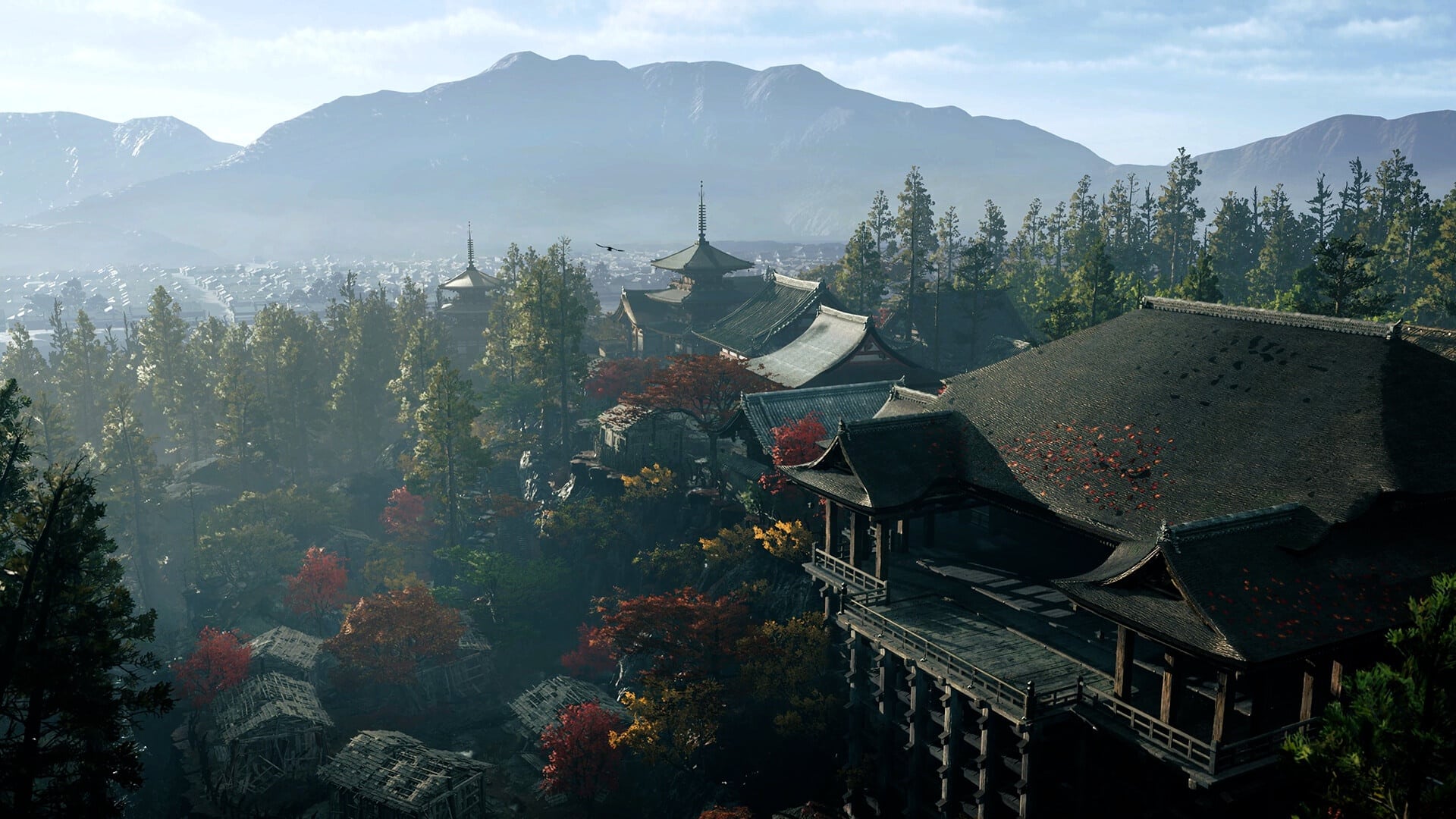
Way of the Sword is set during the early Edo period in the former capital of Kyoto, whose splendor has, however, suffered greatly due to centuries of war. Instead, a grim corruption is spreading across the capital: the gates of hell have opened, andthe streets are haunted by the demonic Genma.
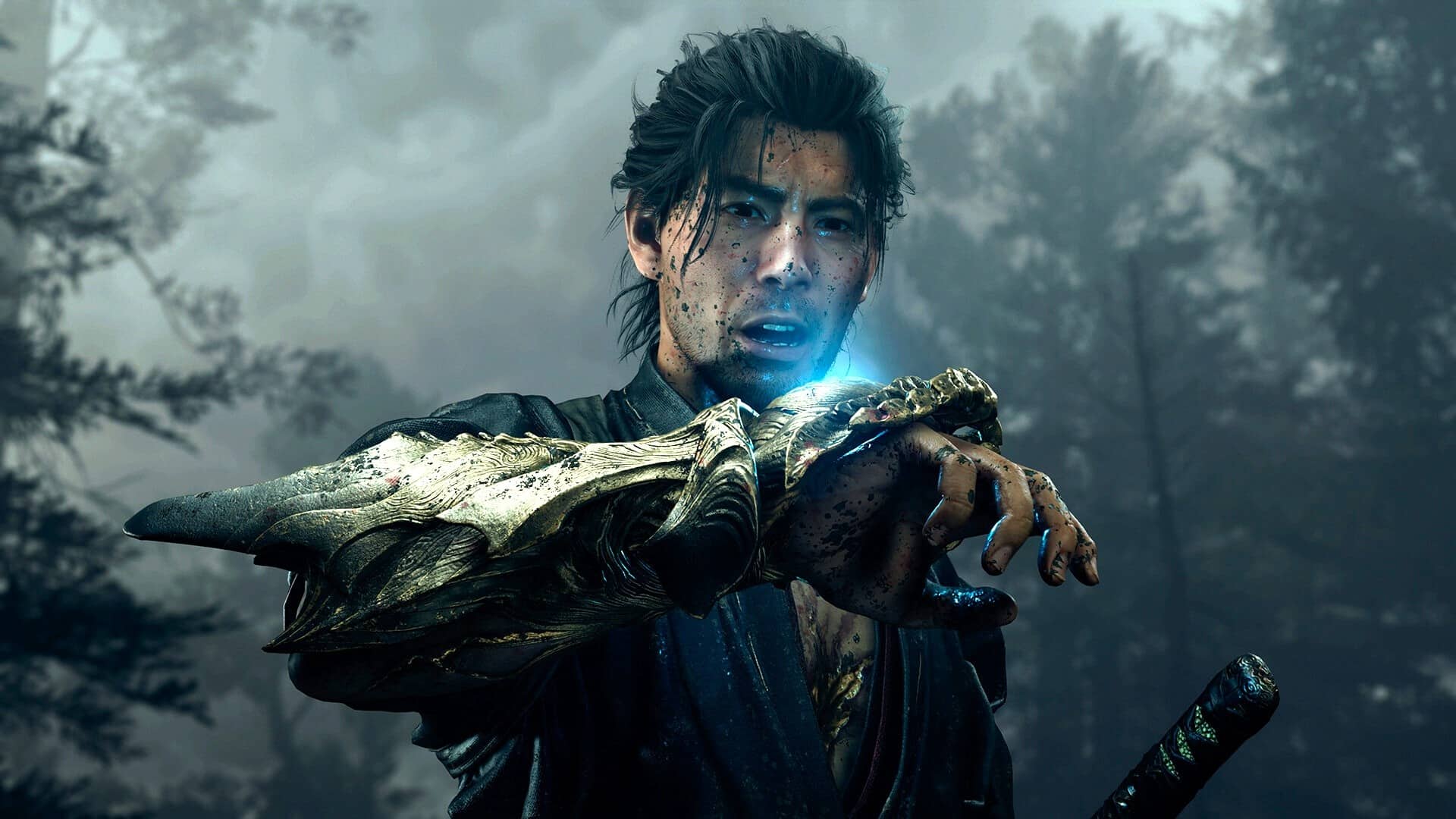
How and why—that’s what I’ll have to figure out as the game progresses. One thing is certain, though: I’m the only one who can stand up to the demons, because a mysterious force gave me an Oni glove at the start of the game. With it, I collect the souls of defeated demons and absorb their supernatural abilities.
Deadly-Fast Blade Dance
Battles against the spawn of hell have always been at the forefront of Onimusha (which roughly translates to “Demon Warrior” in German). The Genma appear in all sorts of forms—from ravenous, drooling ogres to bouncing heads; there are truly some oddities here.
I face the Genma with the genre’s typical mix of sword strikes, precise parries, and well-timed evasive maneuvers—plus, Musashi can deflect enemy strikes, which severely drains their stamina. The basic pattern of red and blue attacks is familiar, though; the combat flows wonderfully smoothly and convincingly conveys the deadly speed of the samurai blades.
With its dark fantasy take on ancient Japan, the new Onimusha is visually very reminiscent ofSekiro: Shadows Die Twice. However, the Capcom title is significantly less punishing than its FromSoftware cousin. Instead of a hardcore Soulslike, this feels more like a “lite” version; I mow down most enemies effortlessly.
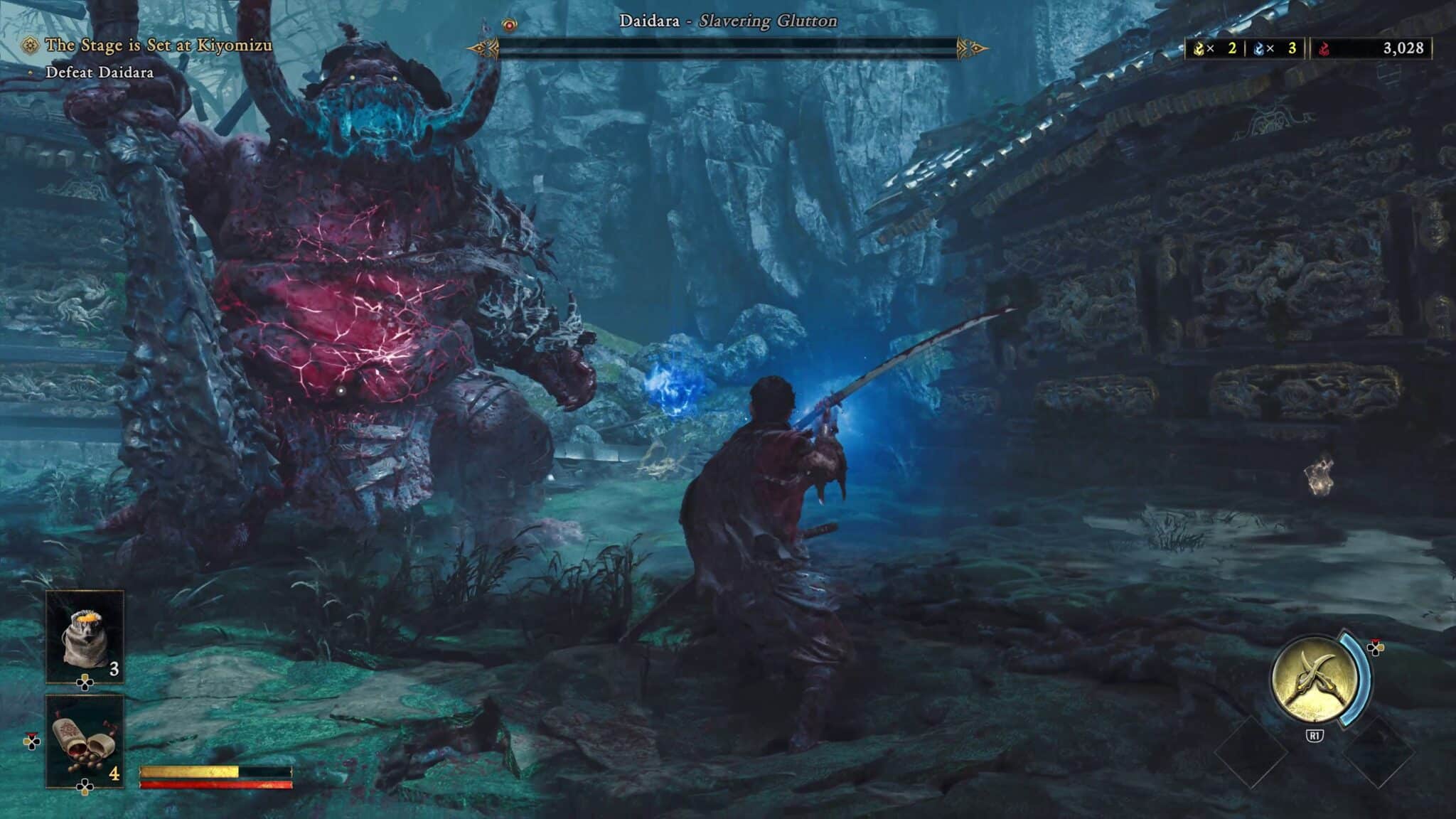
Precise timing is still important, though, becausethe bosses’ strikes pack a punch. If you miss a parry or roll out of the way too late, you’ll quickly find yourself face-down on the ground—which definitely didn’t happen to me during the demo’s first boss fight, ahem… Okay, okay, maybe it did. But I’ll chalk that up to not being familiar with the controls yet. After that, everything went like clockwork, and you could argue that I pulled off my no-death run.
Tactics and Environment
By the way, it’s not enough to just whittle down the enemy’s health and stamina bars. During combat, I have to make sure to regularly use my gauntlet to absorb the falling Genma souls in the environment—among other things, they restore my stamina and health, but they also grant me skill points. However, some boss enemies also help themselves to the souls and heal themselves back up during battles.This adds a tactical element to the duels.
Light Puzzles
The second pillar of Onimusha’s gameplay, alongside the combat, is the puzzles. I can rarely just march straight to my goal in ancient Japan; paths are often blocked by obstacles. Sometimes I have to move a large cube, sometimes knock down a few stones with a well-aimed arrow, and sometimes collect a few escaped stone Buddhas.
Overall, though, the puzzles aren’t too complex and can be solved quickly with a little bit of brainpower. In *Way of the Sword*, they serve more asa nice change of pace between battlesand take up significantly less space than in other Capcom releases like*Resident Evil: Requiem*or*Pragmata.*
The game is also quite linear; even without a map, I eventually figure out where to go. By solving puzzles and defeating bosses, I work my way bit by bit through the various interconnected zones of Kyoto, ridding the capital of demonic corruption.

Technology and Graphics
The game’s technical implementation appears to be successful, at least based on the demo. On the PS5 Pro, Way of the Sword remains pleasantly smooth and doesn’t stutter even during hectic battles with multiple enemies. As for the PC version, however, I won’t be able to assess it until release; Capcom only had the PlayStation version available during the hands-on session.
The game’s visual design, on the other hand, is a mixed bag. The demo’s opening in a surreal Oni dimension captivates me with its fantastic look. The floating boulders, with their gold veins, are reminiscent of Japanese porcelain repaired using kintsugi (with gold and lacquer glue); the paths are lined with dilapidated shrine torii gates and stone lanterns.
In other areas, however, it could have used a bit more color. The parts of Kyoto marked by decay are shrouded in an uninviting gray-brown hue that doesn’t exactly make you want to plan your next vacation to Japan. In reality, Kyoto’s temples and shrines are known, among other things, for their vibrant colors.
That said, during the demo I only saw about two hours of the new Onimusha’s campaign. At this point, I simply don’t know what the rest of the game looks like. Performance, at least, shouldn’t be an issue. Because in its core discipline—sword fighting—Onimusha already looks absolutely fantastic.
Editor’s Verdict
With *Onimusha: Way of the Sword*, Capcom is pulling one of its oldest blades back out of the display case. And sure enough, even after 20 years, it’s still sharp. Thanks to innovations in the Soul System, *Onimusha* still feels fresh even after all these years. The fast-paced combat is a feast for the eyes; the well-balanced mix of hordes of weaker enemies to mow down and tough bosses keeps you engaged in the long run and makes me feel like a true samurai
Whether the story can captivate, however, is another matter entirely. In the demo, I’m bombarded with all sorts of names from Japanese history that, as a connoisseur, certainly catch my attention—but most players probably couldn’t care less about these details. The PC performance and the visuals, which are still a bit muddy in places, also raise some questions at this point.
The new Onimusha already has the right ingredients for a damn good samurai game, though—partly because Miyamoto Musashi, the reluctant glove-wearer, is simply a damn likable character thanks to his dry sense of humor.


