





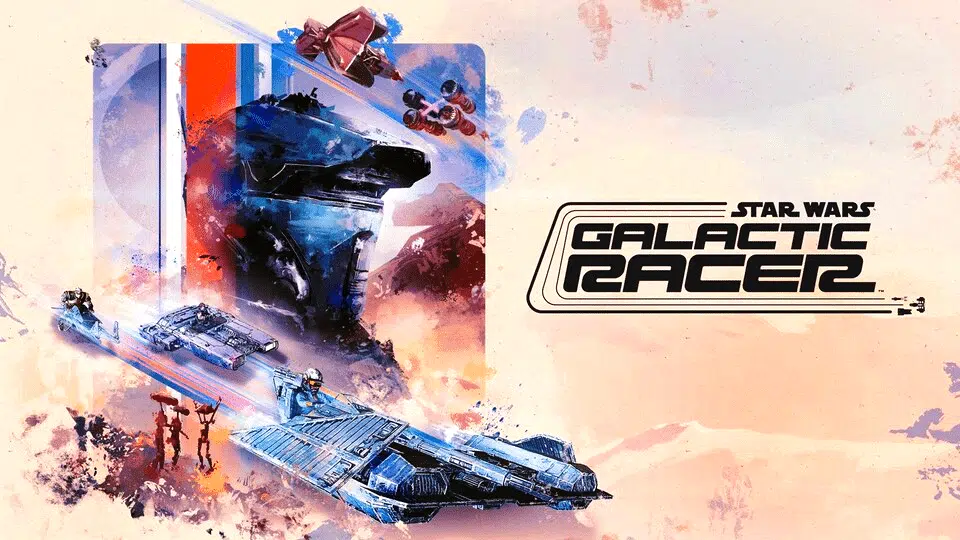
After 24 years, Galactic Racer brings back a legendary concept: Star Wars as a racing game! But in our review, this speedster runs out of steam pretty quickly.
“No pod racers, no purchase,” was the top comment under my latest video on Star Wars: Galactic Racer on YouTube. Over 230 thumbs up—and dozens of other users are singing the same tune; many people are so eager for a revival of the legendary Episode 1 Racer from 1999. But Galactic Racer takes—or rather, races—a different path: The famous pod races play only a minor role; instead, you zoom across the galactic tracks on speeder bikes, gliders, and so-called skim speeders.
For this review, I raced my way up the career ladder, pushed opponents into the barriers, and blazed through lava, snow, scorching heat, and pools of acid—and unfortunately, unfortunately, I have to admit: Galactic Racer has much bigger problems than the lack of pod races.
Table of Contents
Sometimes less is more
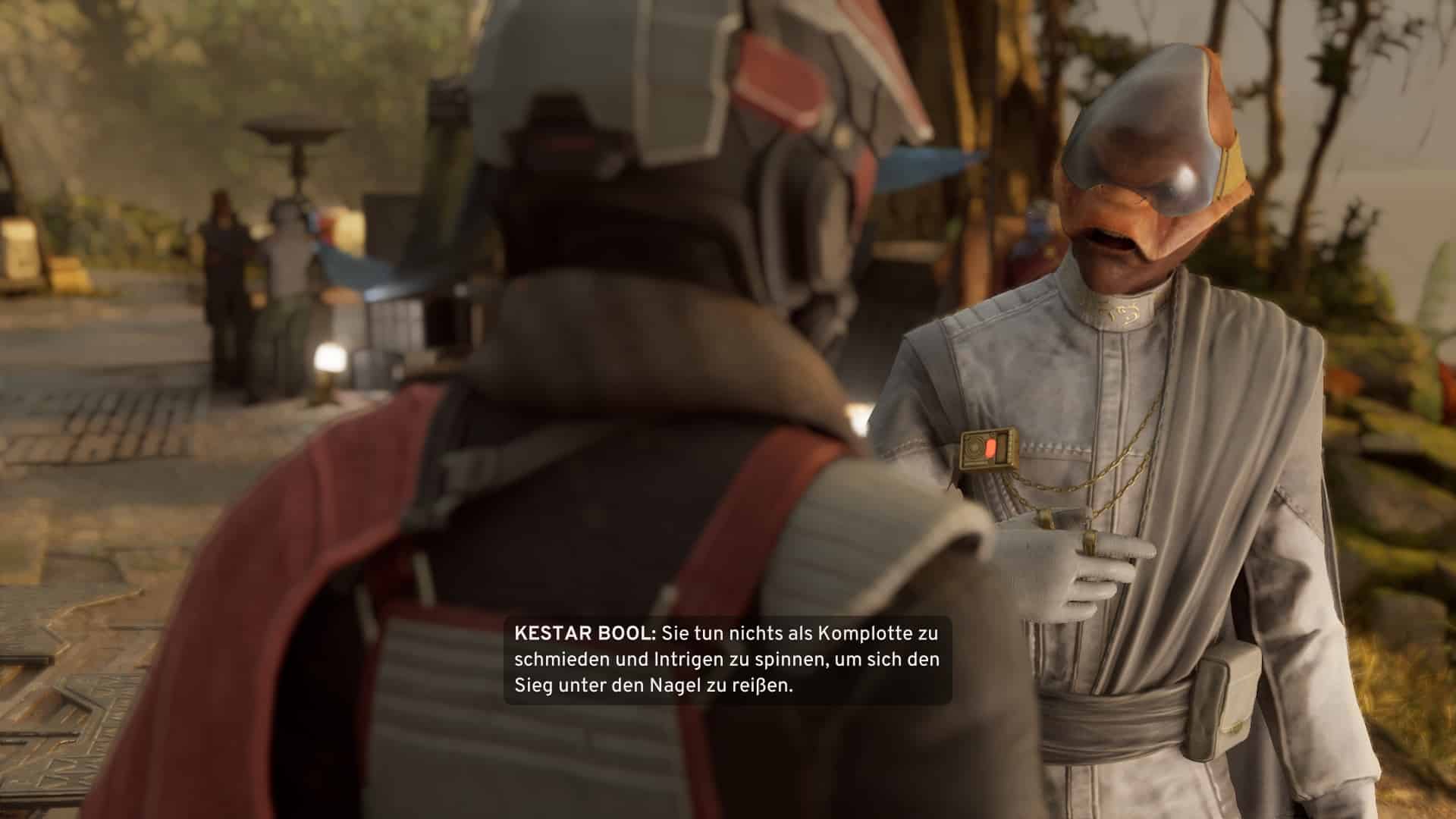
Galactic Racer goes the extra mile when it comes to story, serving up a full-fledged campaign with cutscenes and dialogue, and letting you explore small hub areas across dozens of planets. Shortly after Episode 6, the evil Empire has been overthrown, racing can finally flourish again, entrepreneur Darius Pax proclaims the Galactic League, and as the driver Shade, you make a name for yourself. But there’s an extra motivation simmering in your heart, because Shade has a very personal score to settle with the arrogant racing ace Kestar Bool.
I write “go the extra mile” as if that’s automatically a good thing… but it isn’t here. Galactic Racer would have done itself a huge favor by simply giving me ten cool characters—just like Episode 1 Racer—along with an atmospheric arcade mode and off we go. Sometimes less is more.
Instead, we get a campaign so poorly written that some of the dialogue almost belongs in a Dadaist exhibition. I didn’t understand the content of this one even after listening to it three times, so here’s the full quote with all the context the game provides:
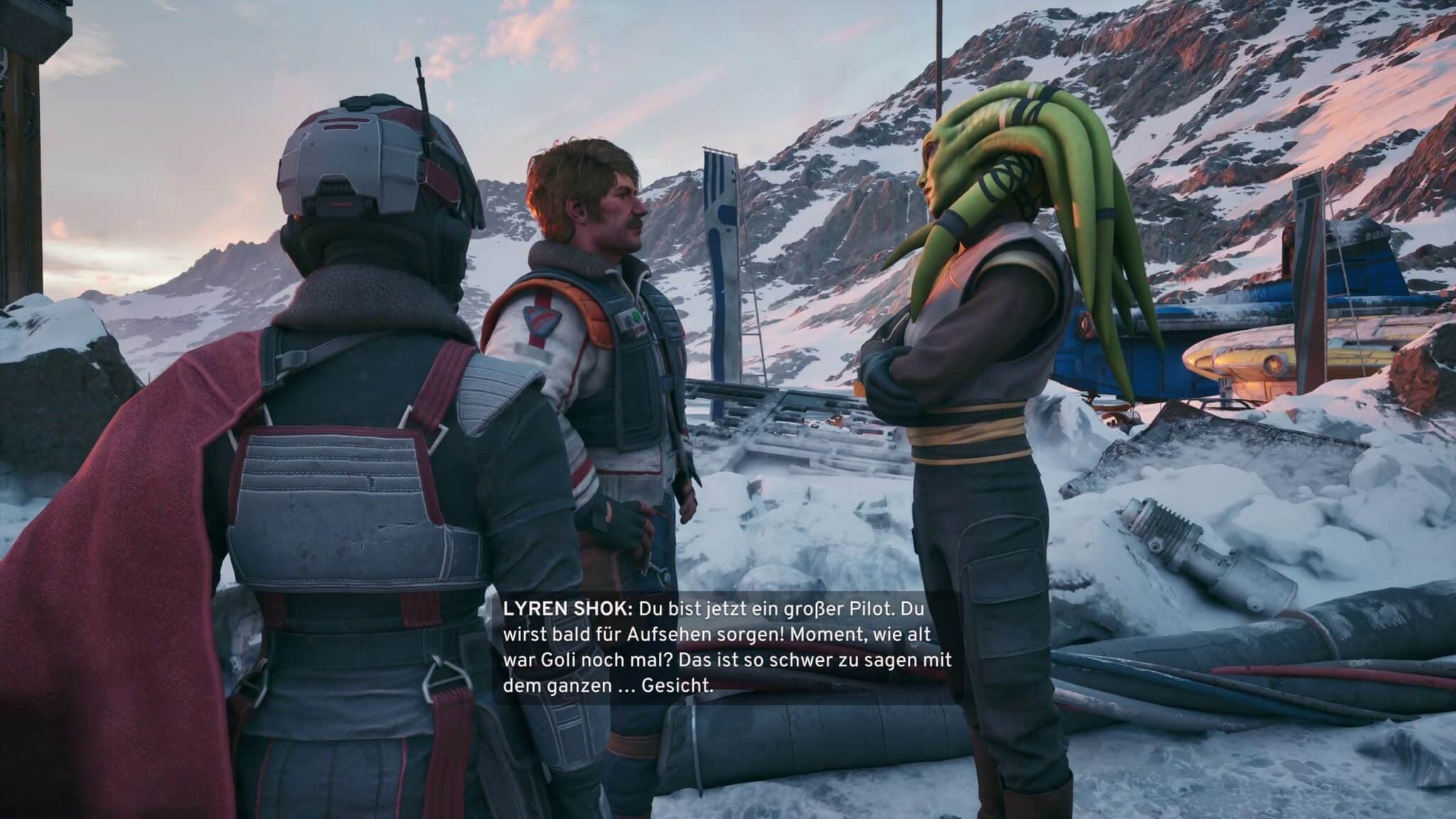
Soren Zaks: Are you crazy? You can’t just say that to a rookie!
Lyren Shok: You’re a great pilot now. You’re going to make a splash soon! Wait, how old was Goli again? It’s so hard to tell with all that… face.
Soren Zaks: Lyren, you’re truly unbelievable.
Lyren Shok: What’s going on here? No one else is looking out for the rookie. I’m just trying to help!
Soren Zaks: How about this: Goli would like to learn more about racing. Stick to that. Leave… biology and romance to someone else.
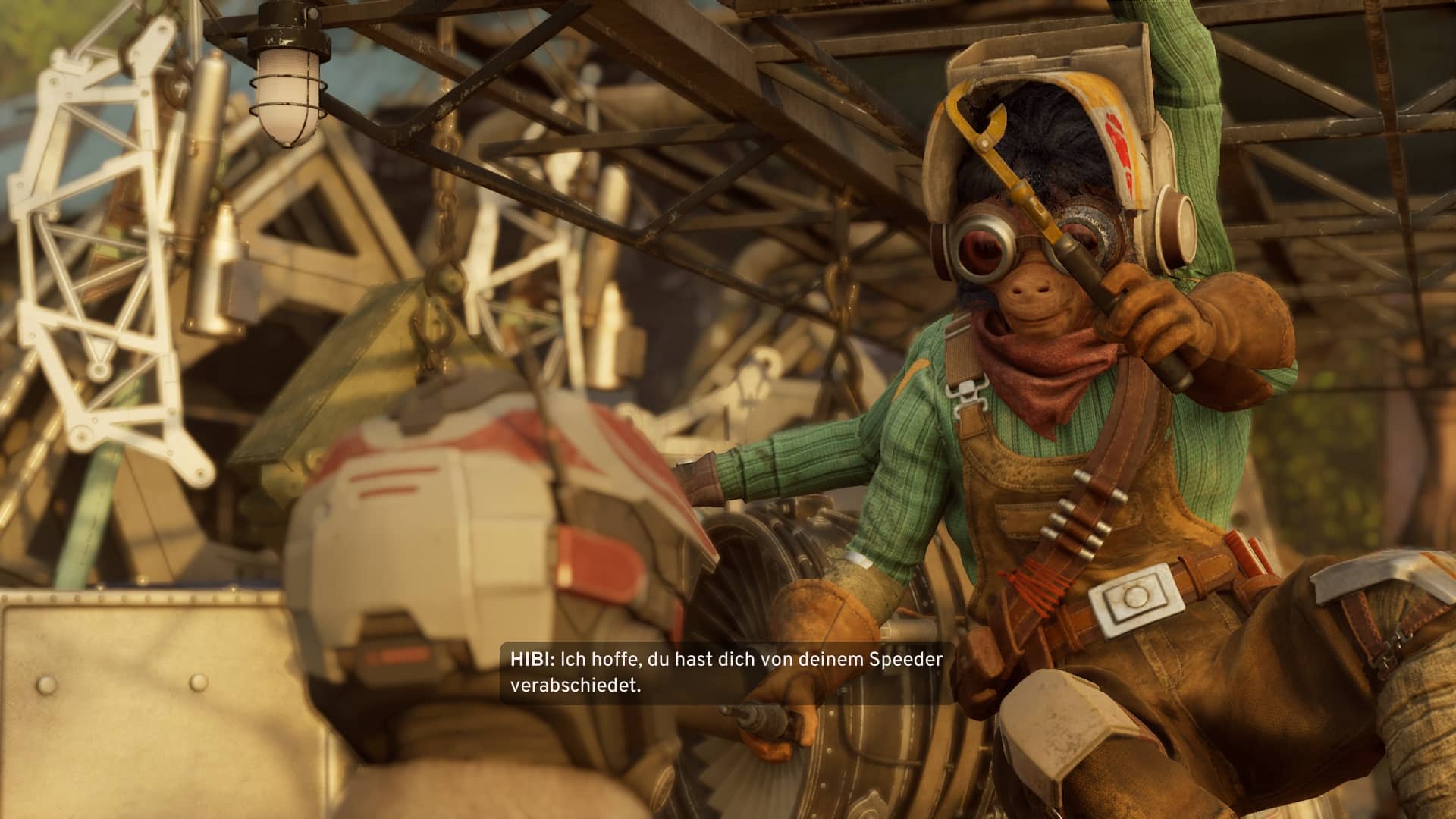
But even setting aside the dreadful dialogue direction, the story doesn’t hold together from start to finish. Shade is recruited by the head of the Galactic League to oust his rival Kestar Bool, because Bool’s success somehow threatens the Galactic League as a whole, but the League head can’t disqualify Bool himself because… oh, I don’t know. Let’s talk about the gameplay.
A Roguelite as a Racing Game?
At the heart of Galactic Racer is the roguelite campaign. Shade receives an entry token and uses it to complete as many races as possible—and as successfully as possible—in order to eventually defeat Kestar Bool in the grand finale. Well, you actually beat Kestar Bool in almost every race before that, since he’s competing in all of them, but for some reason, only that final big race counts. And even that doesn’t really count, but I don’t want to spoil anything.
All the victories leading up to that, however, do at least earn you money and upgrades to improve your vehicle’s handling, ram, boosts, defense, and other minor details. Some perk cards also alter your vehicle’s stats—for example, you’ll deal double damage if you rev your engine into the red zone.
If your car crashes into a wall too often, however, it’s Game Over and you’ll have to start all over again. You can then invest the currency and experience you’ve earned into permanent upgrades that slightly improve your chances the next time you play. Additionally, the order of the locations rotates, so each run differs slightly from the previous one.
So far, so motivating: It’s hard to resist the classic roguelite carrot—the “Come on, this time it’ll go better” mentality. But the developers are masking a problem here that runs much deeper and ultimately ruins the experience: Galactic Racer just isn’t a particularly exciting game.
The Potemkin Village
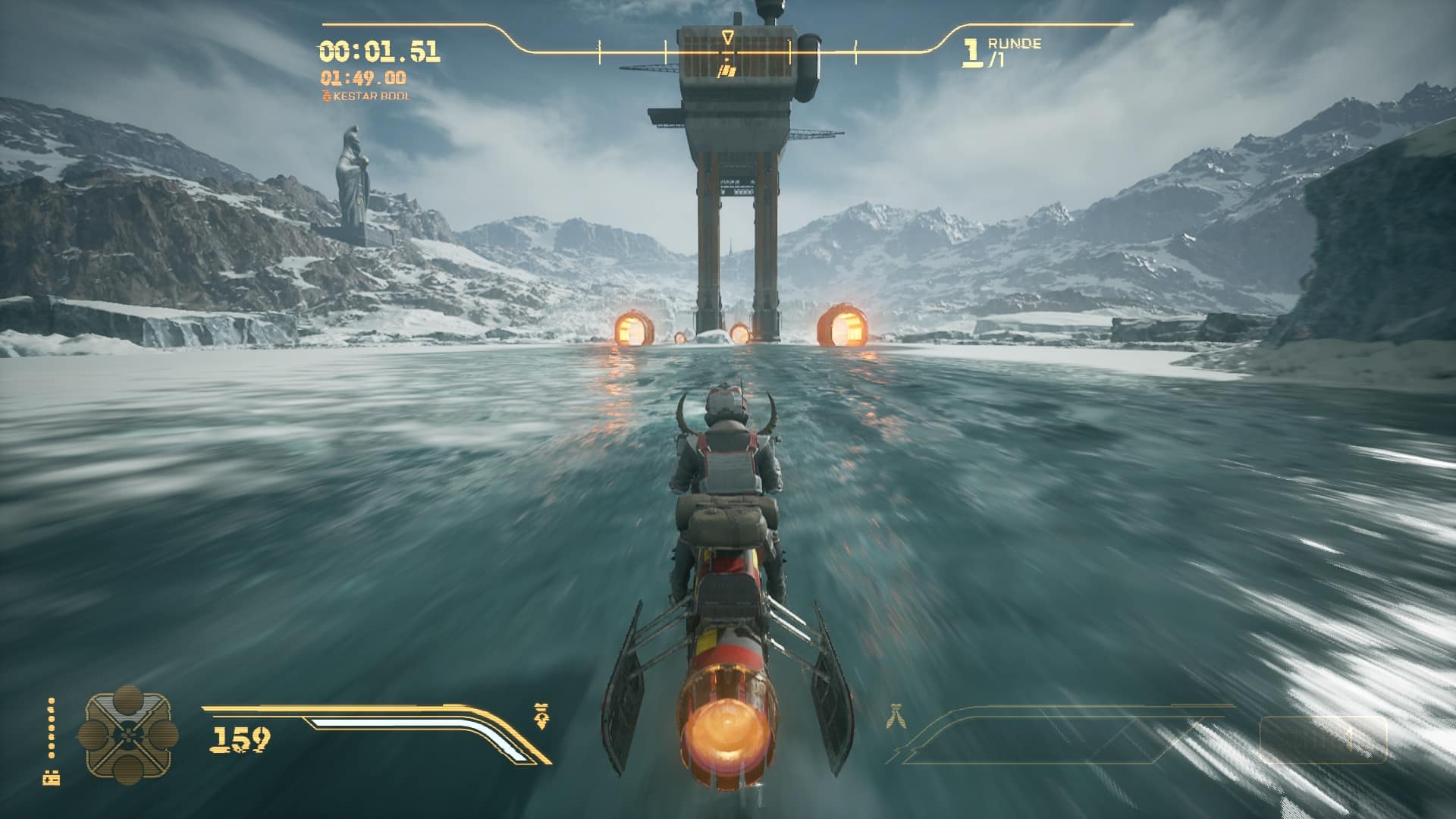
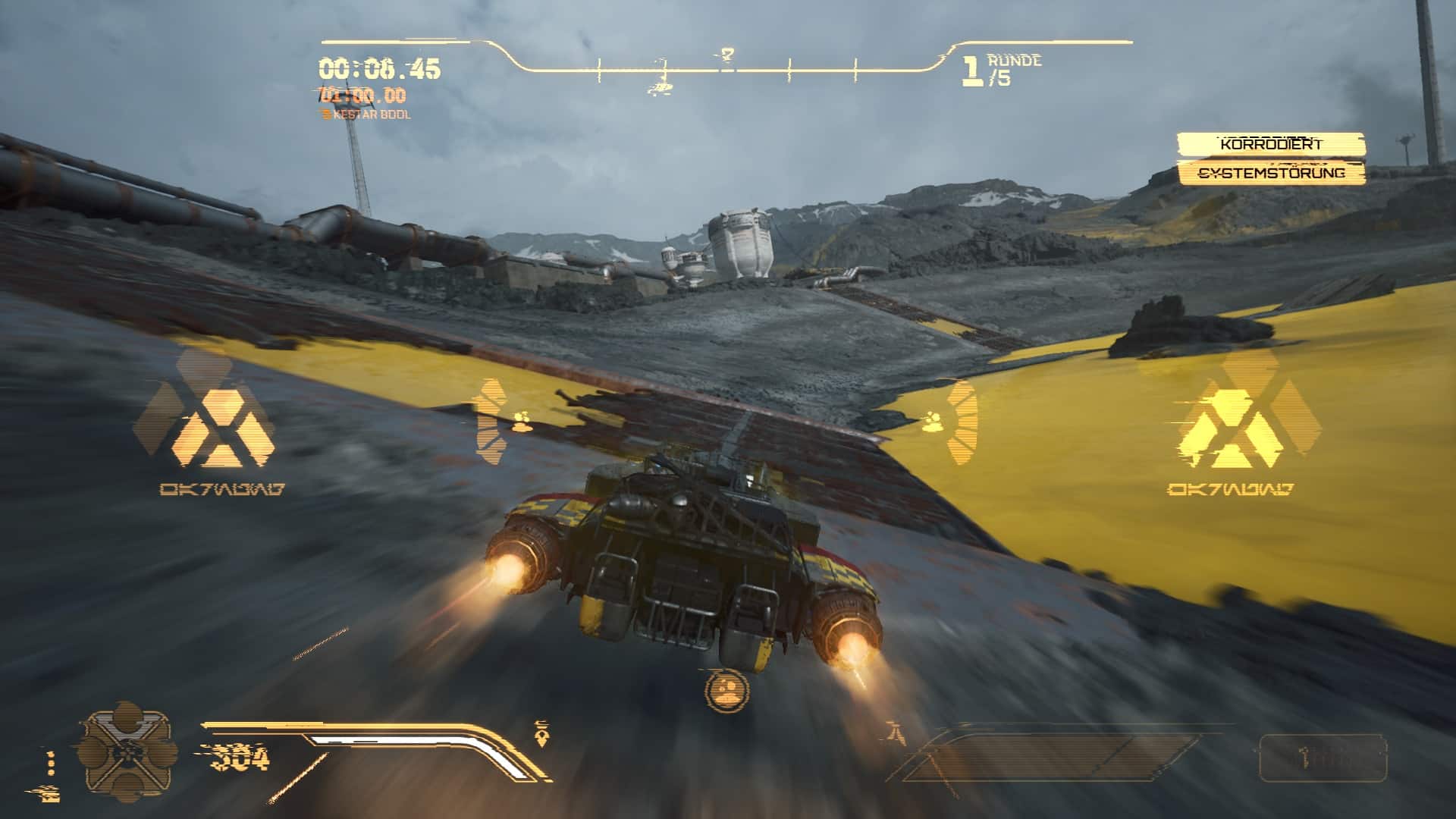
And you read that right: Almost every one of the seven planets offers some kind of gameplay gimmick. On Ando Prime, for example, my chassis freezes if I don’t deliberately drive through heat furnaces. On the other hand, in the cold I can fire off nearly endless afterburner boosts because nothing overheats. On Jakku, the game reverses this dynamic, this time with overheating and shadowy caves. On Sentinel, on the other hand, I pack a shield generator to take a shortcut through acid rivers unscathed.
But after a few races, the facade of this Potemkin village begins to crumble. For example, I have to race through each location multiple times before moving on to the next planet—and it quickly becomes apparent that these worlds really only have that one gimmick. After four races on Sentinel, I’ve had my fill of the acid puddles, especially since the tracks themselves always offer a very similar sequence of open outdoor areas and winding cave or gorge systems.
Episode 1 Racer offered more variety here 27 years ago. I remember the dizzying heights of the Tibanna gas station on Ord Ibanna, where even a single bad turn would send me plummeting into a chasm kilometers deep. Or the switchbacks along the coast of Baroonda, where I suddenly had to maneuver my lightning-fast podracer through one bottleneck after another.
Still, the search for clever shortcuts is just as much fun in Galactic Racer as it was back then. It’s just a shame that, with a total of three vehicles, there’s hardly any variety in your fleet. Yes, the Speeder Bike handles noticeably differently from a beefy Landspeeder, but the third vehicle class—the Skim Speeder—is too similar to it. Landspeeders can drift, Skim Speeders can stand on their sides; but that doesn’t make much of a difference in actual handling.
The biggest problem with Galactic Racer, however, isn’t you—it’s your opponents.
The biggest problem with Galactic Racer
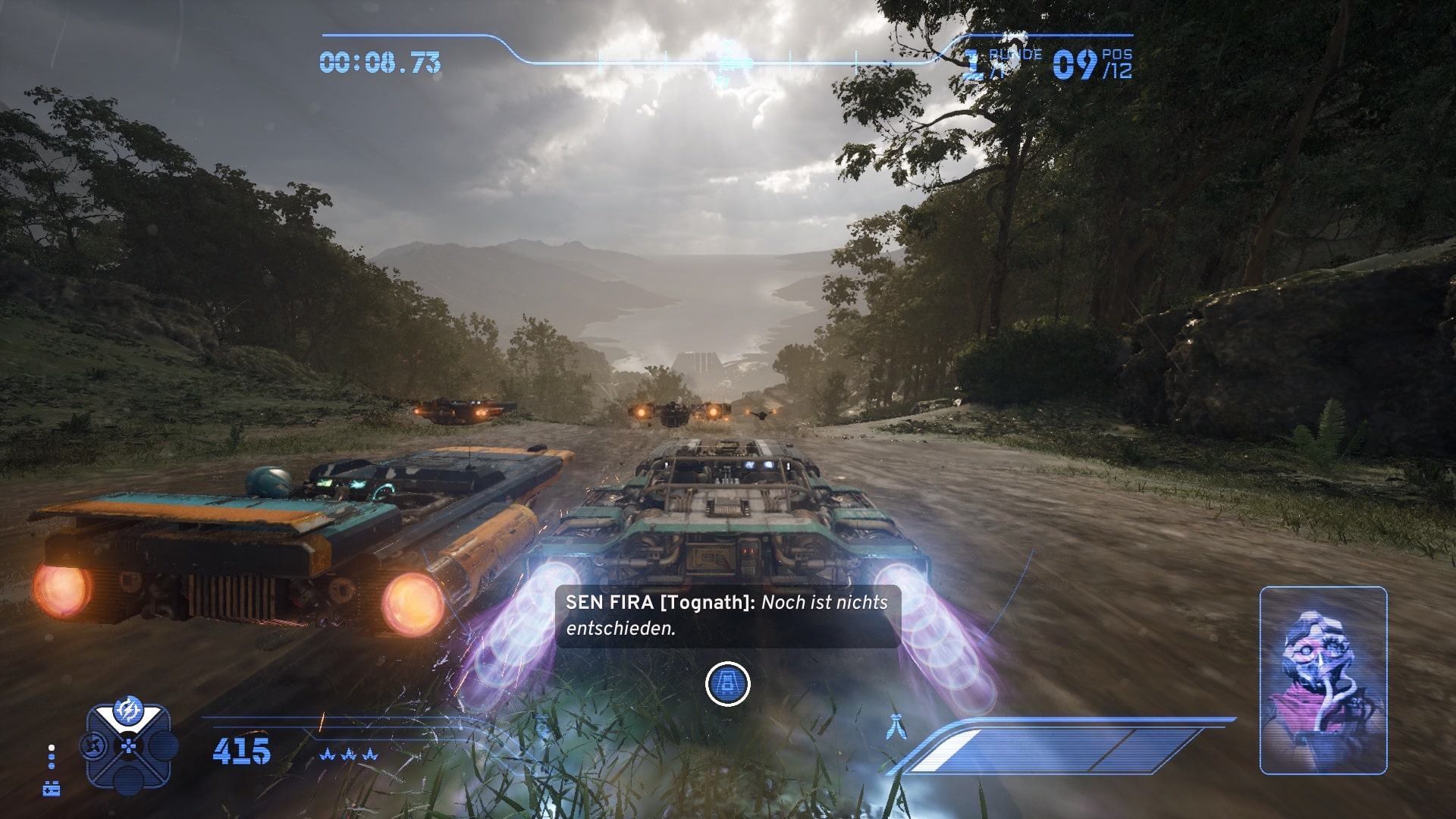
Galactic Racer has a rubber-band AI from hell. Or to put it another way: The races don’t follow any comprehensible rules or laws of nature. At one point, your opponents zoom past you by a mile, only to suddenly slow down on a straight stretch with no obstacles. Conversely, I’ll leave the entire field in the dust for an entire lap before three race cars suddenly leave me in the dust at ridiculously high speeds.
This completely erases any sense of speed, because the dynamic between me and my opponents constantly shifts within a single match, and I have no idea why. And this pattern continues between races as well: In one event, I’m the undefeated leader after 100 meters; in the next, I can’t even see the exhaust pipes of the others.
This is where the roguelite system becomes a huge problem: I choose my car exclusively at the start of a run. I also don’t get any information before a race about the track layout or my opponents’ setups. And even if I did: The upgrade points mostly go toward improving trivial things, like the size of my battery, while essential stats like acceleration or top speed remain untouched. The latter, in turn, only increases passively through the total of all skill points invested. Yet, especially in a mechanic-themed universe like Star Wars, it would be so cool to just tinker with my performance in the workshop.
Long story short: Whether I win in Galactic Racer is, especially later in the game, hardly in my control anymore, but rather depends on lucky perk cards and level-ups. In my very first run, for example, I make it to the very last race without much trouble… but then the competition blows right past me in the final with no chance of catching up. I don’t even see their taillights because the game wants to force me to farm skill points over multiple runs so my racer can go faster.
Kladderadatsch
So the core gameplay loop of Galactic Racer just doesn’t hold up—and I suspect the devs realized this early on in development. That’s because, on top of everything mentioned so far, they’ve crammed in so much fluff to further mask this shaky core. I won’t list everything in detail here, just a few highlights: You sign up with sponsors and level up your reputation there through challenges; you also level up your racer profile between runs and level up specific stratagems—level after level after level.
In addition to the regular races, you’ll find elimination matches where the last-place finishers are gradually eliminated from the race. And beyond the roguelite campaign, you’ll find all kinds of challenge variations, time trials, and so on.
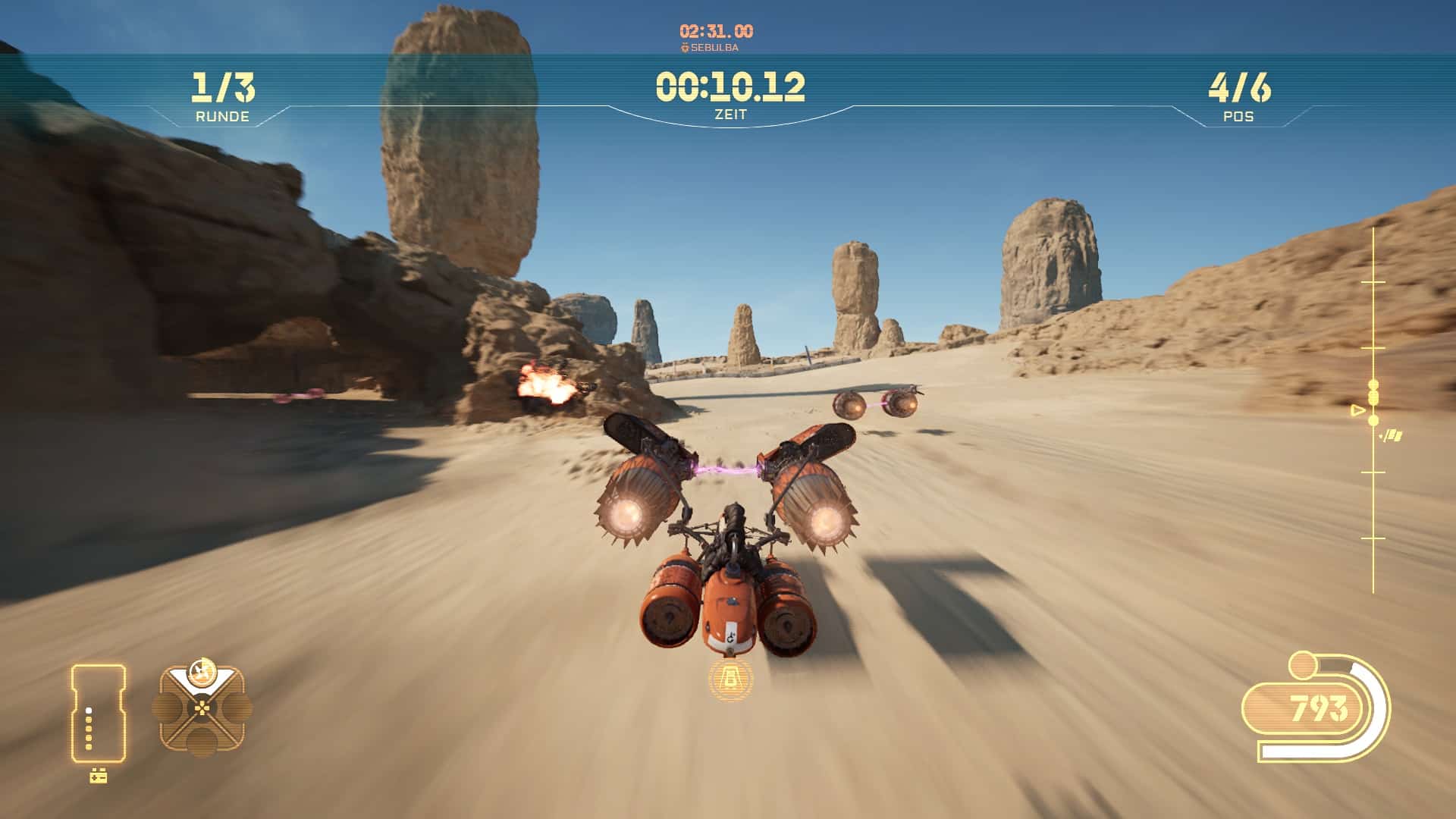
There are also pod races, at least a few. Both within the campaign through Sebulba’s playable memories and beyond it via challenge courses, you’ll slip into the cockpit of the famous monster machines. Definitely a cool addition, but since we’re talking about fairly trivial side missions here, those few Pod Races naturally lack the polish of *Episode 1 Racer* or *Racer Revenge*. Still, it’s cool that the classics made it into the game at all.
So: *Galactic Racer*. I know I sound very negative, because the game unfortunately needs a pit stop in a lot of areas. But the bottom line is that you can still have fun with it—a few lighthearted laps after work are always a good idea if you’re just looking for a bit of Star Wars immersion and enjoy the idea of high-speed racing. Maybe the game will even develop a cool little community in multiplayer down the road.
But unfortunately, that doesn’t change the sobering conclusion: Even 27 years later, Episode 1 Racer remains the better Star Wars racing game.
Editor’s Verdict
I don’t want to write this review. Because, honestly, I love the idea and the courage behind Star Wars: Galactic Racer. After all these years, finally developing a Star Wars racing game again, reviving the glory days of Episode 1 Racer—the fan in me really hopes this project succeeds.
But the game journalist has to admit: The developers got sidetracked somewhere along the way—and instead of untangling that mess, they just kept adding more content around it, hoping the overall result would somehow hold up. But it only does so for the first few hours.
Because at first, Galactic Racer is really fun. The races look spectacular; there’s crashing, booming, and crackling; the planets are beautifully staged; and experimenting with boosts, ion pulses, and the like is a lot of fun on the first playthrough. But little by little, the shine wears off.
Then Galactic Racer reveals its rigged AI, which oscillates completely arbitrarily between the speed of sound and a snail’s pace. Unless you’re constantly crashing into walls, the game ultimately devolves into a numbers game: If you’ve poured enough skill points into passively scaling your top speed—and also get lucky with the upgrades you draw—then you win. Otherwise, you lose, and it’s on to the next run.
All the trappings—sponsors, procedurally generated events, perk cards, podracing side missions, and the like—distract you for a little while… but not for long. Galactic Racer runs out of steam incredibly quickly. And that really shouldn’t be the case, especially for a full-price title.


