





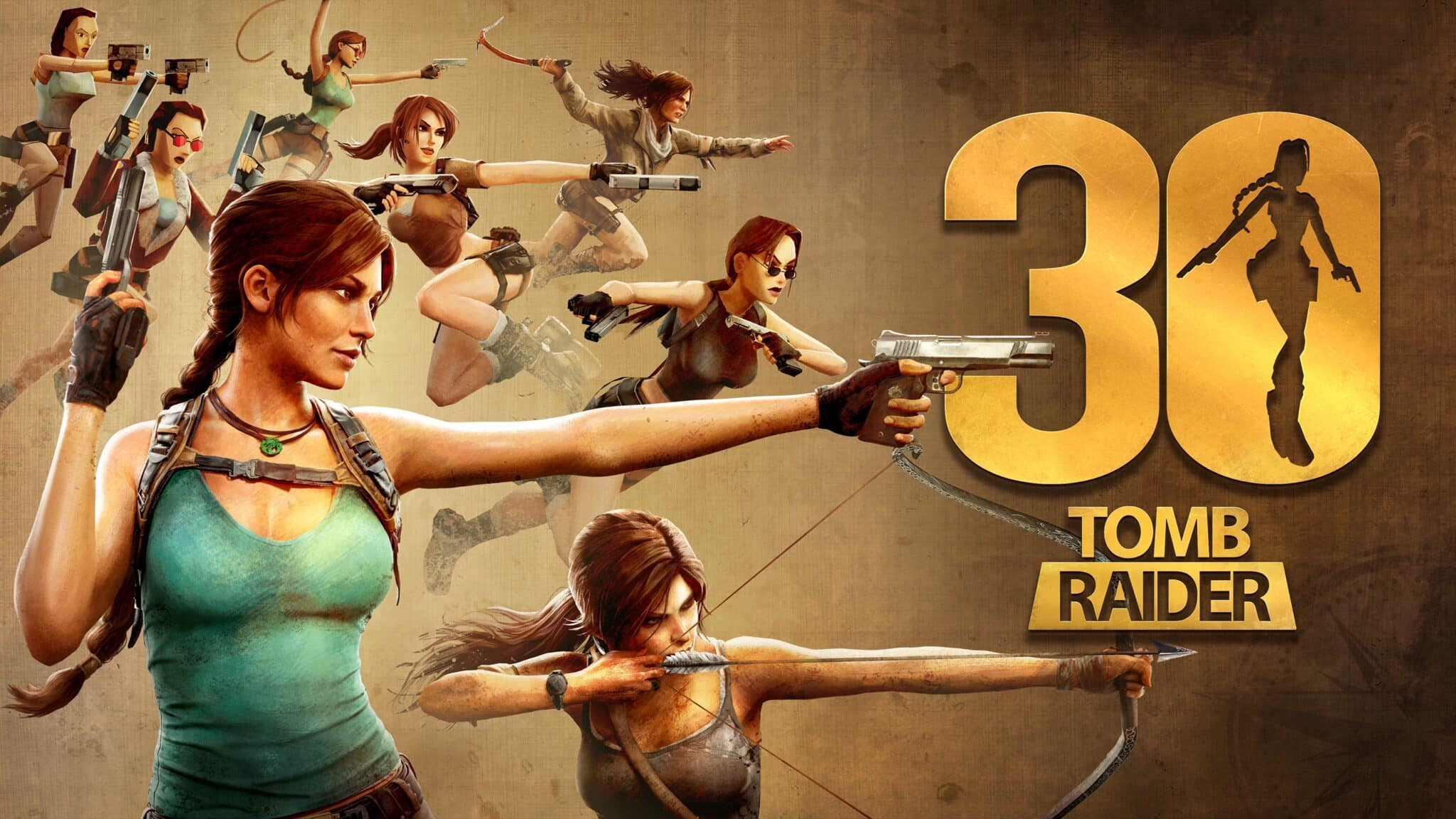
From the Scion artifact to the legendary T-Rex to tank controls: The seven-million-copy hit sparked a global phenomenon with a bright future.
In 1996, a small British studio changed the gaming world forever. With *Tomb Raider*, developer Core Design sent the fearless archaeologist Lara Croft into real, freely explorable 3D ruins for the first time. Toby Gard and his team didn’t just generate excitement on the gamepad—they created a character who took the medium of video games far beyond its previous boundaries and became a pop icon. Today, the classic celebrates its 30th anniversary.
The adventure was first released on the Sega Saturn, followed shortly thereafter by versions for the PlayStation and MS-DOS. With its technology and gameplay, the title immediately struck a chord: Instead of flat, two-dimensional platforming, players suddenly experienced true spatial depth.
In Pursuit of the Scion: Climbing Precision, T-Rex, and Tank Controls
In its game design, Core Design focused on a spirit of discovery, solitude, and tricky climbing sequences. Lara set out in search of the mysterious artifact known as the Scion, with her journey taking her through gloomy caves in Peru, ancient monasteries in Greece, dusty tombs in Egypt, and the sunken pyramid of Atlantis.
Due to the game world’s design, which was based on a rigid grid system of 3D blocks, every jump required absolute precision. In retrospect, the classic is notorious not least for its “tank-like controls”—and depending on the situation, you had to count your steps precisely to avoid plummeting into the next chasm. And then, of course, there was the legendary T-Rex, which proved to be a terrifying opponent in one of the levels.
Pop culture icon and Uncharted trailblazer: Lara’s success story continues
It was the beginning of a success story. The first installment sold more than seven million copies. At the same time, Lara Croft graced the cover of the British fashion magazine “The Face,” among other appearances; she endorsed energy drinks and danced her way through music videos—publisher Eidos’s marketing, in particular, sought to position the adventurer as a polygonal sex symbol.
Looking back at Tomb Raider today, you see a pixelated game with clunky controls—in which case, we recommend giving the remaster a try, complete with modernized controls. Back then, of course, it looked completely different and absolutely impressive. Lara’s debut also paved the way for many modern 3D action-adventure games, such as Naughty Dog’s successful Uncharted series.
Lara is far from hanging up her boots. Tomb Raider: Legacy of Atlantis, a remake of the original, is set to be released on February 12, 2027. A brand-new main installment, Tomb Raider: Catalyst, will follow in 2028.


