





Awakening of the Delta can certainly be considered the biggest DLC ever released for an Anno game. We dug our way through the Valley of the Pharaohs and found more than just gold.
It’s been almost a year since I reviewed Anno 117: Pax Romana for you. Back then, I was convinced it could become one of the best Anno games. It wasn’t quite at the point where it could outshine Anno 1800—which wasn’t surprising. Anno 1800 is one of the best city-building games of all time and has only gotten bigger and better over the years.
The fact that Anno 1800 is now being played more than Anno 117 (at least according to Steam) may also be because people are hooked on a massive masterpiece where, thanks to numerous cool expansions, there’s still something to do even seven years after its release. In the meantime, though, Anno 117 has managed to catch up a bit. We’re in the final stretch of the first year of content and can look back on two major expansions.
Now, *Awakening of the Delta* is set to cap off this first year with *The Crown of the Pharaohs* and introduce a completely new region—one that some fans of ancient Rome have been looking forward to since launch. We’re talking, of course, about Egypt! Or as it’s called in Anno 117: Aegyptus.
One of the most significant provinces of the Roman Empire, a land steeped in history, and the breadbasket of the ancient world. Egypt is vast. Egypt is special—and both of these qualities also apply to the third major 117 DLC. The only question is whether Anno 117 is already showing early signs that, with its own DLCs, it might eventually knock Anno 1800 off the top of the Anno pyramid to bask in the sunshine of its own success.
As beautiful and vast as the Nile
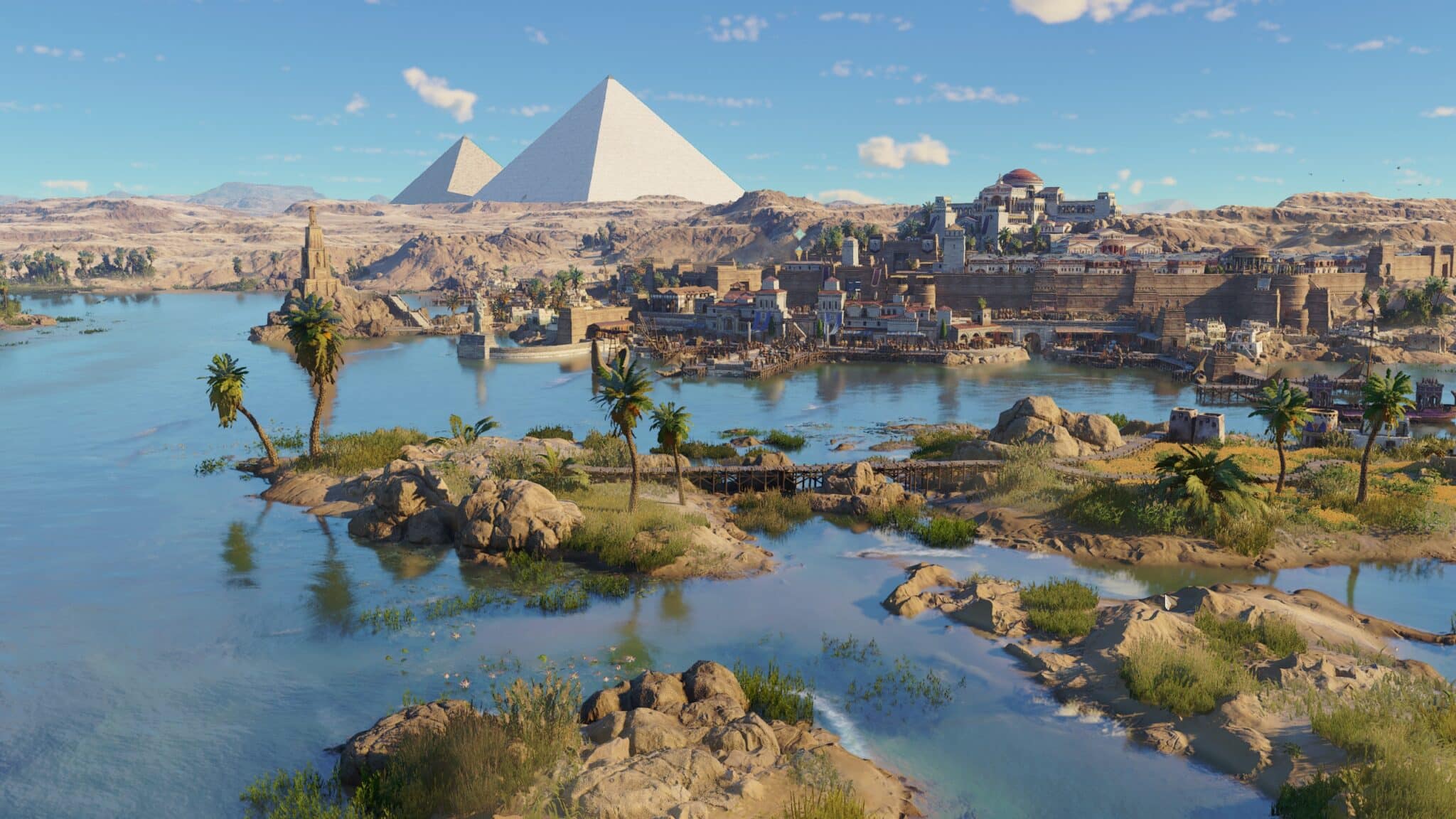
(Aegyptus looks absolutely stunning and exudes the full range of ancient Egyptian romance.)
You can either start a completely new game in Aegyptus right away or expand there later from Latium or Albion. It’s worth it just to see the land of the pyramids with your own eyes. Unsurprisingly, the developers at Ubisoft Mainz have once again succeeded in creating a graphical masterpiece.
Anno 117, of course, already looks outstanding on its own—if you overlook the character models, which always seem a bit blurry. But with Aegyptus, they’ve once again succeeded in creating a special feast for the eyes. The pyramids on the horizon, the Nile as it branches into many tributaries and winds its way through the landscape, the green banks, the vast sandy deserts under the scorching sun. Later on, of course, magnificent buildings and the bustling activity of Egyptian cities are added to the mix. Wonderful! Every screenshot here looks like a postcard.
What impressed me most, however, is that Aegyptus is structured completely differently from all other Anno regions.The country lies entirely within the Nile Delta and therefore does not consist of an island atoll with a lot of saltwater in between. Instead, you’ll settle river islands and even the mainland at the edges.The “islands” here are flat areas surrounded by towering mountain ranges. It’s best to take a look at the map to get an idea:
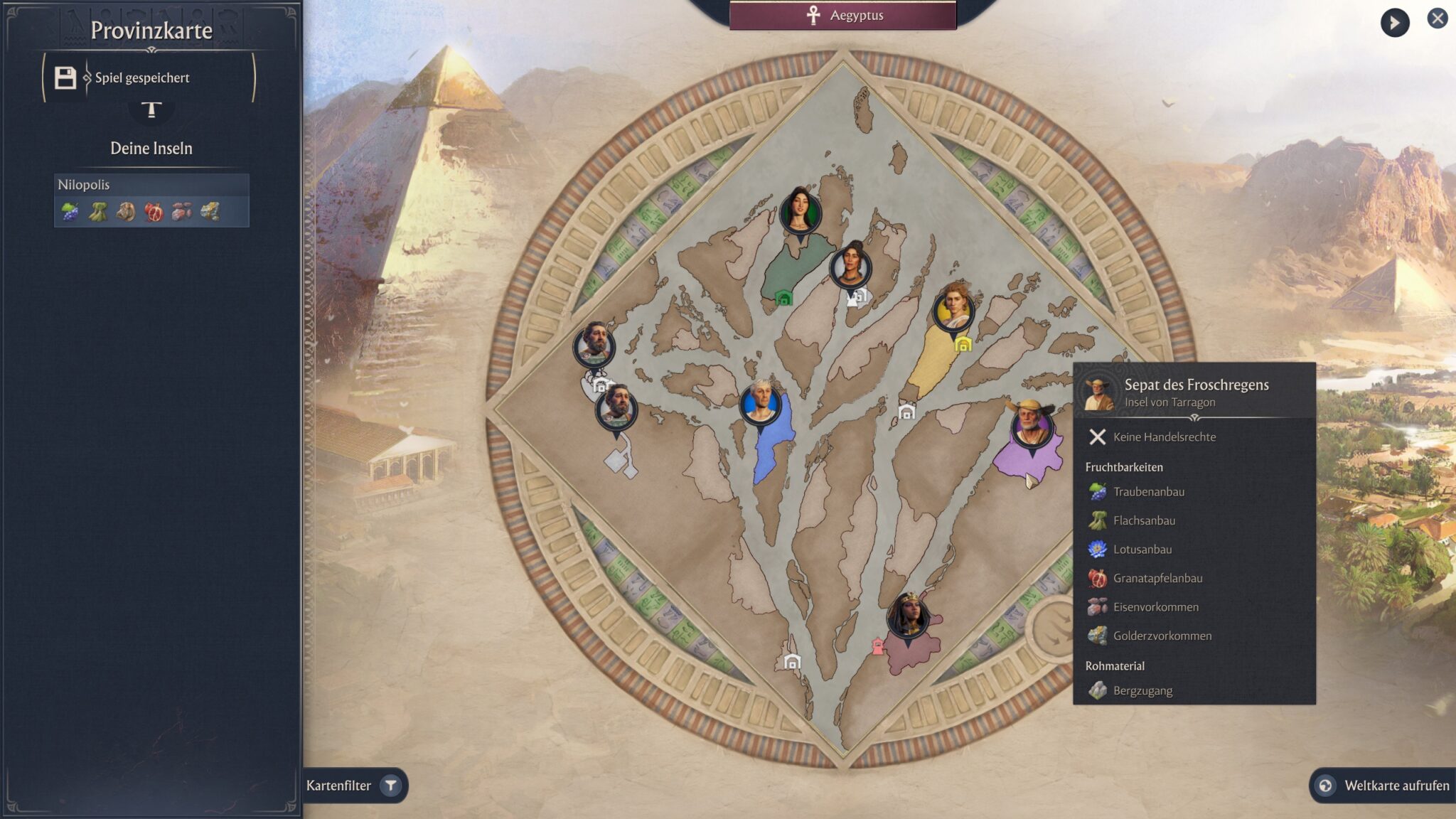
(The light areas are the “islands” of Aegyptus. The dark regions are unbuildable and are generally mountainous.)
While the fact that Aegyptus appears so mountainous is pretty nonsensical compared to the real Nile Delta, Anno has always been somewhat pseudo-historical anyway. I didn’t find any of this particularly bothersome. On the contrary! Aegyptus is an incredibly atmospheric region, with great music, stunning cityscapes, and impressive natural scenery.
However, this geographical innovation also comes with a minor drawback. Unlike in Albion or Latium, Aegyptus looks exactly the same in every game. The handcrafted islands aren’t randomly distributed or arranged. Of course, this limits variety, but most Anno players play the same game from start to finish anyway. Resource distribution, on the other hand, remains random. In every game, you’ll find different natural resources and fertility levels on the Nile islands.
These include many fertility types for goods that already exist in familiar regions—such as grapes, flax, granite, lavender, barley, and even gold. So if you want to keep corresponding production chains out of Albion and Latium, now’s your chance!
Egypt’s Lifeline
Even more than the mainland and the islands, however, Aegyptus is defined by the delta that gives it its name! In my opinion, the Nile itself is one of the biggest and best new features the DLC has to offer. That’s because the Nile is noticeably different from the ocean. For one thing, there’s obviously the direction of the current.
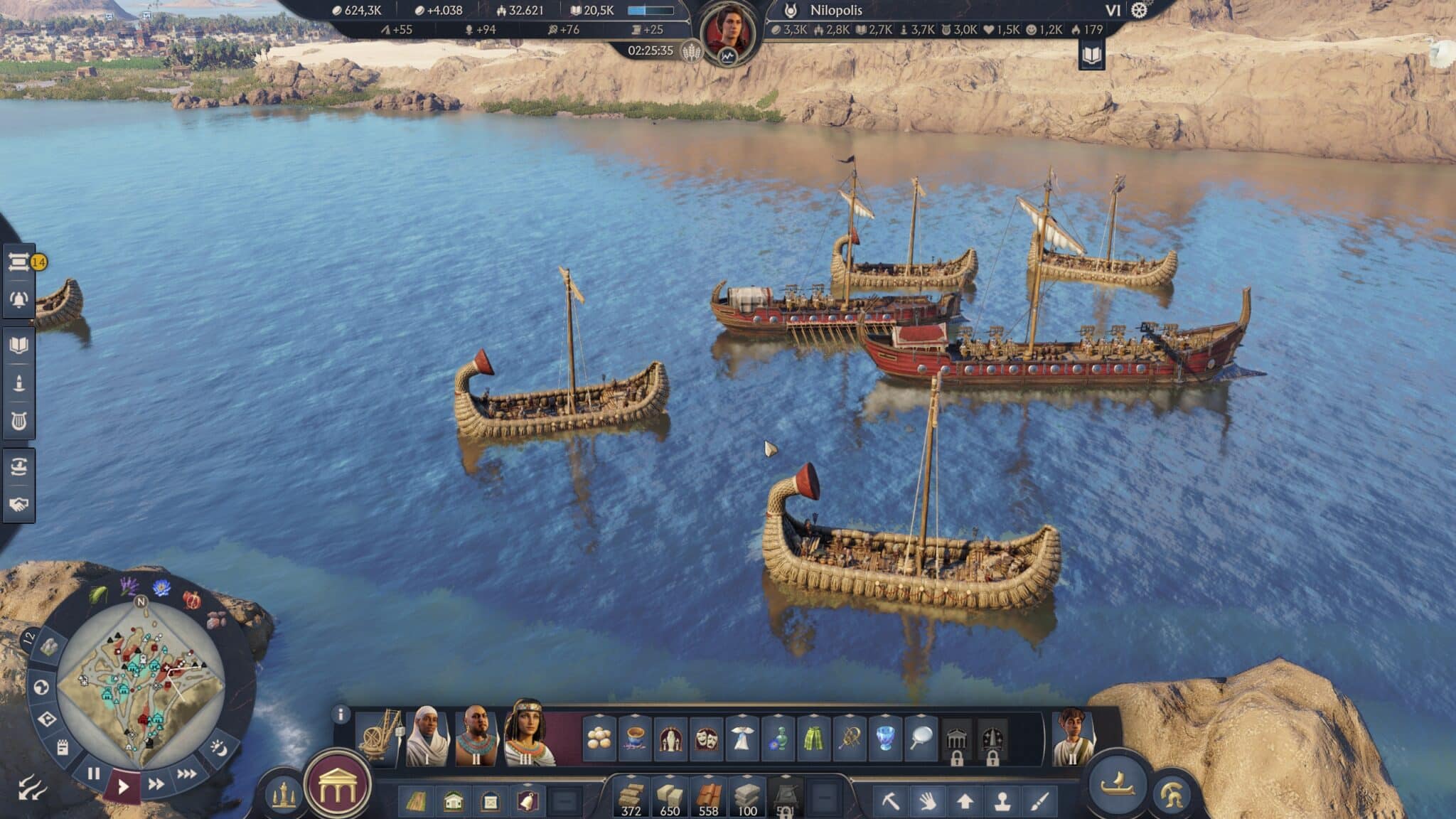
(The Egyptian river sailboats (top and bottom) are noticeably faster on the Nile than the Roman ships (center of the image).
Goods are transported faster downstream toward the sea than when your ships are fighting against the current. So it’s always easier to supply islands at the river mouth in the north of the map than the other way around. That said, this isn’t an insurmountable problem. After all, every ship on such a trade route travels once upstream and once downstream.
What’s more important is using the right ships for the river. Your Roman triremes from the main game don’t handle the shallow riverbed and current well and are severely slowed down by them. If you want to connect your cities in Aegyptus via maritime trade, you should definitely use the new Egyptian Nile galleys. There are three of them: a large and a small merchant ship, as well as a military vessel with archers. Unlike the Roman ships, however, you cannot customize the river vessels.
With these boats, you’ll travel the Nile much, much more efficiently than with the large Roman ships. And that definitely makes a difference in the game. You should definitely secure at least one settlement at the upper end of the Nile and use it as a transshipment point if you’re shipping goods from Albion or Latium to Aegyptus—or vice versa —since the Egyptian river ships, in turn, can barely make headway in the Mediterranean.
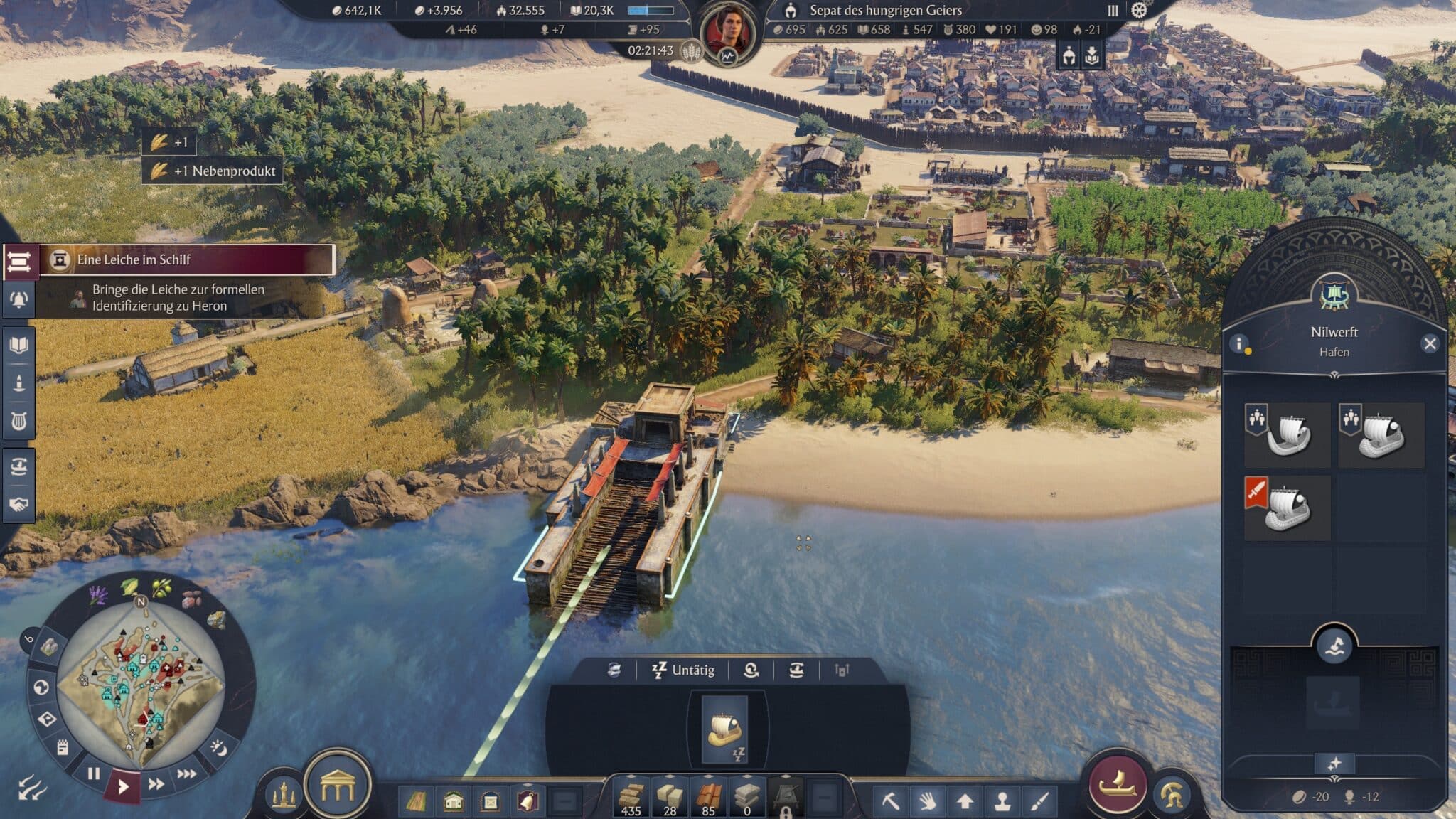
(River ships are built at a dedicated shipyard, but there are no modules for them.)
The pitfalls of the Nile should not be underestimated, especially if you find yourself in a military conflict with pirates or other praetors. In particular, the new local bandit Kandis of Kashta is nearly impossible to capture with Roman ships, as her fast river sailboats easily outmaneuver the cumbersome galleys. So you’ll have to fight fire with fire.
A Word of Warning
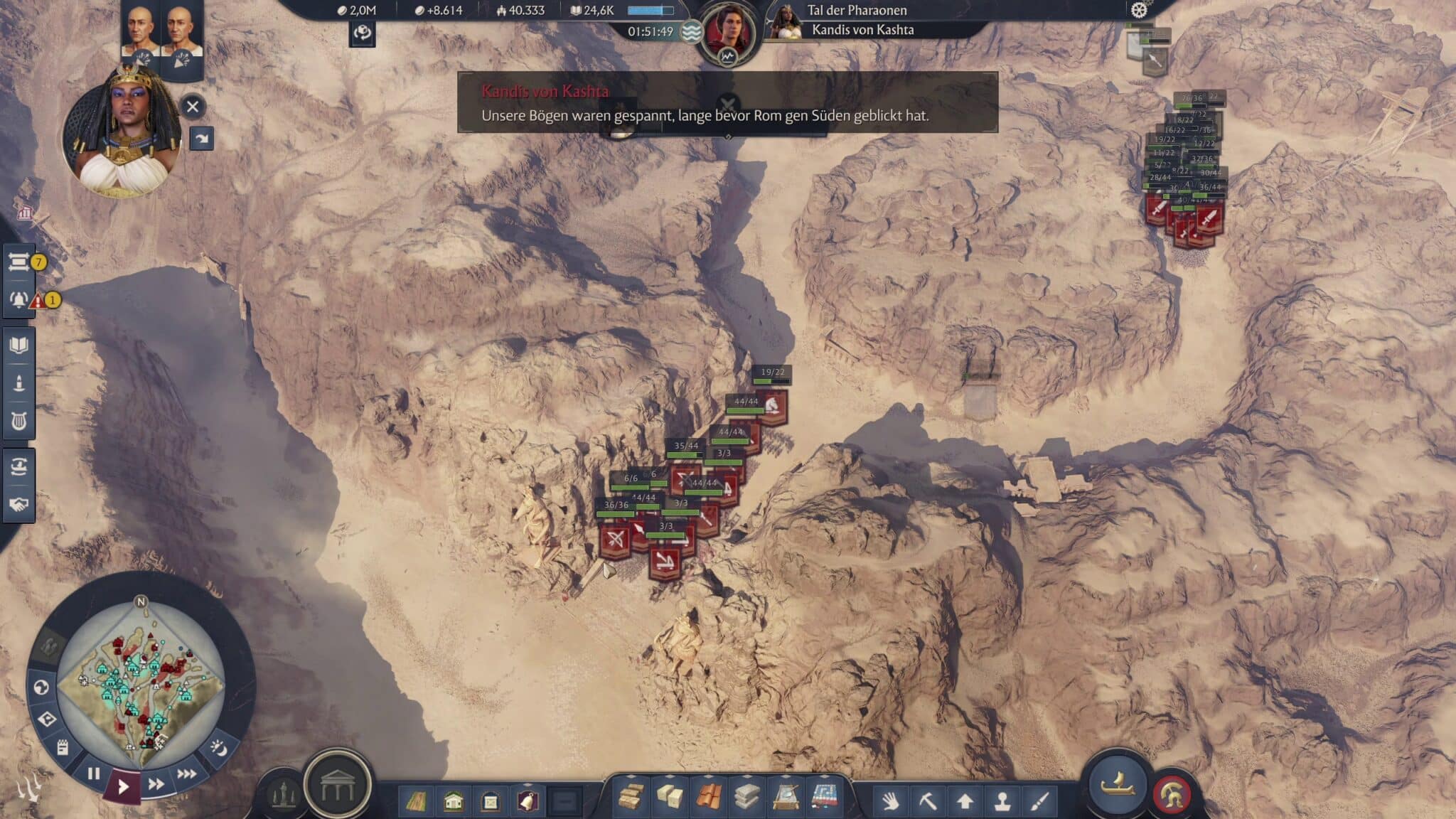
The new bandit in Aegyptus should not be underestimated. For one thing, as mentioned, her river sailers aren’t easy to intercept unless you use Nile ships yourself. But even worse is capturing the rebel’s base. Kandis of Kashta is based in the Valley of the Pharaohs—a sprawling rock labyrinth full of burial chambers. At first, it looks as though only a handful of land units are guarding the base. But once you land your army and venture into the labyrinth, countless rebels pour out of the tombs.
Between Desert Sand and Riverbank Mud
The second gameplay feature of the Nile stems from its annual floods. Each “island” consists of three biomes:
- The floodplain: This swamp lies directly on the island’s shore. Here, you’ll mainly build mud collectors, goose hunters, reed farms, or pearl collectors.
- The Farmland: The marsh gives way to green farmland, where fertile grass grows and even small forests thrive. There’s plenty of space here for plantations, and animal farms also enjoy a production bonus. On top of that, the forests allow for date gatherers and woodcutters.
- The Desert: Shortly after the farmland, there is nothing but sand and dust under the scorching sun. There is no fertility here, but plenty of space for building.


