





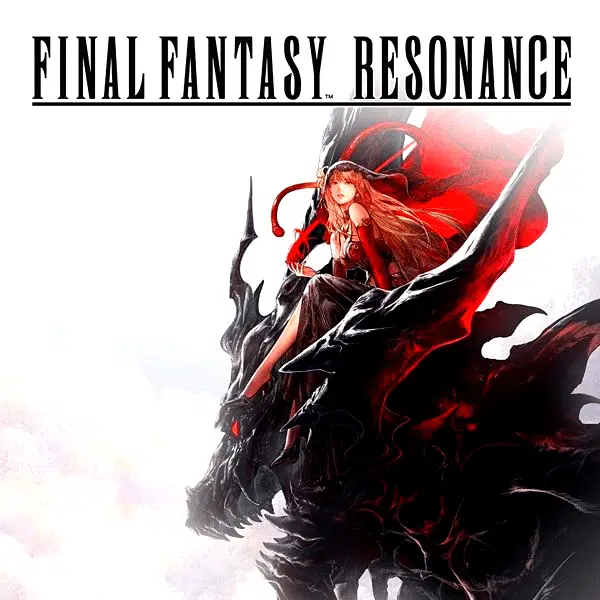
The new Final Fantasy is actually quite old—or at least it feels that way. And the more you grew up with the legendary JRPG series, the more you’ll appreciate it.
No, things weren’t better back then. Certainly not when it comes to games, even if nostalgia sometimes tries to convince us otherwise.
That’s what makes it both exciting and difficult to judge a game like Final Fantasy Resonance fairly. How much you’ll enjoy this retro RPG depends largely on how big a fan you are of the legendary JRPG series—and, above all, how long you’ve been a fan.
Resonance is old-school to the point of pain—and sometimes even beyond. The only question is: why did I pour over 40 hours into the game in just one week? Voluntarily. During my vacation. Let’s set out together to uncover the clues.
Table of Contents
A 2.5D Masterpiece
Let’s get the obvious out of the way first: Final Fantasy Resonance draws heavily from Octopath Traveler 1 & 2, which in turn were intended as homages to early Final Fantasy games. The cool kids would probably call that “coming full circle.”
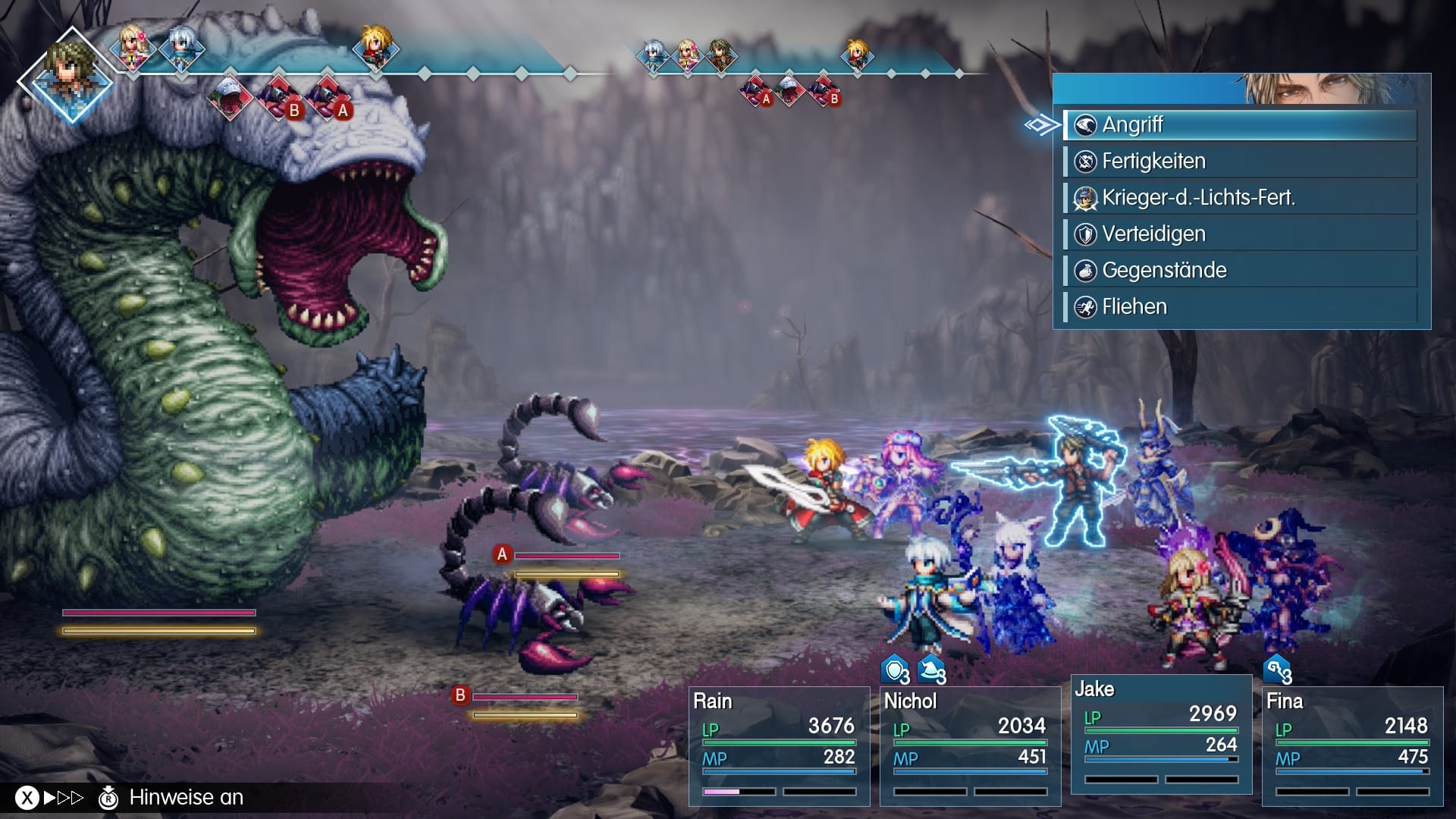
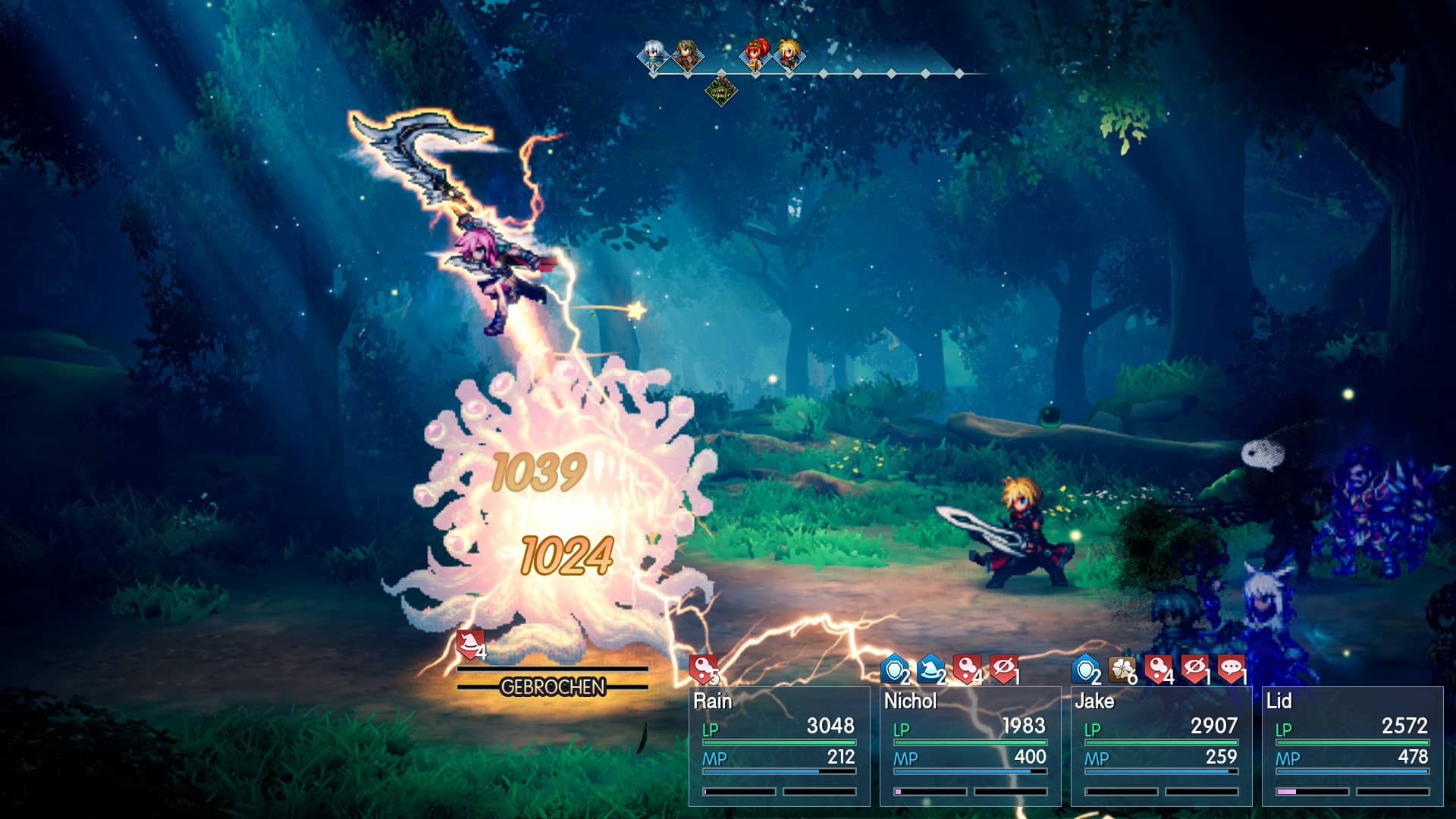
In both games, pixelated yet intricately animated 2D characters move against 3D backdrops rendered in Unreal Engine. In both games, the key to success in the tactical turn-based combat is to stagger your enemies—that is, to temporarily incapacitate them—by exploiting their weaknesses.
However, you’ll quickly notice in Final Fantasy Resonance that the developers had a very different budget at their disposal compared to its little brother. The 3D backdrops consistently surprise with clever camera movements and, in this regard, are pleasantly reminiscent of Final Fantasy 7–10.
There are also tons of elaborate cutscenes, some of which are even rendered. So when you summon the series’ signature Esper supermonsters like Ifrit, Odin, Titan, or Ramuh, it feels appropriately epic—especially because Resonance cleverly combines the rendered scenes with the in-game graphics.
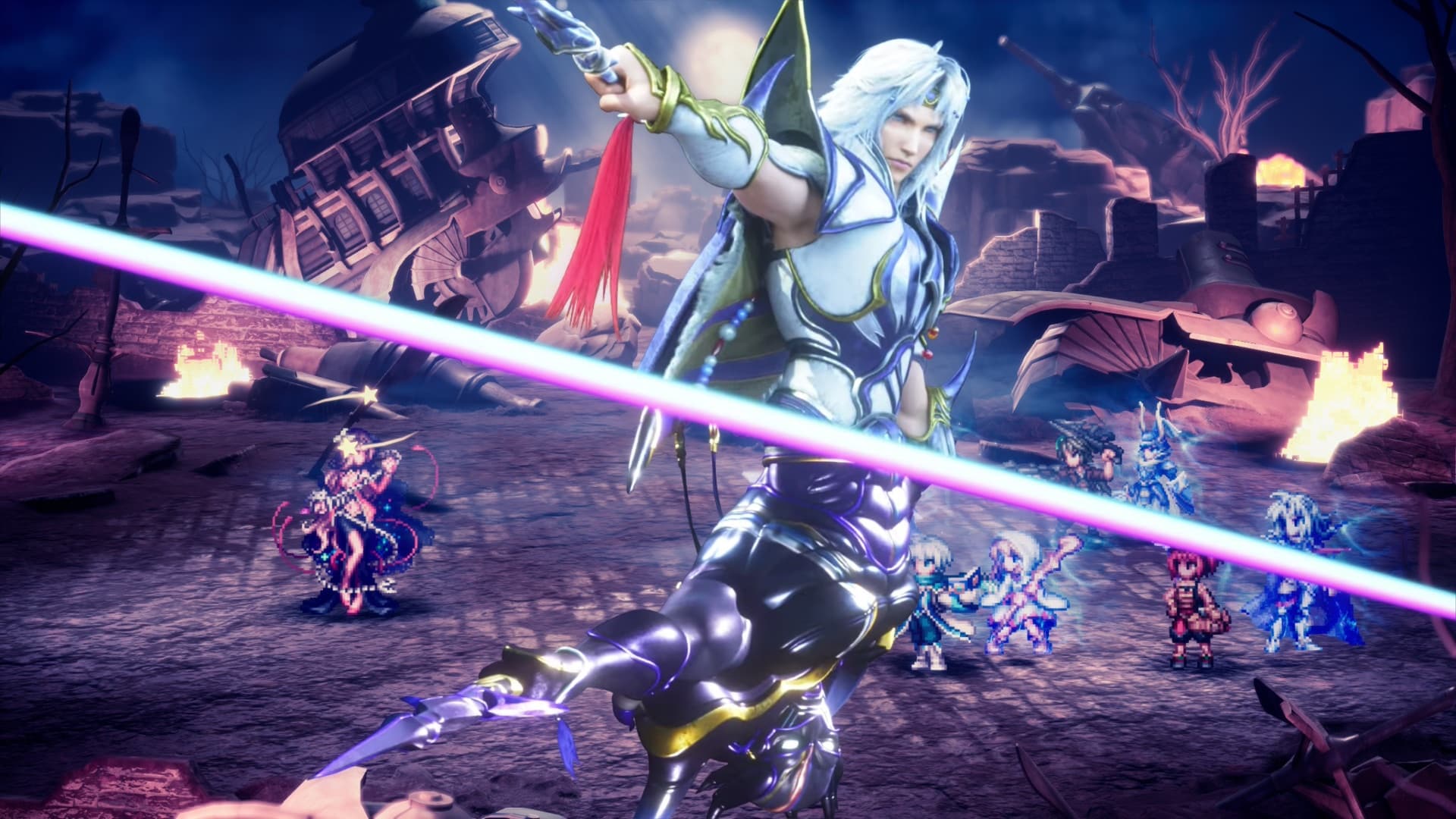
The orchestral soundtrack also sounds truly impressive, blending familiar themes with new pieces and ranking among the best I’ve heard this year. The only downside: the excellent voice acting is only available in English or Japanese.
Old-school to the point of pain
So. That pretty much covers everything about Final Fantasy Resonance that could be described as modern. Because in terms of gameplay, this “new” Final Fantasy takes you straight back to the ’90s.
- An overworld map that lets you travel to towns and dungeons and gradually unlocks as you progress through the game.
- A strictly linear story with no freedom of choice.
- Random battles that can’t be skipped.
- A simple character progression system with automated level-ups, which mainly consists of buying the best possible weapons and armor at the shop in every new town.
- Dungeons that basically all consist of random battles, treasure chests, flashing items, and a boss at the end. Rare puzzle exceptions prove the rule.
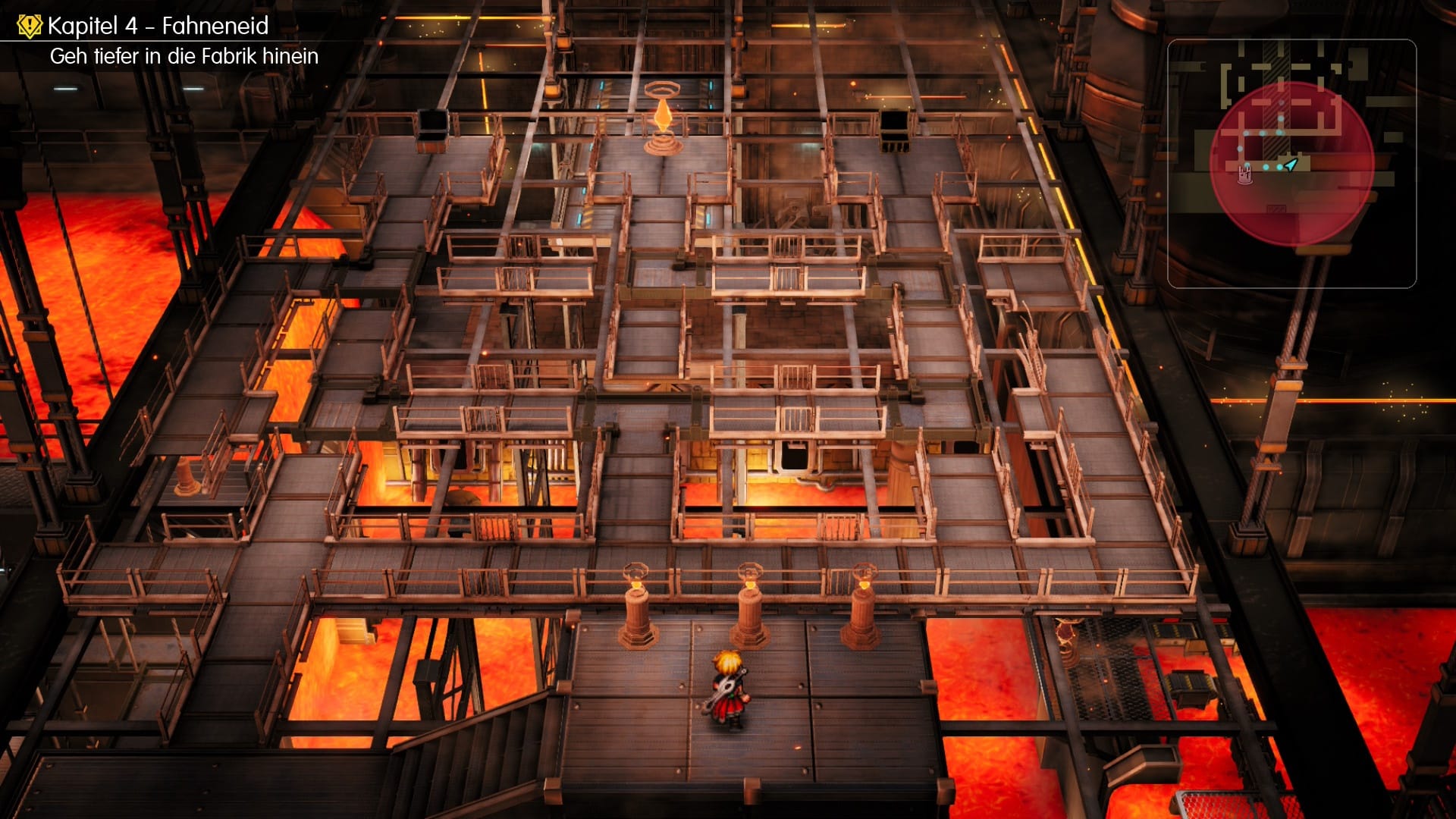
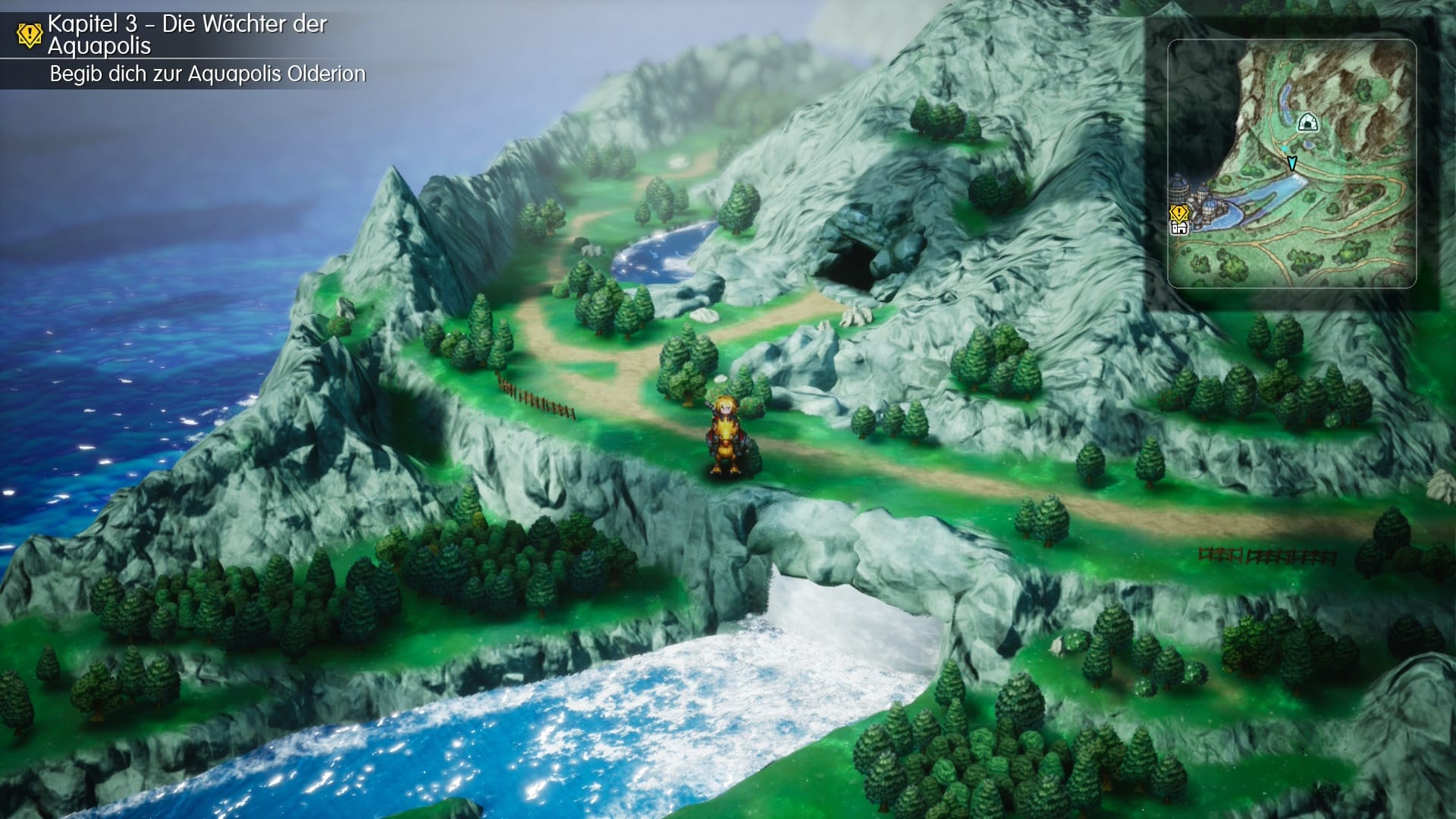
- The simplest side quests that send you from A to B to retrieve C or defeat D.
- A party of four characters—but when exploring dungeons, towns, and the overworld, you only see the main character, Rain.
I’m listing these facts so matter-of-factly on purpose to trigger one of two possible reactions from you: either “That’s how it has to be!” or “What’s the point?” The only concessions Final Fantasy Resonance makes to modern RPGs are a handful of convenience features:
- three difficulty levels
- a sprint button, whether on foot or on a chocobo
- skippable Esper summons
- save points right before boss fights, including teleportation back to the dungeon entrance
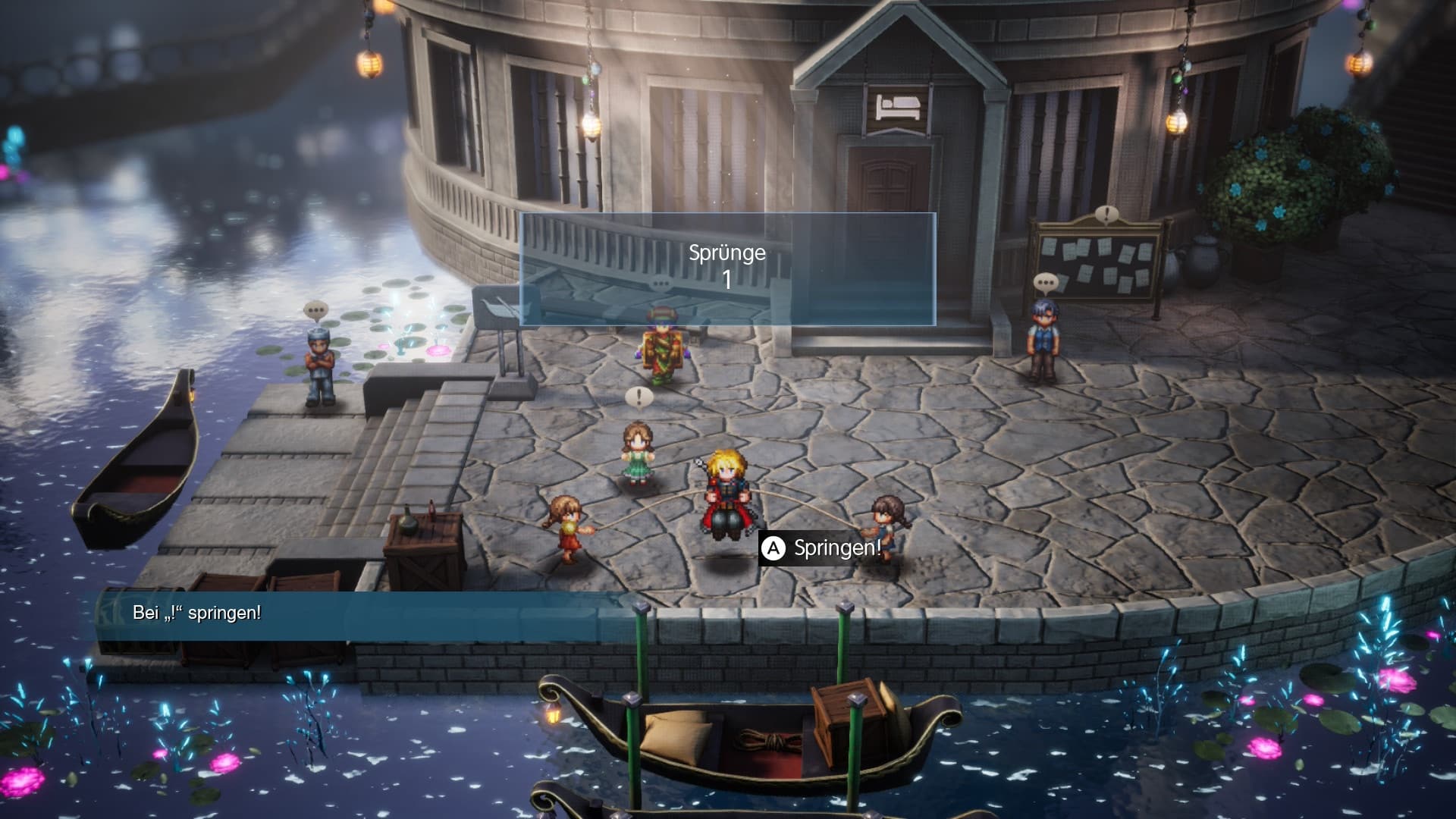
At one point, I was even on the verge of quitting Final Fantasy Resonance out of frustration. Yes, it’s a recurring theme in the series that there’s a hidden city of the Magi. It only becomes a problem when I have to spend over 30 minutes scouring the entire world map by airship to discover it—hoping that my button-press radar will eventually pick something up. In any case, search the ocean southeast of the volcanic island. You can thank me later.
Catch ’em all!
Still with me? Then here’s the second part of my relationship test: Lightning, Bartz, Cloud, Tidus, Vaan, Zidane, Clive, Squall—how many of these names bring back fond RPG memories for you?
The more there are, the more the most important game element of Final Fantasy Resonance will resonate with you: the so-called “Visions.” Scattered throughout the game world, you’ll find shrines—some well-hidden, others less so—that contain, of course, a crystal, which you can use to unlock one of a total of 26 characters from the Final Fantasy series.
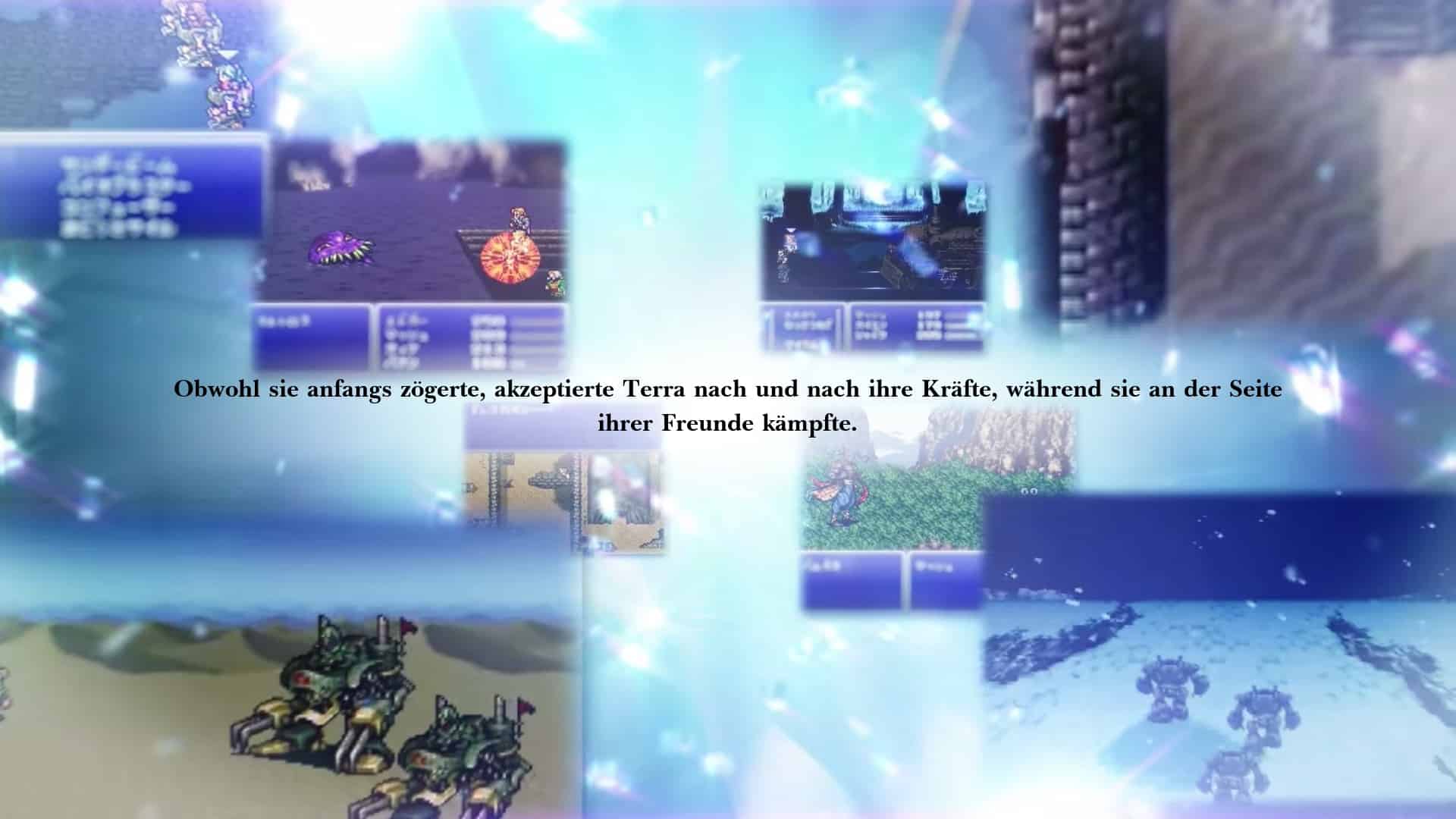
The story even provides a reasonably plausible explanation for this and, above all, introduces the characters wonderfully. In a cutscene, you’ll not only hear the “origin stories” of these characters, but also see scenes from the corresponding games. And if you’re familiar with those games, it really does feel like a reunion with old friends.
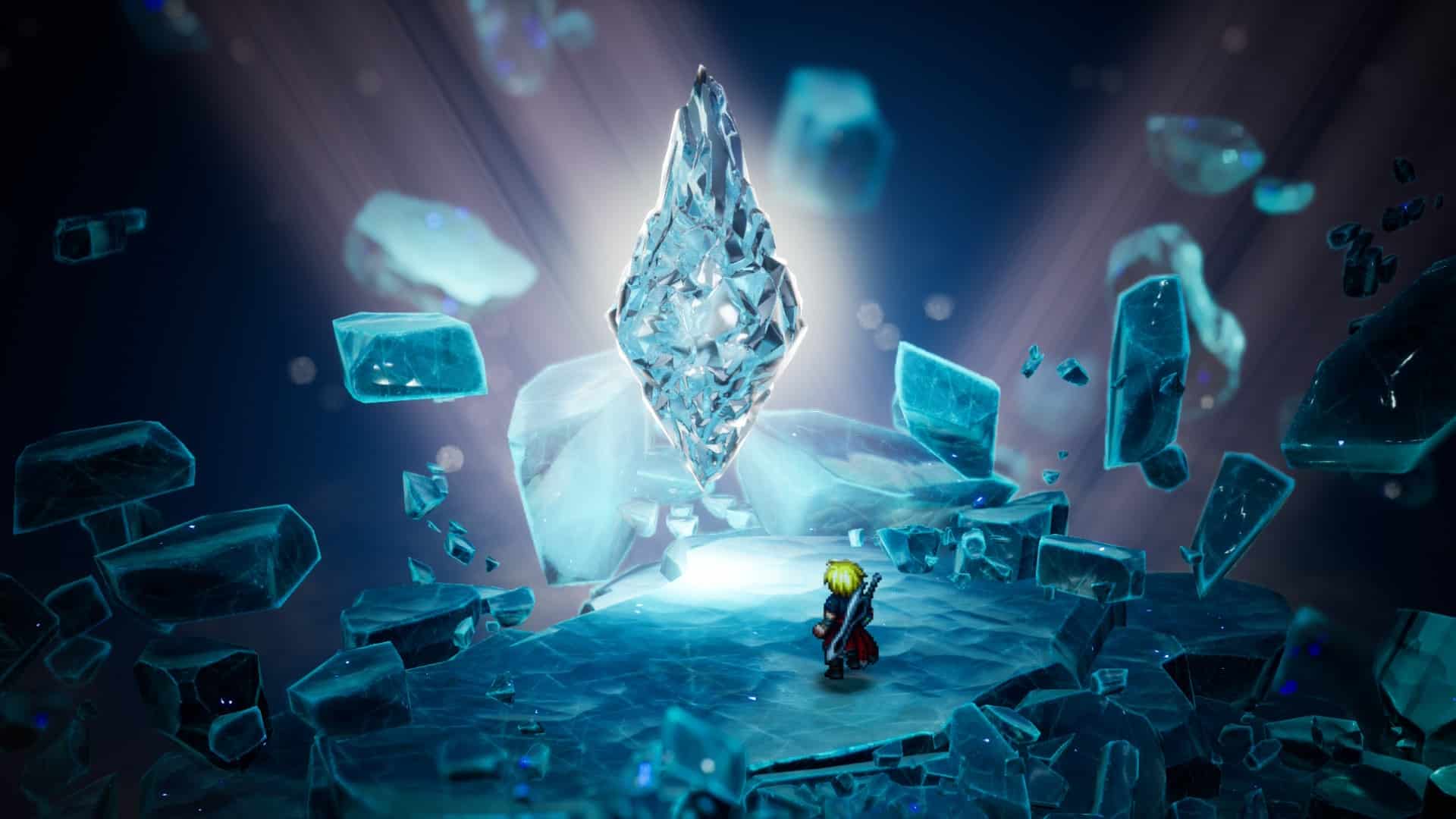
In-game, the Visions come across as much more down-to-earth, because they’re essentially a job system in disguise, just like the ones you’re familiar with from countless other Japanese role-playing games.
In other words: Instead of a job, you assign each of your eight party members a “vision,” which levels up as long as it’s assigned, thereby unlocking increasingly better abilities. Once unlocked, these abilities can be used by your heroes even if you switch visions—but of course, you have limited slots.
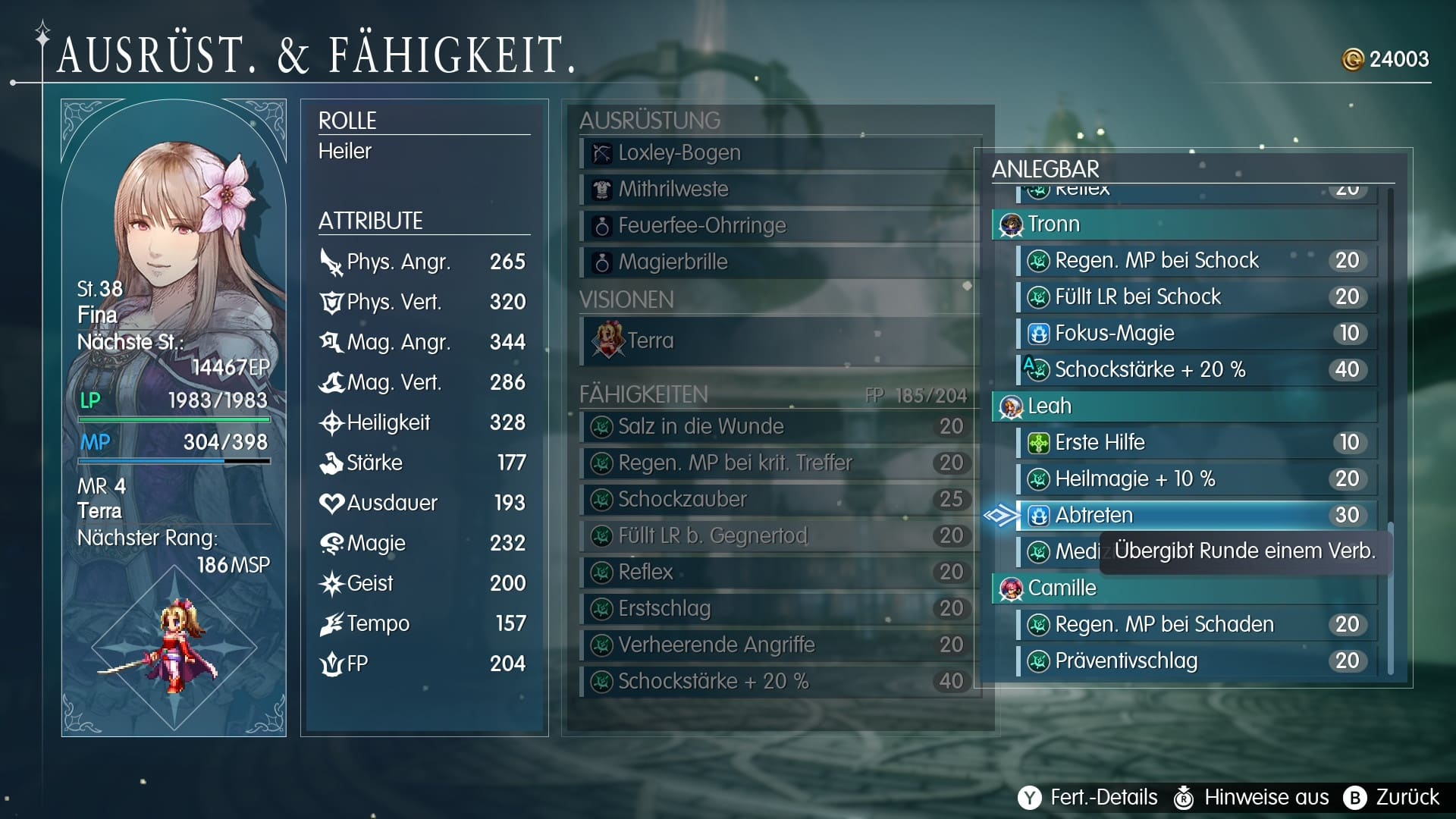
This system—or something similar—also appears in Octopath Traveler and Dragon Quest, though you’ll naturally feel a stronger emotional connection to Cloud Strife’s Vision than to a Warrior’s job. At least if you know who Cloud is. And now you can look forward to the fact that one of his abilities is called “Cross Strike.”
As a fan of the series, I certainly won’t rest until I’ve “caught” all the visions, to paraphrase Pokémon.
A Weakness in More Ways Than One
However, the truth is also that, ultimately, combat is all about exploiting your enemies’ weaknesses to stagger them as quickly as possible. If you manage to do this to all of them at once, you’ll be able to unleash a spectacularly staged special attack from your assigned visions.
However, the balancing is a bit off because, starting at the medium difficulty level—especially against boss enemies—you only stand a chance if your entire party consistently targets their weak points. In practice, this means: trigger the boss fight, identify the weak points using an analysis spell, return to the save point, optimize your party and visions accordingly, then attack.
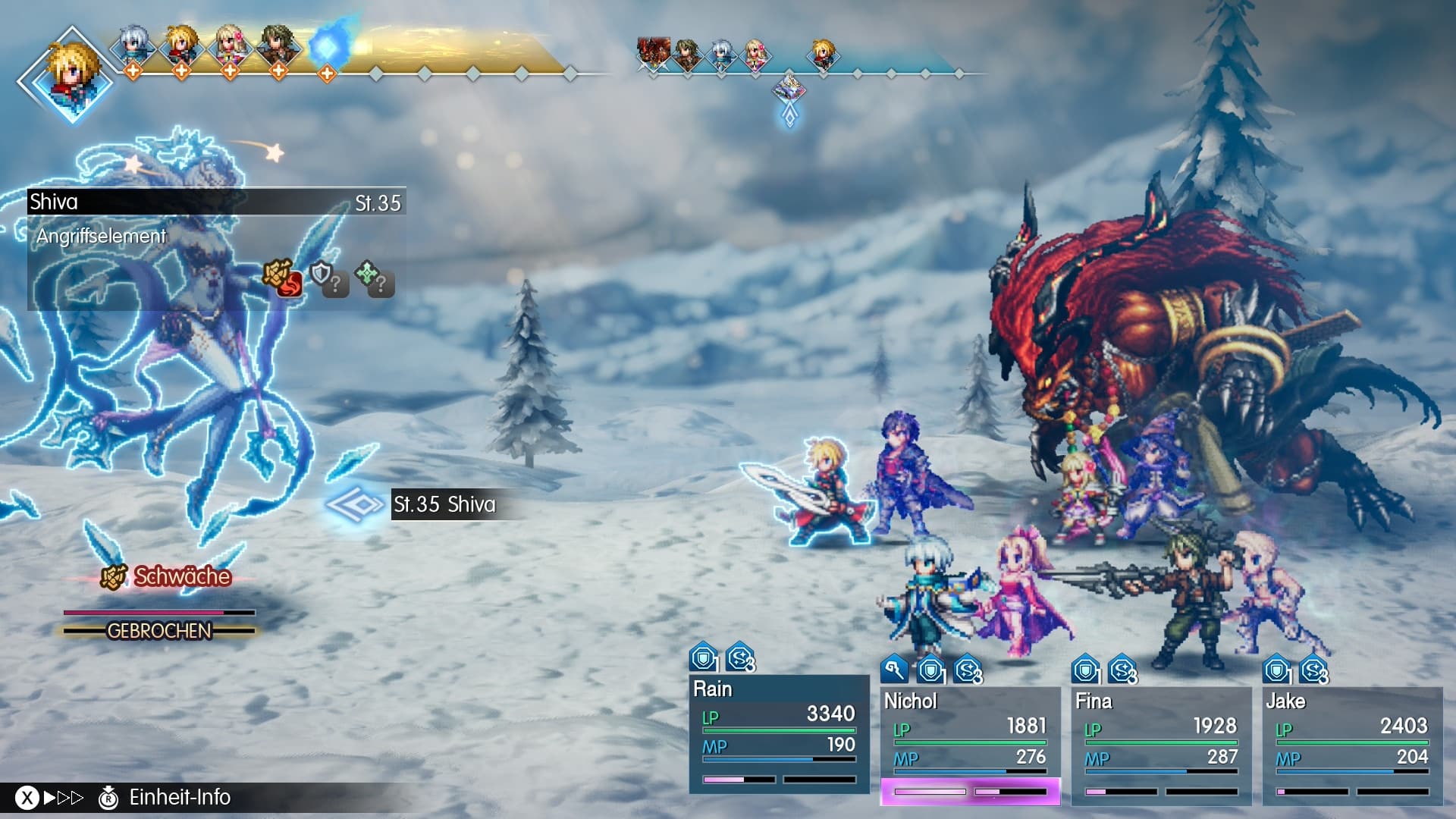
Thanks to the cool presentation and emotional connection to Espers and Visions, this is still a lot of fun, but it can’t hide the fact that the battles in Octopath Traveler 1 & 2 allow for significantly more tactical finesse.
First impressions of the story are deceiving
Final Fantasy Resonance delivers the most innovation, of all places, where I would have least expected it: in the story. Yet the story begins more classically than classic and pulls out all the stops with Japanese RPG clichés:
- the noble, selfless hero—in this case, Rain, commander of the Airship Brigade
- the naive, beautiful “damsel in distress,” who, of course, harbors a secret
- a masked villain who wants to destroy the world

Resonance mixes all of this with more fan service than a VIP ticket to a Backstreet Boys concert. Take a deep breath… there are chocobos, crystals, Espers, Moogles, Magi, airships, the classic escalation from “fire” to “Feuga,” cutscenes during summons, Morbols, Cactuars, Tomberries, particularly tough optional endgame bosses, and yes, even Sephiroth gets to join in.
It sounds like a must-play for a trip down memory lane, but the longer you play, the more you realize how thoughtfully and lovingly Square has blended the classic ingredients into something new.
To be fair, it’s worth noting that Final Fantasy has always had more subtext and narrative depth than other Japanese role-playing games—just think of the environmental pollution theme in Final Fantasy 7.
However, I didn’t expect Resonance to break with its own clichés so strongly as the game progresses—and even unmask them, in the truest sense of the word. That’s why I don’t want to give away much more about the story.
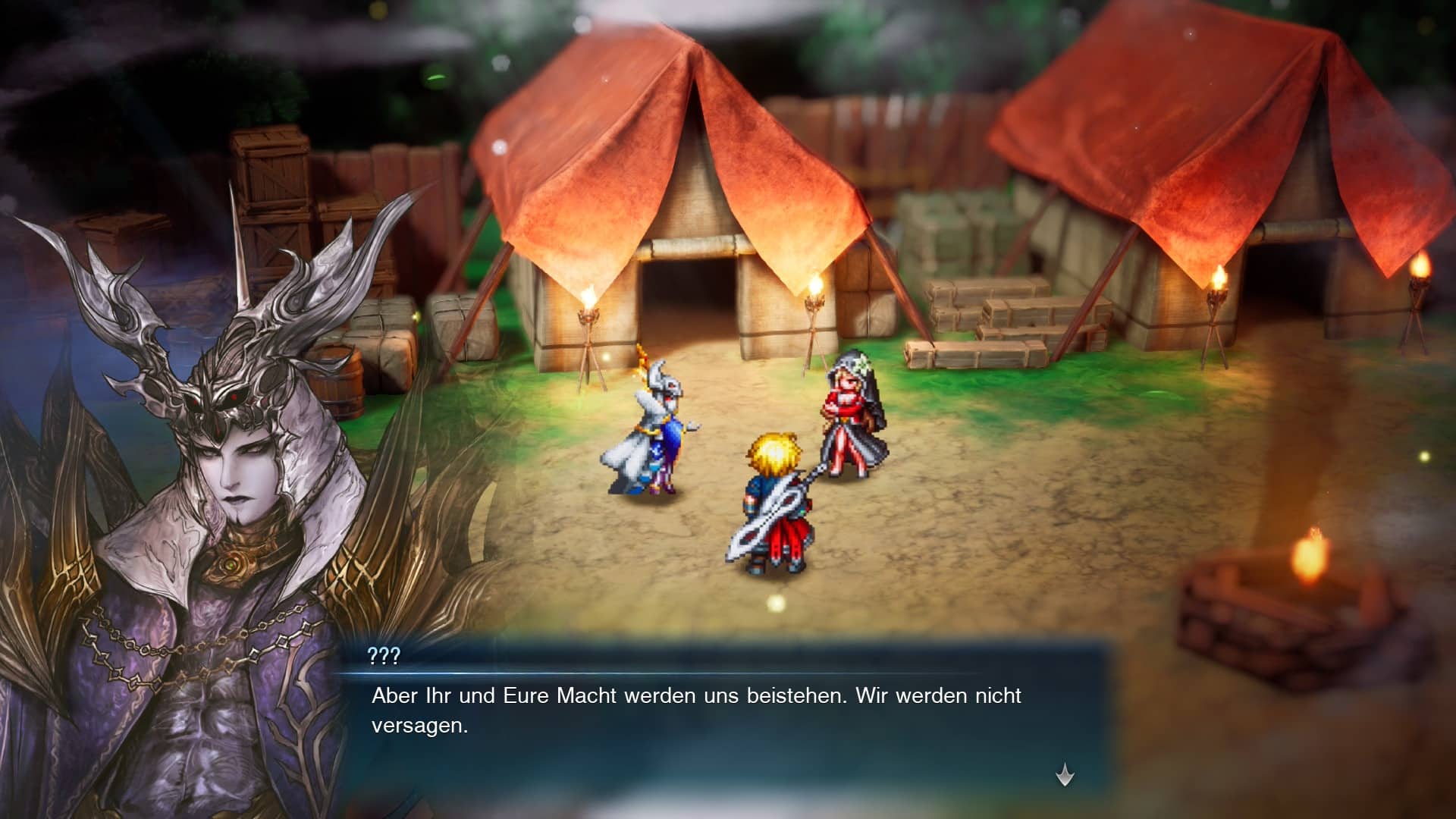
I’d even go so far as to say that the story works even for those who aren’t really into Final Fantasy. Which isn’t at all true for the rest of the game. But I think that point has come across if you’ve read this far. At least a little.
Editor’s Verdict
Playing Final Fantasy Resonance feels a bit like the party playlist at my “25 Years Since Graduation” celebration. Anyone who happens to drop by will have heard at least a few of the songs before. But to really understand what they mean to me and my friends, you’d have had to be there back then.
Final Fantasy Resonance is basically the Final Fantasy mixtape. If you’re a longtime fan of the series—and especially if you have a soft spot for the turn-based early days—then I highly recommend this trip down memory lane. For me, it really hit all the right notes and felt like a reunion with old friends.
As a game critic, however, it’s also my job to take off my nostalgia glasses. And the closer I look, the clearer it becomes that, purely in terms of gameplay, other Japanese RPGs simply have more to offer. In the old-school segment, this applies to both *Octopath Traveler 2* and *Dragon Quest 7 Reimagined*. And if you’re looking for something more modern, I’d recommend the FF7 remakes or Metaphor: ReFantazio.
On the other hand, it’s been a long time since I’ve played a game that sees itself so clearly as fan service. And Final Fantasy Resonance nails that job with flying colors.


