





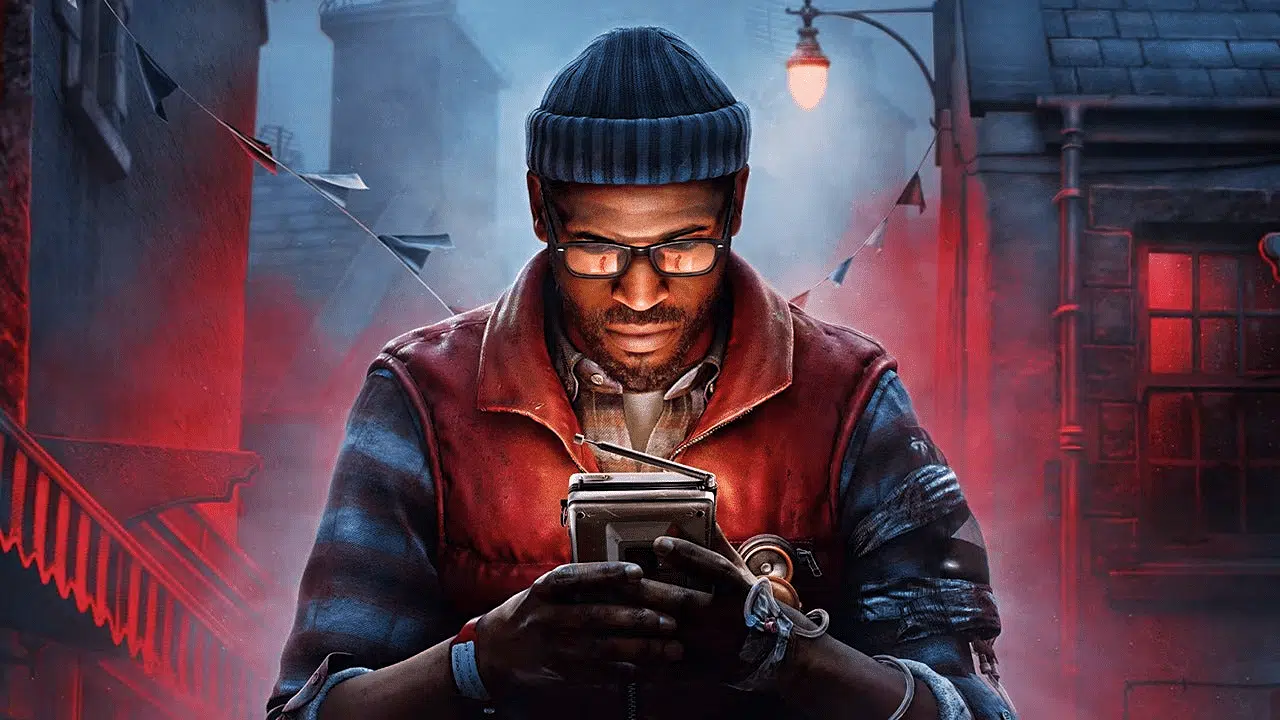
Kevin is completely hooked on St. Amelia—even though there are some parts she’d rather never play again.
(St. Amelia is modeled after a real Scottish coastal town, which is just one of the reasons it feels so incredibly real.)
For over 18 hours, I was hooked on Silent Hill: Townfall like a drug—and even now, long after the credits have faded from the screen, the Silent Hill fever just won’t let me go.
With Townfall, the Scottish development studio Screen Burn has taken on a massive legacy: A new game for this legendary horror series—featuring a new setting outside the U.S. town, a first-person perspective, new gameplay mechanics, and a unique vision—is almost like open-heart surgery in the gaming world. The risk of striking the wrong chord with fans is enormous.
So, can such a radical overhaul actually work? Does this completely new direction even still feel like Silent Hill in the end? Spoiler: Yes, it does—but you’ll have to be willing to go along with this unusual procedure.
Table of Contents
Symptom 1: Scottish Fog
Silent Hill: Townfall drops me and the main character, Simon Ordell, into the small Scottish coastal town of St. Amelia. Neither of us has a clue what we’re doing here, how we ended up here, or who the mysterious voice is that’s whispering to us that we should find “her.” The biggest difference between me and Simon? He has a tube in his arm that leads to an IV drip filled with a strange liquid—that will become important later on.
It takes less than two steps for the thick fog to swallow me whole as I make my way from the boat dock to the town center. Behind me, I hear the waves crashing hard against abandoned boats; ahead of me, the soft clanking of chains and the whistling wind. In short: Townfall doesn’t just gently build its atmosphere—it hits me with the full dose right from the very first minutes.
(St. Amelia is modeled after a real Scottish coastal town, which is just one of the reasons it feels so incredibly real.)
You can easily finish the game in about 10 to 12 hours—but during my playthrough, I got so lost in the world that it took me over 18 hours. That’s because St. Amelia really invites you to pause and explore everything. The town looks as if the people here had ceased to exist from one moment to the next. Unmade beds, open pens at workstations, doors left wide open, bloody gauze bandages, and carelessly abandoned protest posters tell not only the story of an island but also of its downfall. A mysterious corporation appears to have exploited the island and its inhabitants, driving them into ruin.
(Silent Hill: Townfall is so immersive that I can almost smell the sea air.)
This magnificent attention to detail is, unfortunately, marred by just one issue: the obvious asset recycling. The fact that general notices and posters on the walls repeat themselves is completely understandable and doesn’t really bother me. But when I find supposedly intimate letters to deceased loved ones—of which there are only two variations in the entire game—and I keep coming across the exact same handwritten text over and over again, it comes across as unintentionally funny. Most people probably won’t notice this—but for anyone who, like me, gets hung up on every little detail in this game, it’s a break in immersion from this otherwise so masterfully constructed world.
Symptom 2: Immersive Mental Work
Townfall’s greatest strength is its consistent immersion, which runs like a common thread through all aspects of gameplay. Even navigation and puzzles work differently here than what I’m used to in most video games. Instead of simply marking my next destination on a map, for example, I receive signals via my little pocket TV, the CRTV. Short video clips then guide me to the right location. So I have to piece together for myself, based on my surroundings, which alley I’m currently seeing on the screen, where that particular house facade is located, and when I need to turn to find the stairs leading to the front door.
The puzzles also fit into the game in a similarly organic way. I always find clues in the game world—either directly in my surroundings or as a signal via the CRTV. For example, to turn on the power in a house and use a computer, I first have to find a prepaid electricity card, the kind that was completely commonplace in the UK in the 1990s. Elsewhere, I first have to pore over old instruction manuals just to figure out how to take a patient’s X-ray.
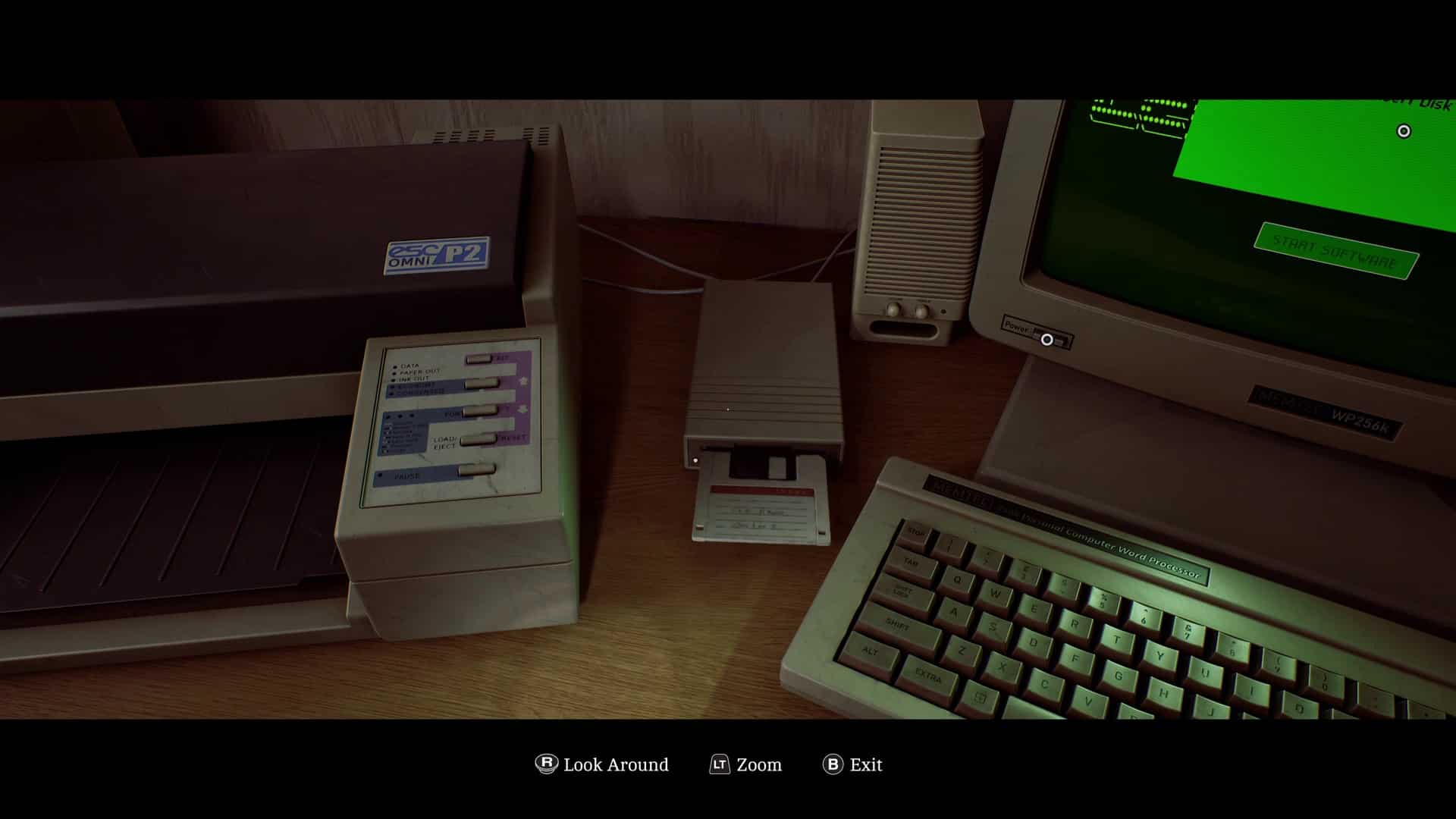
(The puzzles reveal Screen Burn’s roots: they once again demonstrate a knack for clever, tactile retro brain teasers, just like in their previous games.)
It’s precisely this deep grounding in reality that makes all the difference. Instead of confronting me with the completely far-fetched puzzle mechanics so typical of the genre, the challenges here feel like a genuine part of the world.This clever design decision forges an even closer bond with the city and its missing residents. I can imagine their everyday lives so much better, feel their despair and fear up close—and thanks to the tactile design, it just feels cool when I interpret all the clues correctly and operate a massive machine the right way.
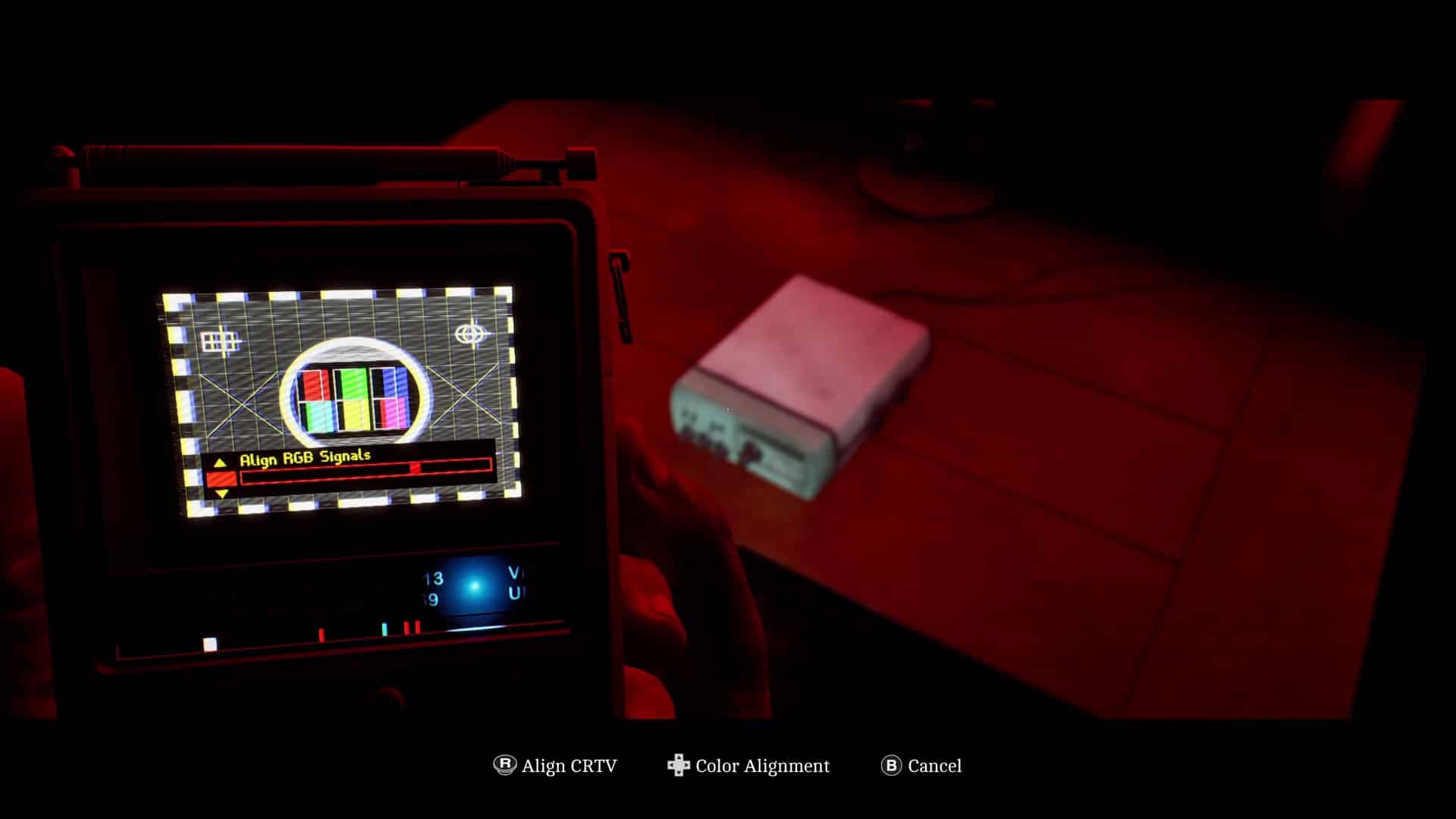
(The small pocket TV serves as a monster radar, helping with puzzles and navigation through the world.)
Only in a few isolated instances do the otherwise clever puzzles cause headaches—either because the clues are too cryptic or, conversely, unnecessarily complicated. With one puzzle, I overthought things where there was no need to. With another, I would have liked one more clue to help me arrive at the solution faster.
By the way, Townfall offers two difficulty levels for puzzles. On the assisted level, clues in documents are highlighted in color. The puzzles themselves, however, don’t change.
Symptom 3: A Life-or-Death Struggle Hanging by a Thread
Townfall wouldn’t be a true Silent Hill game if it didn’t also throw terrifying monsters in my face. For me, combat has never been one of the series’ strengths—and Townfall is no exception. Every confrontation here is a huge risk, because every enemy can be deadly to Simon. So I have to carefully weigh my options at all times to decide whether I really want to attack. After all, I’m not just putting my life on the line: the durability of my melee weapon also decreases with every hit landed or successful block. Ammo for my pistol is scarce, and if the noise attracts even more enemies, I might as well pack it in right then and there. So, all things considered, sneaking is often the much smarter choice.
Of course, my trusty CRTV comes to my aid once again. It lets me locate enemies through walls and plan my approach strategically. If this reminds you of *Alien: Isolation*—just like it does me—it’s probably no coincidence: Jon McKellan, CEO, writer, and director at Screen Burn, worked on that very cult horror game back then as lead UI artist and designer.
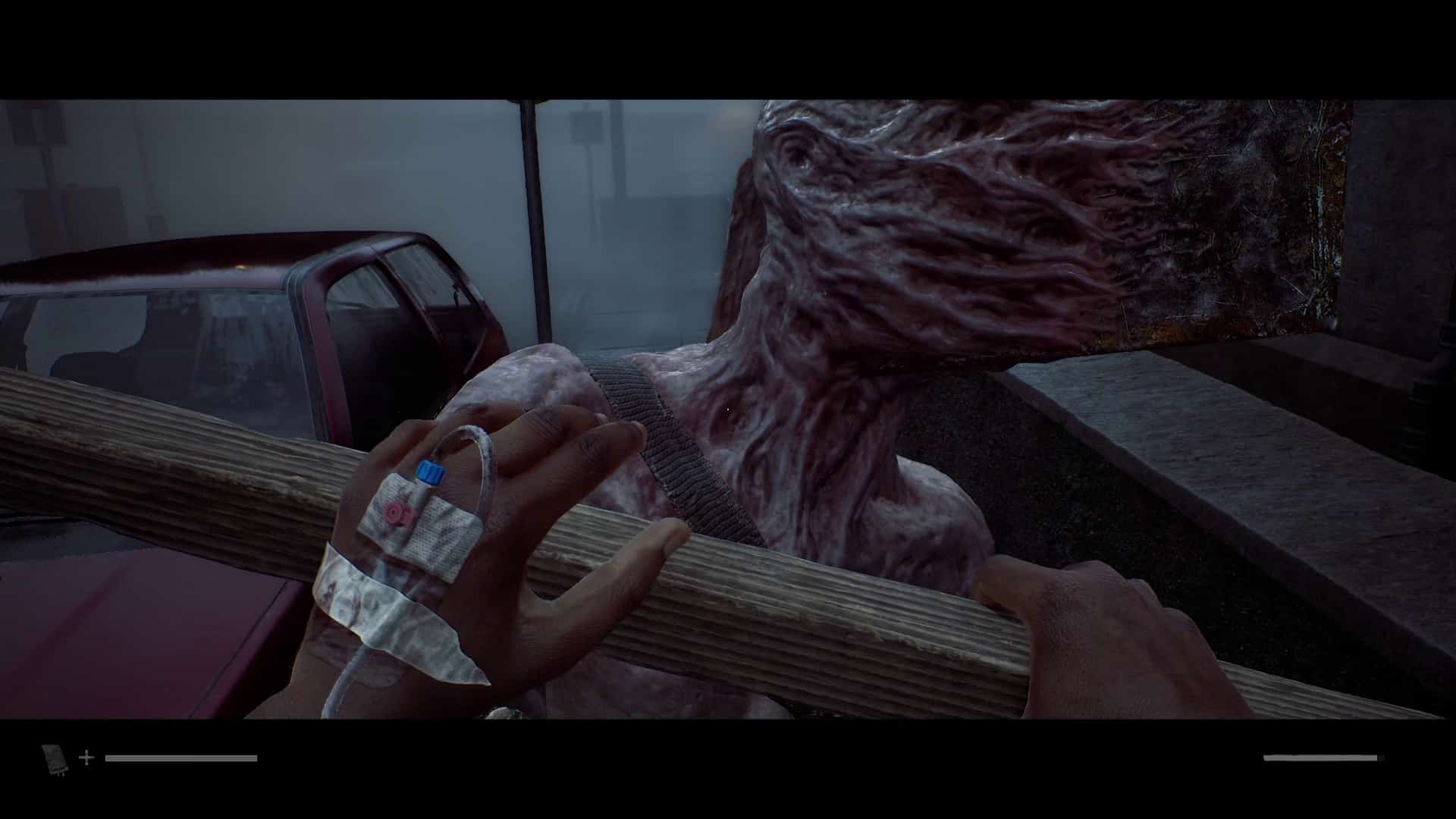
(Every fight could end fatally for Simon. So I have to think carefully about whether I want to take the risk.)
If the monsters do manage to get their hands on me, special infusion bags save me from an immediate Game Over. I can find empty bags and the corresponding infusion fluid all over the game world and use them to craft a life-saving resource that will save me from death just once.
In the first few hours of the game, this cat-and-mouse game is incredibly intense because I have to weigh every move I make. I’m unfamiliar with the surroundings, I don’t yet understand how the different monsters behave—and when I’m suddenly trapped with a handful of them in the confines of an apartment complex, I have to really think on my feet to avoid making too much noise.
As intense as the encounters with the monsters may feel, the gameplay mechanics get repetitive very quickly. Whether I’m out on open streets, hiding in a garden shed, or stumbling around in dark basements: the routine hardly changes. I watch the monsters’ paths, hide, distract them with thrown bottles or radios, and sneak around them. The game does mix things up a bit in a few places, but not enough to significantly shake up the core loop.
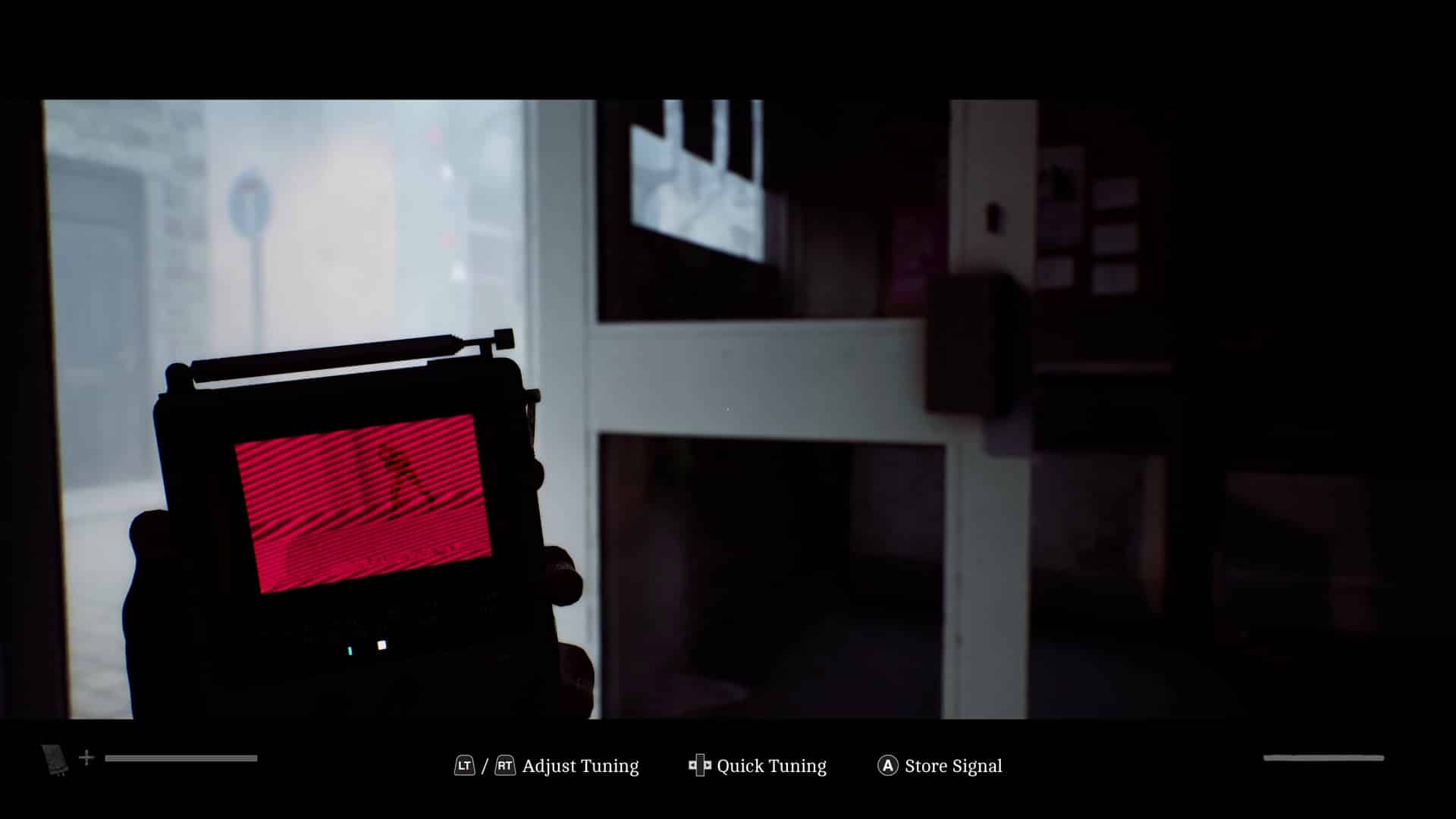
(I can also see enemies right through walls on my CRTV.)
Symptom 4: Constant Shortness of Breath
Screen Burn makes bold choices in many areas and deliberately sets itself apart from its series predecessors—but at times, it feels as though the developers ultimately lack the confidence to trust their own game. Often, Townfall falls too heavily into the typical Silent Hill formula, even though the rest of the game fights against it tooth and nail.
The beautiful, detailed world literally invites you to explore it at your own pace. The constant sneaking already slows the game down significantly and disrupts the pacing. And yet, even after the most intense stealth sequences, Townfall leaves me with far too little breathing room and confuses tension with constant stress.
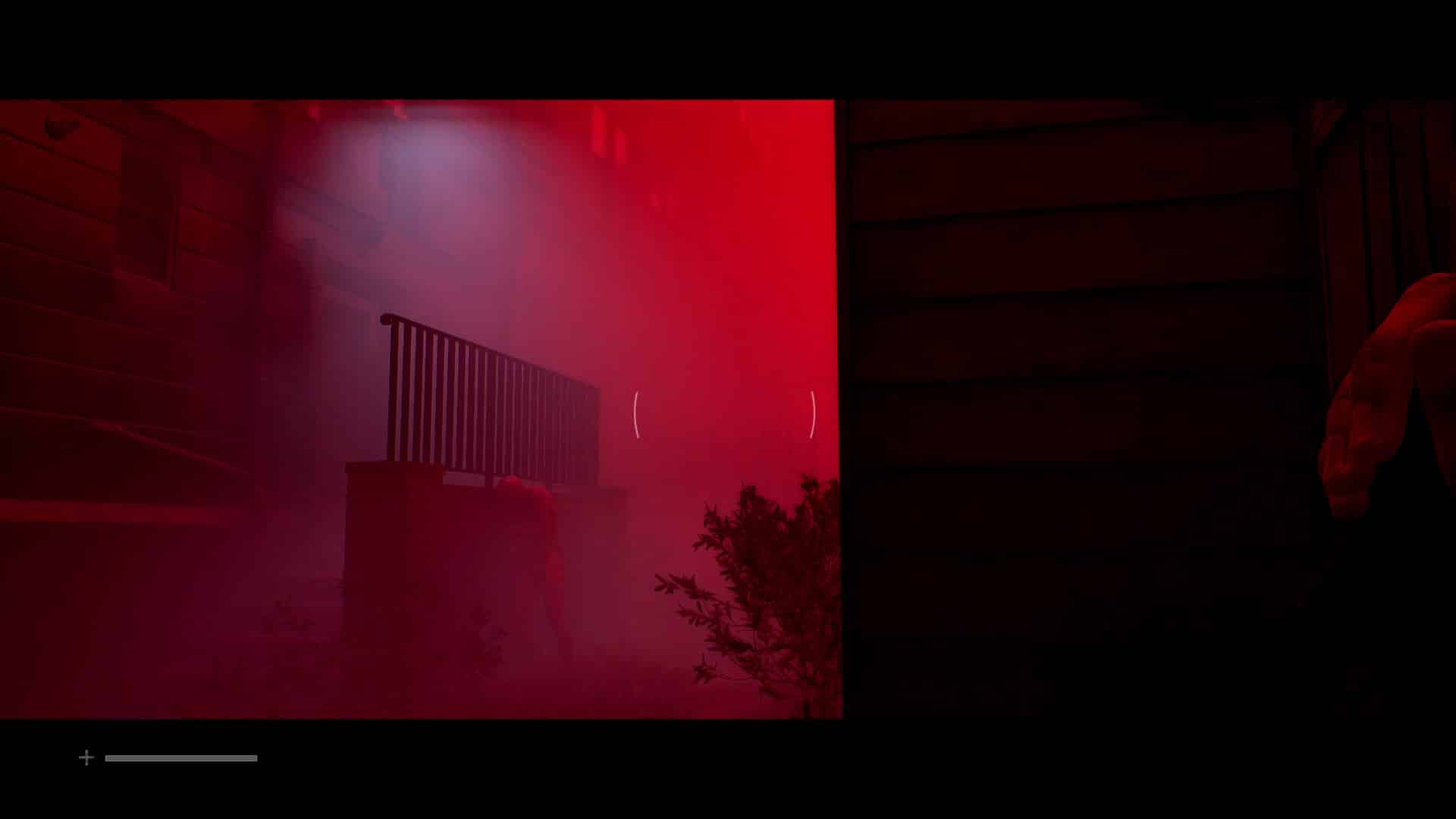
(I can distract enemies with bottles, car alarms, or the radio.)
This becomes especially clear in the pitch-black otherworld, which—as is only fitting for Silent Hill—dutifully descends as soon as I’ve spent more than five minutes in one place. It’s precisely in these moments that my mood often threatens to tip over into frustration. Despite my flashlight, I can’t even see the tip of my own nose, let alone any enemies. New monsters also spawn after almost every puzzle step. Did you enter the right code? Great, here are five new companions for you! Oh, you opened a door? How about three new “colleagues” in the garden? This usually doesn’t add any more challenge to the game; instead, it unnecessarily drags out certain sections and distracts too much from what actually makes Townfall so great.
And then there’s that @!&% beast that drove me—and many other testers—absolutely crazy. Compared to its smaller counterparts, it just feels unfair and overwhelming. What should be a masterfully oppressive atmosphere thus becomes fertile ground for genuine frustration and exclamations like “I never want to play this again!”
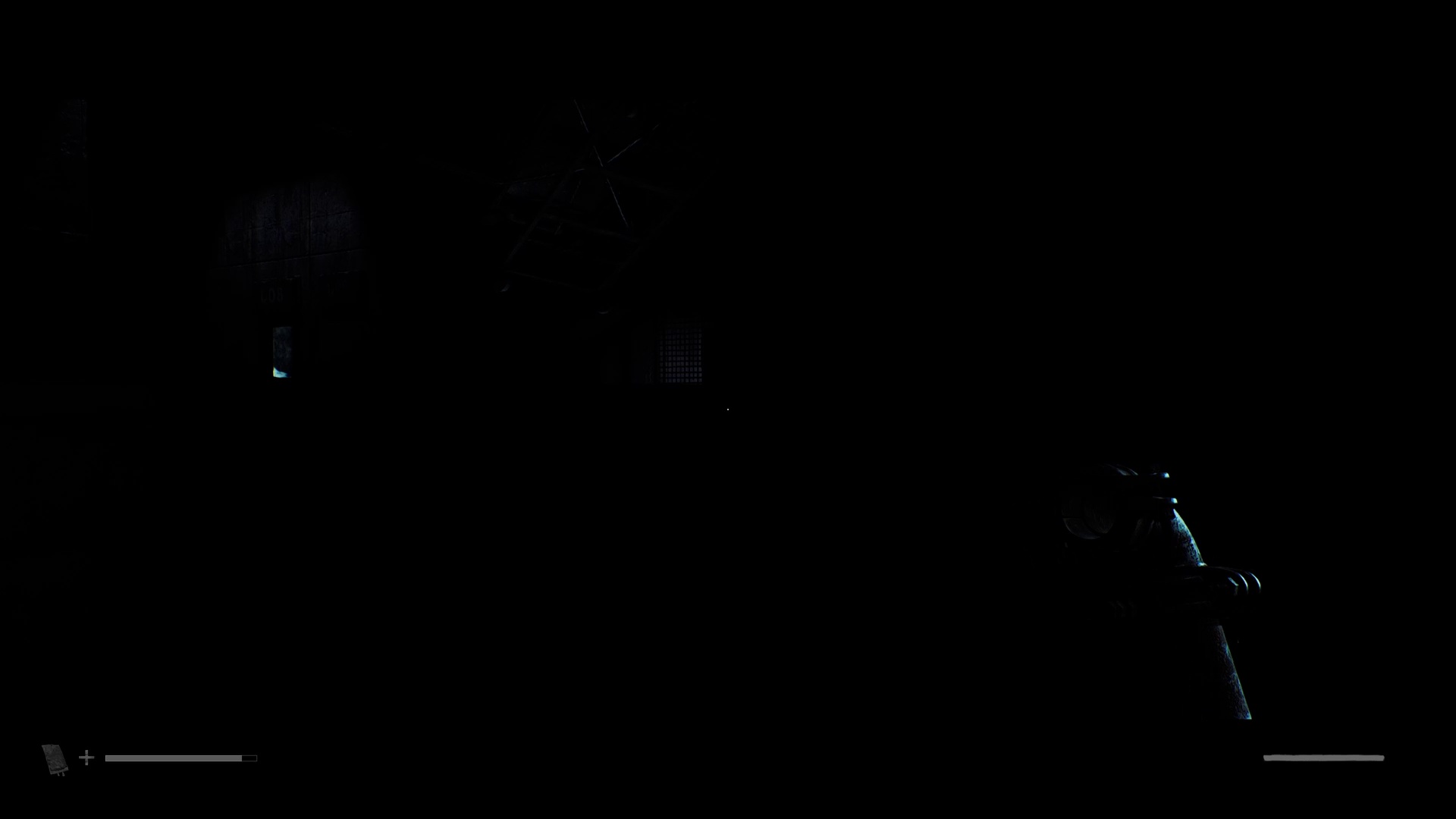
(This is an actual screenshot from the game. I spend some sections simply in complete darkness.)
Especially when it comes to the Otherworld, I would have liked Screen Burn to trust its own creative ideas even more. There are definitely great hints of this in Townfall—for example, a moment when it almost seems as if the town itself is a living organism. Plus, even the quiet moments in Silent Hill: Townfall effortlessly overwhelm me with a flood of emotions and goosebumps. I would have loved to see a lot more of that.
Final Verdict: Is This Still Silent Hill?
There are endless online debates about what Silent Hill is really all about at its core. For many, it’s the fog-shrouded U.S. town; for others, it’s the cult following; for still others, it’s the classic monster design. For me, it’s first and foremost the unmistakable feeling these games exude—and Townfall captures that 100 percent for me.
Silent Hill: Townfall draws noticeable inspiration from past installments and honors its roots, yet at the same time boldly forges its own path.
So who should give this a try? If you can get past the fact that Silent Hill is called St. Amelia here and you’re in the mood for atmospheric magic, a gripping, emotional story with magnificent performances, and extraordinary, clever puzzle mechanics, then it’s definitely worth a look. However, you’ll need plenty of patience and the ability to handle frustration. If repetitive stealth gameplay quickly gets on your nerves and you can’t stand occasional pacing issues, then you might be better off staying away from it.

(Townfall has a fantastic story with terrific actors. The ending still haunts me to this day, and I’m looking forward to the other four.)
By the way, Townfall delivers flawless performance: On my computer, the new Silent Hill ran at max settings consistently smooth as butter and without any bugs. But I’ve got an RTX 5080 and an AMD Ryzen 7 7800X3D purring away in my case, so performance might vary on weaker systems.
Of course, you’ll have to decide for yourselves whether Silent Hill: Townfall is a true Silent Hill experience or not. For my part, I’m very happy that Konami isn’t abandoning the series, but is instead exploring different directions, embracing new visions and studios, and pushing the boundaries. Yes, Townfall is different. But for me, it’s also exactly the bold Silent Hill that this cult series needed.
Editor’s Verdict
There are many things to discuss about Silent Hill: Townfall. There are many things to criticize about Townfall. But for me, it’s one of the best games in the series. Yes, I, too, had moments when I exhaled irritably through my nose and grumbled that I “never want to play this @!$?’* part again in my life!!” But at the next opportunity, I’ll start my next playthrough because I’m hungry for more.
Because Silent Hill: Townfall nails the most important thing: the feeling. I feel like I’m in a Silent Hill game. I’m enchanted by the beautiful surroundings, spending way too much time in front of shop windows reading every little note to get to know St. Amelia and its residents. I get caught up in the characters’ stories, come up with my own theories, then throw them all out the window and start over with new ideas. And even after the credits roll, I can’t stop thinking about Townfall.
If you can overlook the repetitive stealth gameplay—which can sometimes be unfair and annoying—then I highly recommend a trip to St. Amelia. Because I can promise you one thing: you’ve never experienced a Silent Hill like this before.


