





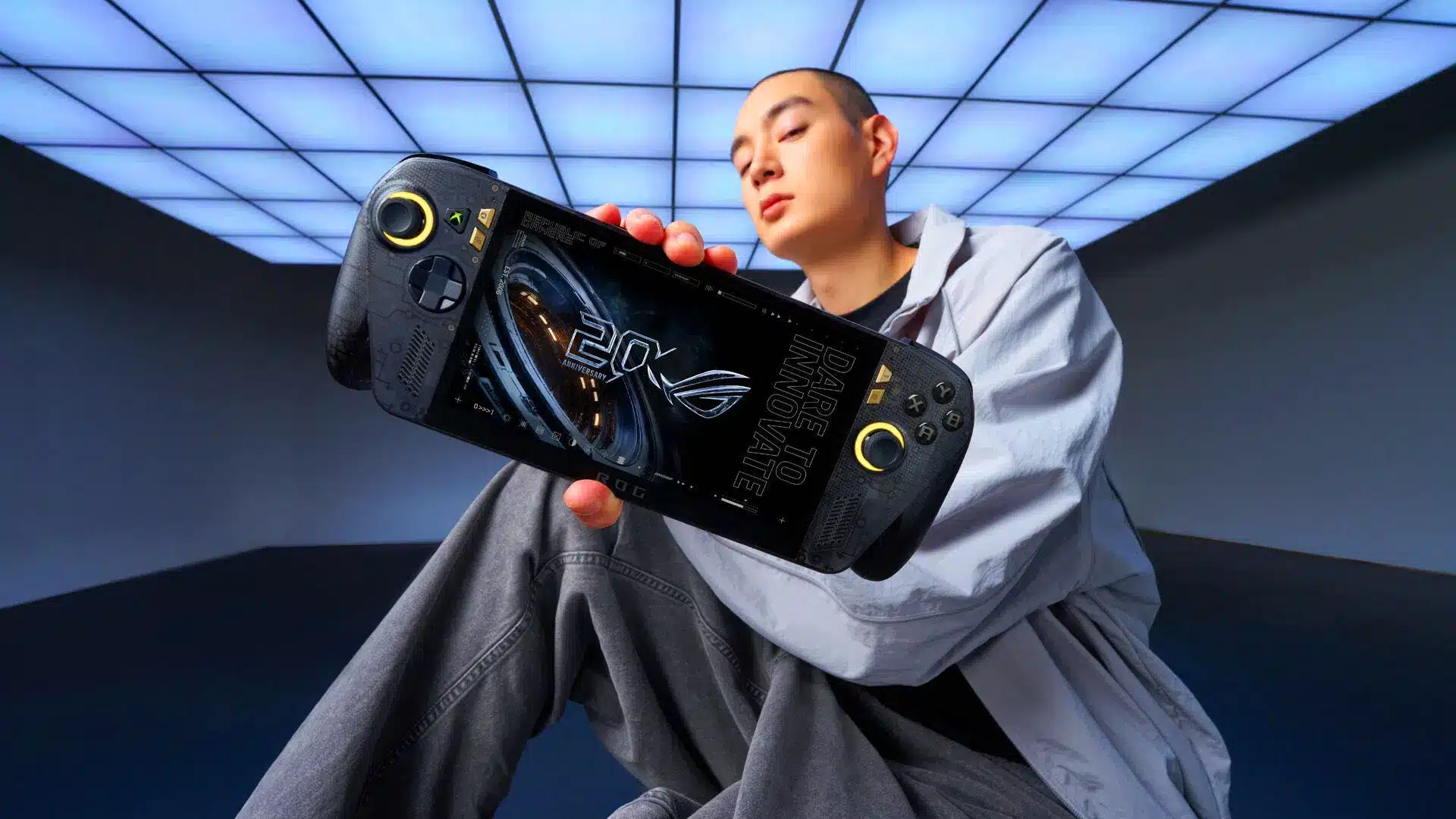
I’ve been hoping for the new features of the ROG Xbox Ally X20 in Asus handhelds for a long time—but are the upgrades worth the extra cost?
Now it’s official: The new Asus ROG Xbox Ally X20 will also be available separately, without the expensive anniversary bundle that includes video glasses. Although the priceit’s been well-received by the gaming community– these are difficult times, after all.
In return, the Ally X20 offers useful improvements that I’ve always wanted from Asus handhelds.
Table of Contents
Asus addresses the biggest weaknesses
Asus’s Ally handhelds have always had two major weaknesses: the rather mediocre screen and the analog sticks prone to drift. Aside from that, they’ve always offered great value for the price, and today’s Xbox Ally handhelds are no exception.
The new Ally X20 addresses these weaknesses and even takes it a step further.
OLED: Finally, a good screen
Larger:The new handheld features a slightly larger 7.4-inch screen. This isn’t a huge difference from its predecessors, but it’s definitely welcome, since 7 inches has always been a bit too small for PC games designed primarily for large screens. In addition, the screen bezels are now thinner; on other Asus handhelds, they’ve always been very thick.
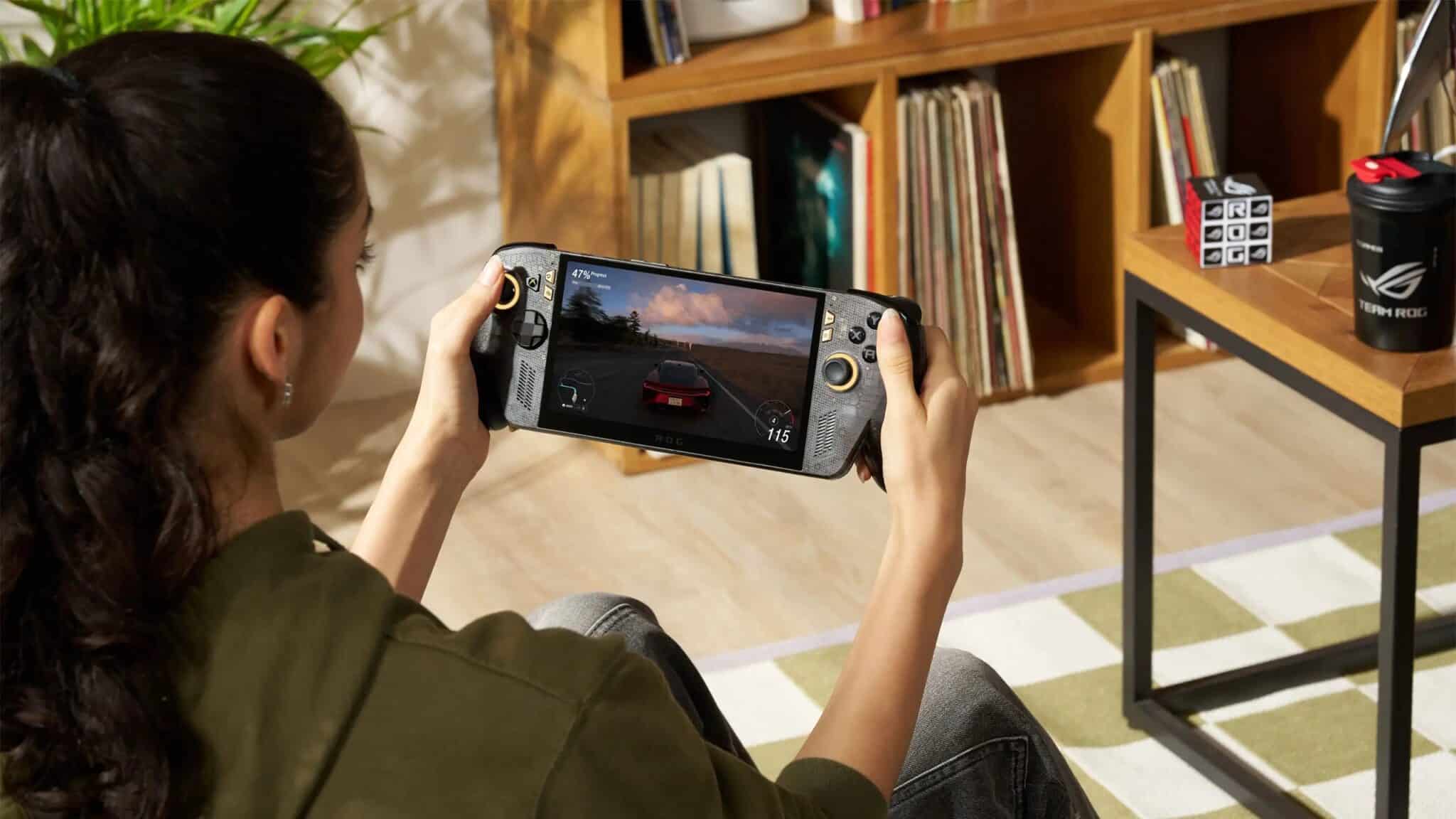
Better:The switch to an OLED screen makes a truly significant difference. Asus’s handhelds are all equipped with the same, rather mediocre, LCD screen. It wasn’t bad by any means, but it definitely wasn’t a strong point of the device. Most competitors had much more to offer in this regard.
The new Ally X20 now features the display I’ve always wanted in a handheld like this:
- OLED for significantly improved contrast, perfect blacks, brilliant color reproduction, and a fast response time of 0.2 ms.
- 100 percent DCI-P3 color gamut coverage
- 120 Hz with variable refresh rate (VRR and OLED are still rare in handhelds).
- VRR range expanded to 30 to 120 Hz.
- Support for Dolby Vision HDR
In the first hands-on videos, the screen makes a very solid impression, and I’m looking forward to seeing it for myself in the future.
Brightness:The maximum brightness of the screen is quite important for handhelds, especially if you plan to play outside your home. Previous Asus handhelds offered 500 nits in this regard. That’s barely sufficient, but poorly suited for outdoor gamers.
The Asus ROG Xbox Ally X20 displays SDR content at 600 nits and HDR content at a whopping 1,400 nits. Combined with the anti-reflective coating, the new handheld should be better suited for gaming outdoors in daylight.
TMR Sticks: Finally, Drift-Resistant Sticks
Better late than never: Asus has equipped the Ally X20 with so-called TMR (Tunnel Magnetoresistance) sticks. All of the manufacturer’s previous handhelds still rely on analog sticks with mechanical potentiometers, which can wear out over time. This is one of the main causes of stick drift.
The new analog sticks use TMR sensors to measure the slightest changes in magnetic fields to determine their position. The result is not only increased precision but, above all, significantly improved durability with greater resistance to the annoying stick drift problem.
The competition has long been using magnetic Hall-effect sticks, which work similarly and also suffer less mechanical wear, so I’m pleased that Asus has not only caught up but has made the leap straight to TMR sticks, which are even more efficient and precise.

microSD Express: The Nintendo Switch 2 led the way
The Nintendo Switch 2 was the first handheld to support the new microSD Express cards. These are significantly faster than the UHS-II standard, which is common in PC handhelds.
If you want to expand the storage capacity of your Steam Deck or similar devices in a meaningful way, you’ll need to replace the internal SSD—a step that isn’t exactly straightforward for many people.
With the introduction of microSD Express cards, this is no longer absolutely necessary. The cards transfer data at over 800 MB/s, which is faster than SSDs connected via a SATA interface.
The Asus ROG Xbox Ally X20 is the second handheld PC, after the MSI Claw 8 EX AI+, to support these fast microSD cards. So if the internal 1 TB of storage isn’t enough for you, they offer a simple (though expensive) way to expand it.
Differences from the Predecessor
| Feature | Asus ROG Xbox Ally X20 | Asus ROG Xbox Ally X |
|---|---|---|
| APU | AMD Ryzen™ AI Z2 Extreme | AMD Ryzen™ AI Z2 Extreme |
| RAM | 24 GB LPDDR5X | 24 GB LPDDR5X |
| SSD | 1 TB PCIe 4.0 NVMe M.2 (2280) | 1 TB PCIe 4.0 NVMe M.2 (2280) |
| Display | 7.4-inch OLED, FHD (1080p), 120Hz, 600–1400 nits | 7.0-inch IPS-level, FHD (1080p), 120Hz, 500 nits |
| Controller | TMR Joysticks (with RGB), Transforming D-Pad, Impulse & Hall-Effect Triggers, Xbox Button with LED | Standard Analog Sticks, Standard D-Pad, Hall-Effect Triggers & Bumpers |
| Storage Expansion | microSD Express Card Reader (supports SD v8.0, PCIe Gen4 x1) | UHS-II microSD Card Reader |
| Weight | 756 g | 715 g |
| Dimensions | 30.0 x 12.1 x 2.75 ~ 5.13 cm | 29.0 x 12.1 x 2.75 ~ 5.09 cm |
| Connectivity | Wi-Fi 6E + Bluetooth 5.4 | Wi-Fi 6E + Bluetooth 5.4 |
| Battery | 80 Wh (4-cell Li-Ion) | 80 Wh (4-cell Li-Ion) |
| Operating System | Windows 11 Home | Windows 11 Home |
Our 2026 Handheld Buying Guide
The Big Question: Is the Handheld Worth 1,400 Euros?
Asus is charging a premium for these upgrades. The Asus ROG Xbox Ally X currently costs around 1,000 euros. So you’re paying 400 euros for the better screen, the new design, the improved controller, and microSD Express support.
You’ll have to decide for yourself whether these upgrades are worth the money. If I didn’t already own a handheld, the new Ally X20 would definitely be on my shortlist.
While the handheld isn’t quite as fast as theMSI Claw 8 EX AI+(the Intel G3 Extreme reaches the peak performance of the AMD Ryzen Z2 Extreme at just about 18 watts), it does offer the OLED screen that I missed on the MSI handheld. It also costs 250 euros less.
On top of that, switching to SteamOS on the Asus handheld should be less complicated, since AMD hardware is still the easier route for Linux operating systems.
A comparison with the soon-to-be-released Acer Predator Atlas 8 featuring an Intel G3 chip (scheduled for release on October 1, 2026) could be interesting. This handheld will cost 100 euros less, though we don’t yet know how fast it will be—in any case, it doesn’t have an OLED screen.


