





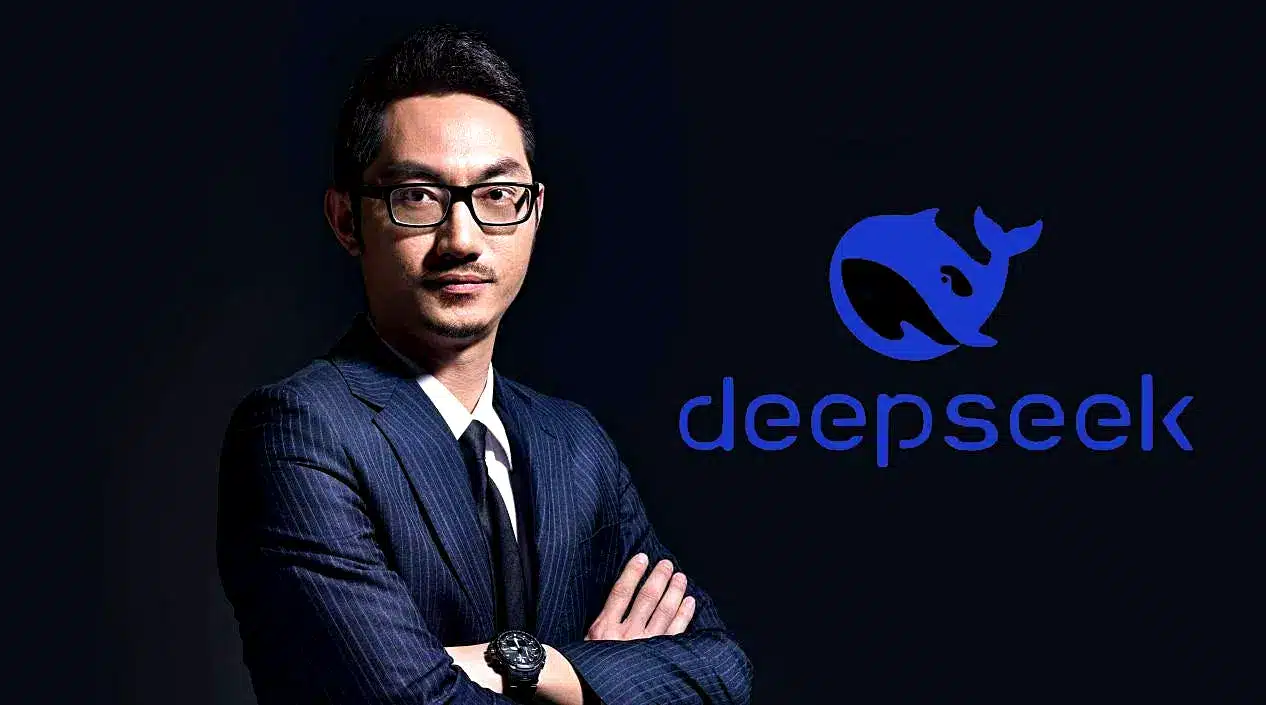
In an investor call, DeepSeek CEO Liang Wenfeng took issue with Nvidia’s dominance: Huawei hardware is set to fully replace the GB300 systems.
DeepSeek founder and CEO Liang Wenfeng spoke with unusual candor during an investor call about China’s race to catch up in computing power and about Nvidia:
“I’m quite optimistic about domestic computing power—at this point, Nvidia is digging its own grave.”
Huawei 950 vs. Nvidia GB300: The DeepSeek CEO’s Analysis
Specifically, Wenfeng claims that Huawei’s “Atlas 950 SuperPoD”—a so-called supernode, i.e., a tightly coupled cluster of many accelerators—could completely replace Nvidia’s “GB200” and “GB300” racks in terms of performance and price. The price is higher, but within reasonable limits: Whether it’s 50, 100, or even 200 percent more expensive, it ultimately doesn’t matter, according to Wenfeng.
However, he himself points out the catch: It takes four Huawei chips to match the performance of a single Nvidia GPU, and Huawei is about two years behind.
- Four Huawei 950s would be equivalent to one GB300—with the same latency and the same range of tasks, according to Wenfeng.
- The Huawei supernode is scheduled to launch in the third or fourth quarter of 2026; Nvidia’s GB200 hit the market in the third quarter two years ago.
China’s Computing Gap: Why the U.S. Is Ahead
Wenfeng attributes the gap with the U.S. to resources, not personnel—the talent gap, he says, stems from the computing deficit. According to the DeepSeek CEO, the largest AI models currently active utilize around 800 billion parameters simultaneously, while Chinese models use only about 10 billion—a significant lag.
Full transcript of Wenfeng’s investor conference call. He’s a lot more forceful here. He insists that open-sourcing is *the* agenda. If you’re not on board, go buy more Zhipu.
And crucially, he says restraint is *the only way to survive*. World-eating labs will be culled. https://t.co/tTCa83rxak pic.twitter.com/XhqVm3zuMK— Teortaxes▶️ (DeepSeek Twitter Super Fan 2023 – ∞) (@teortaxesTex) July 23, 2026
According to Wenfeng, training a model of this caliber would require around 50,000 GB300s or about 200,000 Huawei 950s—not including research. Huawei is currently providing capacity for about 16,000 accelerators for DeepSeek; the bottleneck lies in Huawei’s manufacturing.
A Crumbling Advantage: CUDA and the TileLang Argument
NVIDIA’s often-cited advantage is the “CUDA” software platform, to which many AI developers are tied. Wenfeng sees precisely this advantage fading: AI can now write the necessary code on its own, and on top of that, there’s an in-house tool called “TileLang” that can be used to replicate NVIDIA’s ecosystem.
As evidence, he cites his own “V3” model: Although the model ran on NVIDIA hardware, it disconnected from NVIDIA’s software environment during training—via a TileLang compiler he wrote himself. His thesis is that specialized AI chips are making the CUDA advantage increasingly irrelevant anyway.


