





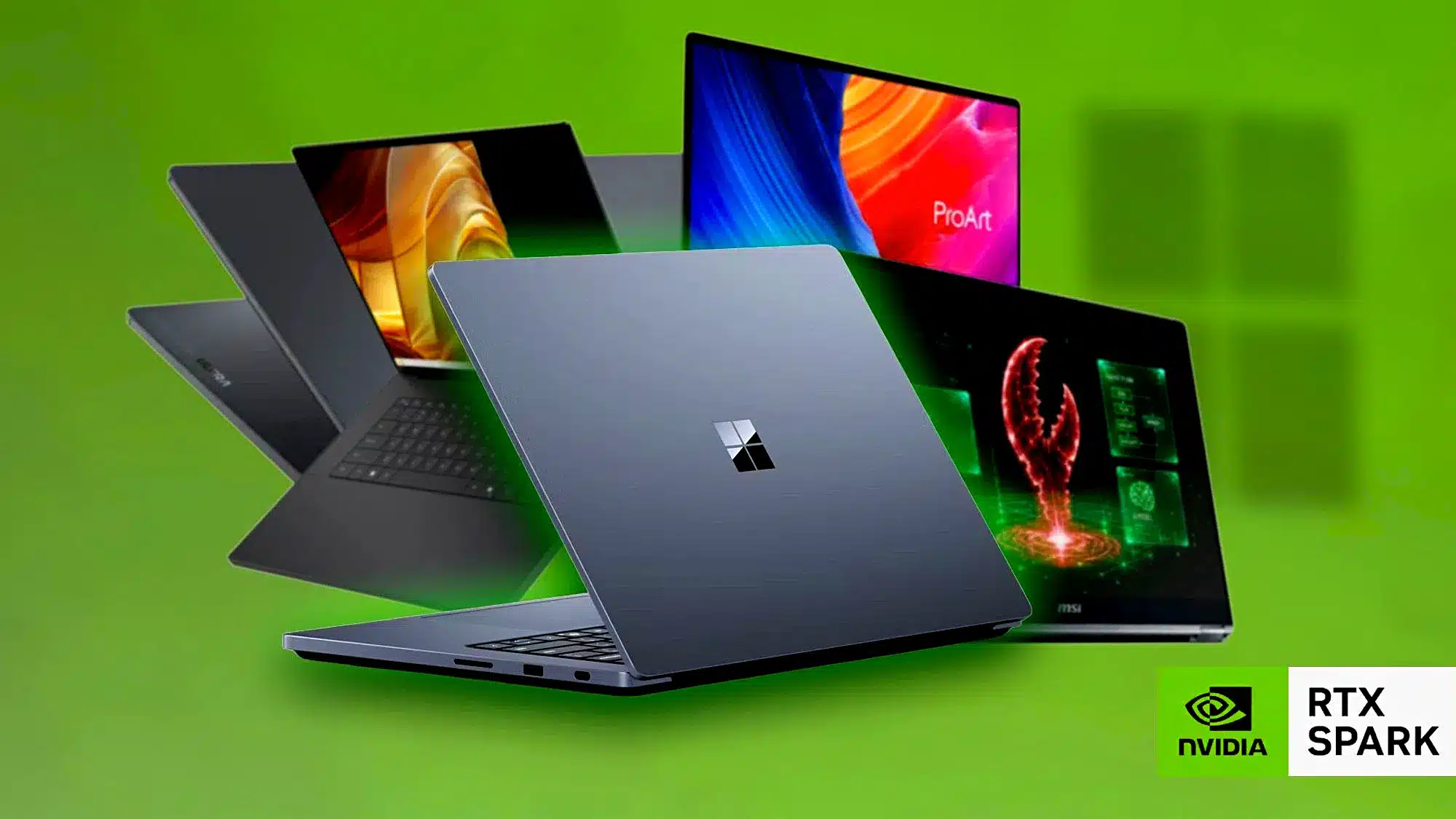
Microsoft has unveiled a new Surface Laptop featuring Nvidia’s RTX Spark.
At a Windows and Surface event, Microsoft unveiled new features and products yesterday. The new Surface Laptop Ultra was particularly exciting.
The laptop is equipped with Nvidia’s RTX Spark and, according to Microsoft, is the most powerful Surface yet.
Windows Competition for the MacBook Pro
Microsoft’s Surface hardware doesn’t have the best reputation. But with the Surface Laptop Ultra, the Windows manufacturer is now looking to make a fresh start. The laptop was designed specifically for developers and creators and, with the RTX Spark, should offer more than enough performance.
As a reminder: RTX Spark is NVIDIA’s first in-house laptop processor, which delivered nearly 54 percent more performance in benchmarks than Apple’s M5 and finished just behind the Intel Core Ultra 9 285HX. The SoC is also expected to perform similarly to an RTX 5070 graphics card.
In addition to the NVIDIA chip, the Surface Laptop Ultra features a 15-inch Mini-LED touchscreen display and can be equipped with up to 128 GB of RAM. The SSD is replaceable. It weighs two kilograms.
The new laptop is set to launch on October 16, 2026, and can be pre-ordered directly from Microsoft starting now. The most affordable model starts at 2,899 euros. However, the price can go as high as nearly 7,000 euros for the top-of-the-line model. A power adapter is included for free only if you pre-order.
Here’s the introduction trailer:
What else was shown? A large part of the presentation focused primarily on developer features that are less interesting to end users. However, some new Copilot and AI features were also showcased, which are set to be integrated into Windows soon.
For example, Copilot can independently create apps and widgets, much like Google’s Gemini. The AI now also has a face to make it seem more personal. Beyond that, Microsoft aims to gradually evolve the AI from an assistant into a standalone agent. For instance, Copilot can run AI models locally and draw on additional computing power from the cloud when needed.


