





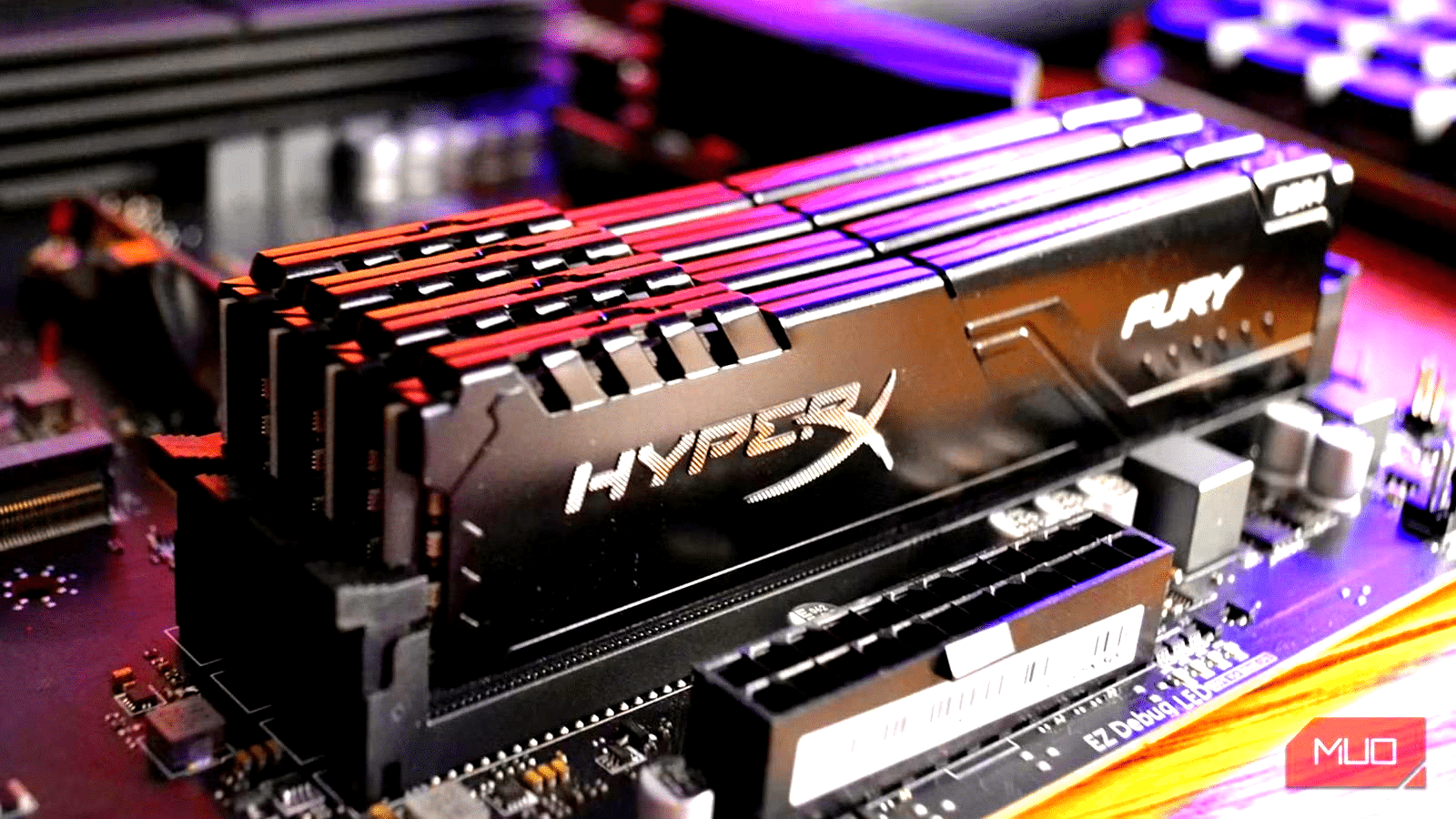
Computer science professor Daniel Lemire has recalculated the historical price curve for RAM. His conclusion: RAM now costs as much per unit as it did in 2007—an unprecedented situation.
Since the summer of 2025, the memory market has been moving in only one direction. Analysts atJ.P. Morgan Global Researchproject an increase of more than 400 percent for DRAM by the end of 2026 compared to early 2024. Daniel Lemire, a computer science professor at the Université du Québec, compared the historical price curve with current market data.
His conclusion: About two decades of progress have just been wiped out; RAM now costs about as much per unit as it did in 2007. He is not aware of a comparable reversal in the history of technology.
A Performance Researcher Analyzes the Storage Market
Outside the memory industry, Lemire is best known as the developer of “simdjson” , a JSON parser that breaks down data formats using SIMD instructions. His area of expertise is software performance—so memory is the material he works with every day.
In this context, the researcher asks what the rising costs mean for software design and identifies two possible solutions: We’ll need more memory-efficient AI systems—or methods that can produce much more memory much faster.
Historically, computer memory has been falling at an exponential rate for decades. But we’ve just undone about 20 years of progress.
RAM, on a per-unit basis, is about as expensive as it was in 2007.
To my knowledge, this is a historical anomaly. I cannot recall a similar… pic.twitter.com/UH6LgZ1fc4
— Daniel Lemire (@lemire) August 5, 2026
The data comes fromStanford DAM Project, which uses the cheapest consumer-grade memory module available on Amazon each month as the market floor. DDR5 prices there range from $11.41 to $13.28 per GB.
The data captures the cheapest offer, which, according to the project, is often tied to a clearance sale of a discontinued generation. Depending on how you calculate it, you’ll end up at two points in the past:
- Without adjusting for inflation, the price range takes us back to 2008. Back then, DDR2-800 ran at 6.4 GB/s per channel; DDR5-6000 manages around 48 GB/s.
- Adjusted for inflation to 2024 U.S. dollars, the range drops to $10.94 to $12.74—a level last seen with DDR3 in 2011 (via Tom’s Hardware).
Unequal Increase: 20 Percent Production Versus 200 Percent Demand
The cause is the much-cited shift in priorities among memory manufacturers: SK Hynix, Samsung, and Micron are prioritizing the production of HBM (High Bandwidth Memory). This stacked memory is critically important for AI accelerators and, on top of that, extremely profitable for the companies.
- In this context, Lemire cites the SpaceX financial report, which states that memory production is increasing by 20 percent annually.
- However, demand is growing by 200 percent over the same period—supply is consequently unable to keep up, leaving consumers facing skyrocketing prices.
New production lines, however, are not expected to come online before the end of 2027. Given the characteristics of the current crisis described above, it remains to be seen whether one of the solutions described by Lemire will be implemented by then—or whether we will have to adjust to a new “normal.”


