





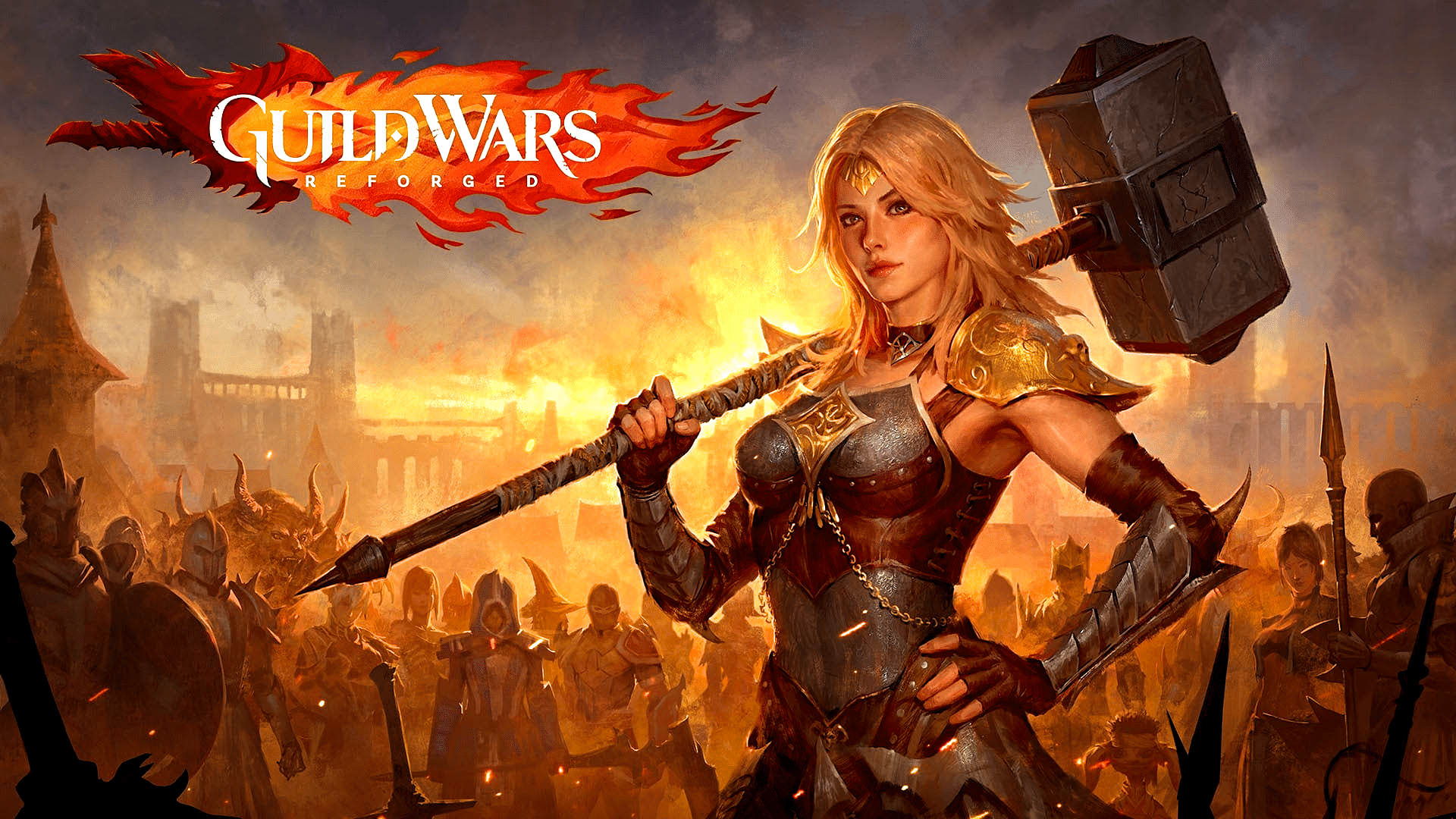
The 20-year-old MMO Guild Wars is currently enjoying a renaissance on Steam. The “Reforged” update is attracting thousands of players back to the servers – but the massive rush is pushing the old technology to its limits.
Guild Wars Reforged, the revamp of the first part supervised by the original developers (under the name “2weeks”) and ArenaNet, has reached player numbers that even the studio apparently did not expect.
While the servers are bursting at the seams, returning players and newcomers are not only fighting monsters, but also an overloaded infrastructure and critical bugs.
A rush that no one expected
It’s rare for a two-decade-old online role-playing game to suddenly climb back up the Steam charts. But that’s exactly what happened over the weekend. While the figures already looked good on Friday, they were surpassed again on Saturday and Sunday. According to SteamDB, a peak of 5,634 players were logged in simultaneously on Valve’s platform alone.
This figure is deceptively low when you consider that the majority of the Guild Wars community traditionally uses the direct client and does not play via Steam. The actual number of players is therefore likely to be many times higher.
A glance at the districts, Guild Wars’ instancing system, showed just how crowded it really was. Popular hubs such as Kamadan had to be divided into seven districts to accommodate the masses of players.
Even the starting area in “Pre-Searing” Ascalon, i.e., before the destruction of the game world in the tutorial area, had six fully occupied districts at times. The mix of veterans who reactivated their old accounts and complete newbies created a spirit of optimism that many had not experienced in the game for years.
Technology at its limit
However, success comes at a price: ArenaNet had to admit last week that the rush of players far exceeded expectations. In response, the server infrastructure was expanded at short notice to ensure stability. Nevertheless, the weekend did not run smoothly for many.
Probably the most curious and at the same time most disruptive problem concerned the in-game economy. Numerous players reported that in-game merchants were displaying empty inventories.
- It was not possible to buy or sell goods.
- Players were unable to check prices for rare materials, dyes, or weapon upgrades. Trade came to a complete standstill in some places.
The situation caused confusion and rumors in the chat. Some groups of players mistakenly speculated that ArenaNet had deliberately blocked merchants for new accounts to prevent gold selling or bots. However, this quickly turned out to be a technical error that affected all players equally.
In addition to the in-game issues, there were difficulties with Steam purchases. The “Bonus Mission Pack” and other DLC content were not correctly unlocked in many users’ accounts after purchase.
Developer response and current status
ArenaNet responded to the complaints via its official X account:
We’re aware that some Steam-purchased DLC is not unlocking as expected and in-game item traders are showing empty inventories. Our team is investigating both and we appreciate your patience.
— Guild Wars (@GuildWars) December 8, 2025
Link to Twitter content
“We are aware that some DLCs purchased through Steam are not unlocking as expected and that merchants in the game are displaying empty inventories. Our team is investigating both issues and we thank you for your patience.”
The studio has now posted a list of known issues. In addition to the vendor bugs, these include:
- Character slot errors
- Client freezing
- Problems redeeming product keys
Is the all-clear given? As of this morning, vendors appear to be back up and running. Tests showed full inventories and functioning transactions. Whether this is a permanent solution or just due to lower server load in the morning remains to be seen.
If you plan to log into Tyria in the coming days, you can look forward to full cities and active group searches—something that cannot be taken for granted in a game of this age. However, you should still expect minor glitches until ArenaNet has fully adjusted its capacity to the new demand.


