





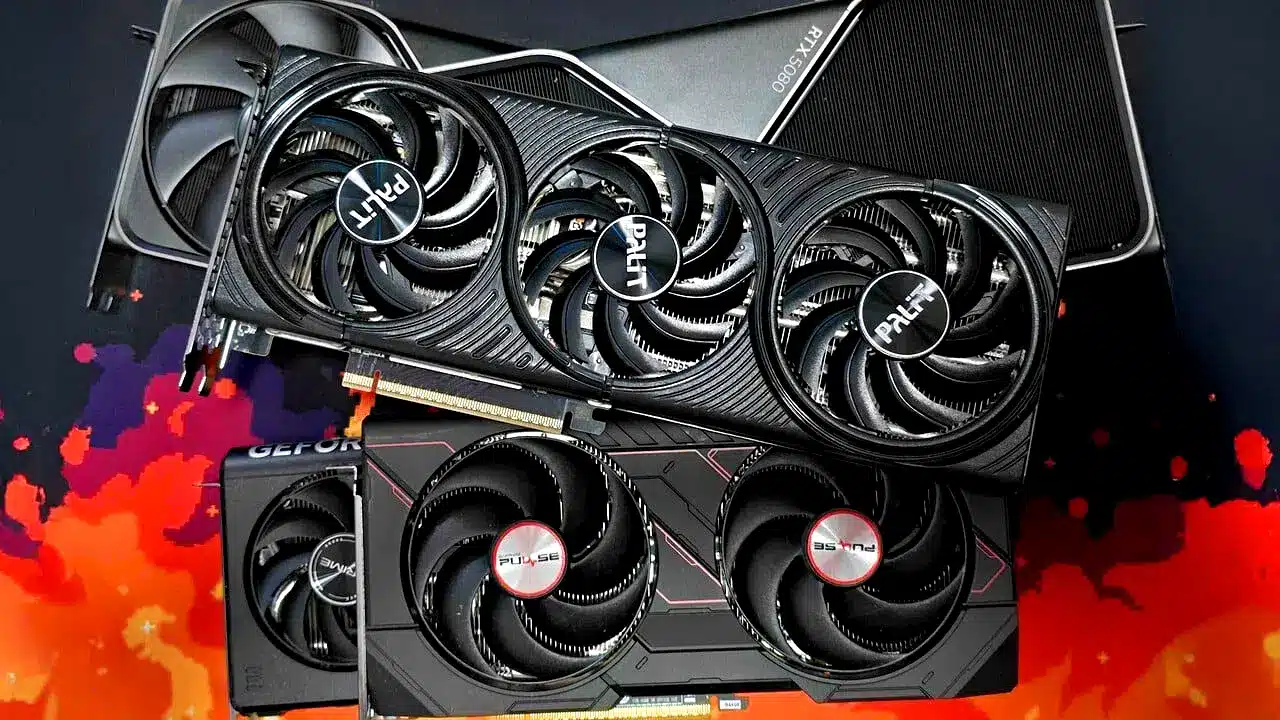
A Reddit user tracked GPU prices at 15 EU retailers for over 50 days. The result: The RTX 5090 class is getting more expensive—everything else has remained stable, at least over the past two months.
Around 126,000 price readings from nine countries, automatically retrieved every six hours: What user “egudegi” posted on the hardware subreddit is arguably one of the most comprehensive community price analyses of the current GPU market in Europe, which, like all others, is being shaken by the memory crisis.
The most striking result of the survey, which is based on data from the website Pricesquirrel, is a clear division of the market.
- RTX 5090-class cards have become, on average, three percent more expensive since launch—and, by the way, are expected to become even more expensive.
- All other segments are falling: For example, according to the data, the RTX 5060 Ti and the RX 9060 XT are each around nine percent below their initial prices from early March.
- AMD’s RX 9070 XT, meanwhile, sits at -7.5 percent; the RTX 5070 Ti, in turn, has landed at -2.1 percent.
Germany and the Netherlands: The Cheapest Duopoly in the EU
According to the analysis, anyone in the EU looking for the cheapest source almost always turns to Germany or the Netherlands.
Germany was the cheapest country in 48.9 percent of all comparable product-day combinations, the Netherlands in 42.8 percent—together, therefore, in 91.7 percent of all cases.
France, Finland, Spain, Italy, and Belgium account for the remaining roughly eight percent.
Regarding the methodology:According to egudegi, the GPU comparisons are based on models that have been tracked since week one of the survey, which is why the sample size per GPU ranges from four to nine units.
The general direction of the findings is reliable, but exact percentage figures should not be overinterpreted. Country data uses exclusively EUR prices for identical models across multiple markets.
However, the picture shifts when looking at the trends.
- France has “improved significantly”: While the premium there relative to the EU low price was still around 19 percent in the first 25 days of observation, it has since fallen to about 10 percent.
- Finland, on the other hand, is moving in the opposite direction—the premium rose from about 9 percent to around 14.5 percent.
In the comments section, egudegi cites not primarily the value-added tax but rather the fiercer competition among online retailers as a possible explanation for the general price leadership of Germany and the Netherlands: Both markets have significantly more competing shops than France, Finland, or Spain, which creates price pressure.
I tracked EU GPU prices across 15 stores for 50+ days, here's what the data shows
byu/egudegi inhardware
Minor Adjustments and Weekdays
Another finding from the data also provides insight into retailers’ pricing policies. According to the analysis, Notebooksbilliger—one of Germany’s largest online hardware retailers—set 45 different prices for a single GPU over a 15-day period.
That averages out to three changes per day, all of which, according to the analysis, fell within a range of less than one euro.
According to egudegi, these are not targeted price cuts, but rather algorithmic “repricing”—that is, automatic adjustments that respond to signals from competitors.
There is also a noticeable weekday pattern:
- On Thursdays, GPUs are cheapest on average, with a mean price of around 813 euros across all approximately 18,000 daily data points.
- On Sundays, the same figure is around 828 euros—a difference of about 15 euros that remains stable across all products and retailers.
So, according to the analysis, anyone who pays attention to the day of the week when making a purchase can, to a certain extent, systematically take advantage of this effect.


