






The scientist has a problem with the most iconic element of the movie
Dune: Part Two is already a hit and sets several records:
- The most successful 2024 theatrical release to date.
- The most successful theatrical release ever for director Denis Villeneuve.
- Double the success of the first Dune from 2021.
A reason to celebrate, even for astrophysicist and film fan Neil deGrasse Tyson, if he didn’t have a physical bone to pick with the worms in the movie
The worm doesn’t wriggle!
deGrasse Tyson was a guest on late-night talk show host Stephen Colbert last week, where the two talked about the latest blockbuster movie Dune: Part Two
and came up with a particular part of the movie. They talked about a certain part of the movie that is physical nonsense, according to the scientist.
This is the questionable scene: The main character Paul rides on the back of a Shai-Hulud, the iconic sandworms from Dune. According to deGrasse Tyson, this shouldn’t be possible at all, because the way sandworms work is completely different.
So, the same people, the Fremen, an indigenous sand people, one of the rites of passage is that they have to ride on the back of the worm. Okay. But it’s a worm that moves in a straight line … Have you ever seen a snake following you in a straight line? No! It has to coil and pushes off through the coil, that’s why they do that in the first place.
Listen to what the physicist says in original sound:
In the aftermath, Colbert and deGrasse Tyson speculate about scales and tiny little feet on the worms’ bellies.
How snakes move
According to deGrasse Tyson, sandworms should actually move like snakes, i.e. not in a straight line but sinuously.
How do snakes move? Snakes have a long, slender muscle structure along their body. To move forward, the muscles alternately contract on one side of the body while the muscles on the other side expand. This creates the wave-like locomotion of the snakes.
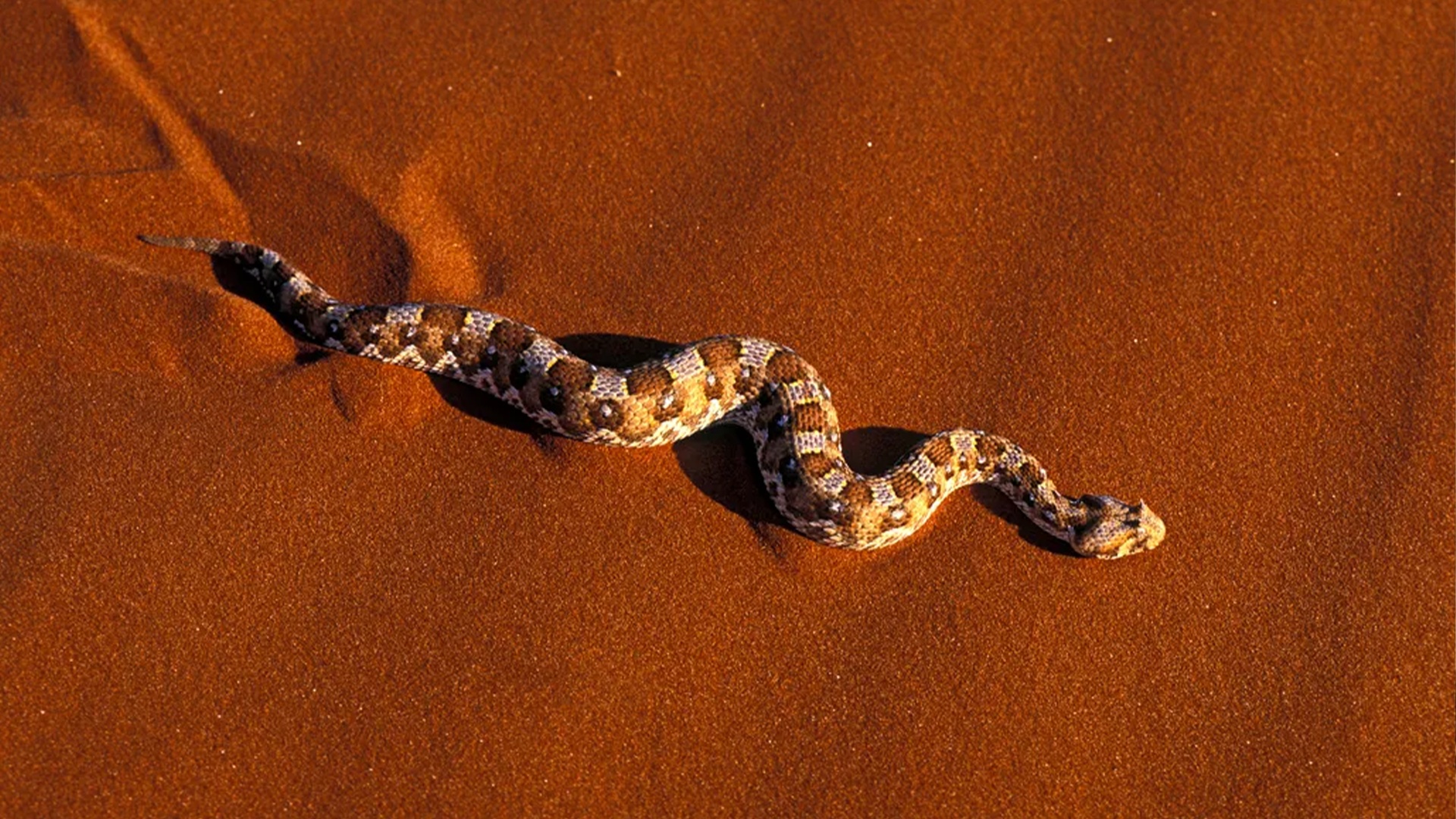
The scales also play a role: They are arranged on the ventral side of the snake in a diagonal direction. When the snake bends, these scales grip the ground and provide adhesion. At the same time, the remaining scales of the body glide over the surface, allowing for low-friction movement.
And what about worms? They also move by muscle contraction. The ring-like muscles in their bodies contract worms and then expand them again to slide forward.
You can watch the trailer for Dune: Part Two
below. You can read our review of Dune: Part Two here.
Did you know? Neil deGrasse Tyson is known for scrutinizing films for their physics. He has already taken apart several blockbusters, from Titanic to Top Gun: Maverick and Godzilla.
Have you already seen Dune 2? How did you like it? Did the movement of the worms bother you too? Let us know in the comments!


