





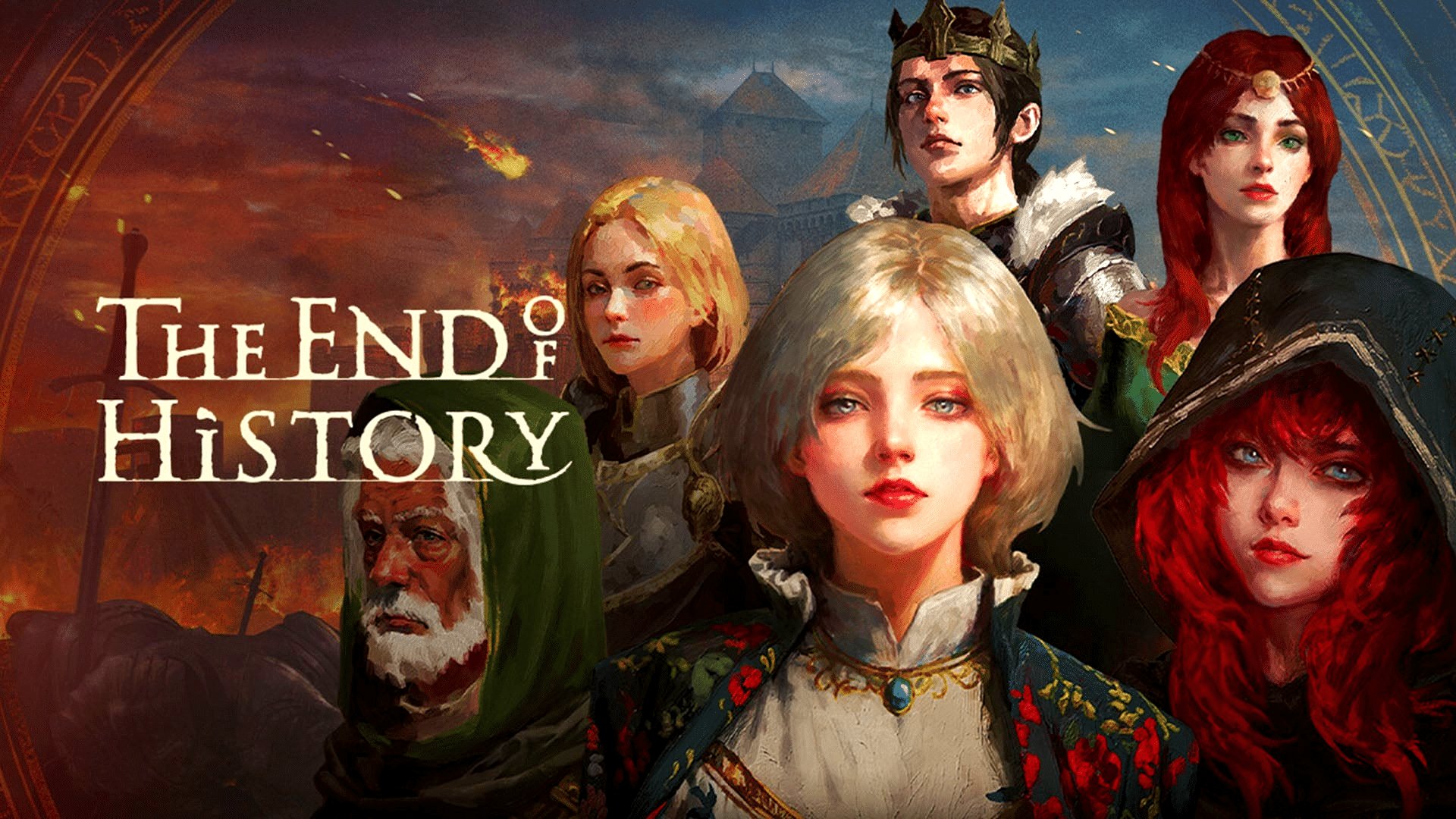
The complex medieval sandbox from a former cyberpunk developer launches this week. We summarize what makes this simulation so special.
If you don’t want to be led by the hand in role-playing games, but are looking for total freedom and a real sandbox, you can’t go past names like Mount & Blade or Kenshi.
A new title that launches tomorrow, December 10, 2025, in Early Access on Steam is following in exactly the same footsteps. The End of History (see the game on Steam) promises a complex mix of grand strategy, role-playing, and simulation.
What’s particularly exciting is who’s behind the project: a developer who previously worked on one of the biggest role-playing games of recent years.
From environment artist at Cyberpunk to solo developer
Behind the studio name Tatamibeya is Hiroshi Sakakibara, a Japanese artist living in Poland. His resume is quite unusual for such a project, but promising. Before Sakakibara moved into the gaming industry, he studied Western history and researched architectural ornaments in Tanzania.
He first made a name for himself in the gaming industry as an environment artist, contributing to the design of Cyberpunk 2077, among other things. He also proved his ability to create atmosphere with his own indie titles Nostalgic Train (2018) and Faraway Train (2021).
With The End of History, he now combines his fascination with world-building with his historical background.
What do you actually do in The End of History?
The screenshots are reminiscent of Mount & Blade, but in terms of gameplay, The End of History goes its own way. You don’t start out as the chosen one, but as a nameless wanderer, a small variable in a huge simulated world. There is no predetermined story campaign for you to follow. Instead, you write your own story through your actions.
The game throws you into a feudal world that functions completely autonomously. NPCs have their own agendas, wage wars, forge alliances, or die—whether you’re there or not.
And you choose a role in this chaos:
- The merchant: You travel from city to city, observe price fluctuations, and organize logistics. This is where one of the most exciting mechanics comes into play: food is a weapon. If you buy up all the supplies in a region, you will cause a famine. This drastically lowers your reputation, but drives up prices. On the other hand, if you deliver food to starving villages, you will be celebrated as a savior. So here, economics is part of politics.
- The mercenary & commander: The game combines a fairly simple combat system with strategy. You command troops, pay attention to formations, and try to flank the enemy. Positioning is more important than reflexes in The End of History because attacks from behind or from the side are particularly powerful.
- The schemer: You can work your way up without a sword. The game allows for in-depth diplomatic interactions. You can become a vassal, destabilize empires from within, or—new to the early access launch—found your own independent nations.
What may be a matter of taste for many of you: Unlike pure “do whatever you want” sandboxes, there is a threat in the background here.
The world is heading for an inevitable “collapse,” driven by hatred and division. A mysterious obelisk and its fragments scattered across the world hold the wisdom to perhaps stop this decline. Whether you follow this meta-plot or simply want to watch the world burn as a warlord is ultimately up to you.
Technology, price, and roadmap
The End of History launches tomorrow at a price of $28; the euro price will be similar. The early access phase is designed to last six to twelve months.
Important for couch gamers and Steam Deck owners: At launch, the game will only support mouse and keyboard. According to Sakakibara, full controller support is high on the priority list, but it requires a comprehensive redesign of the complex menus and will follow later.
In addition, the game is currently only available in English, Japanese, and Chinese, so you should be proficient in one of these languages to understand the complex mechanics. The system requirements (at least GTX 1050 Ti) are moderate, however. So if you’re in the mood for a sandbox that mixes deep strategy and role-playing with the freedom of Kenshi, it might be worth checking out the demo.


